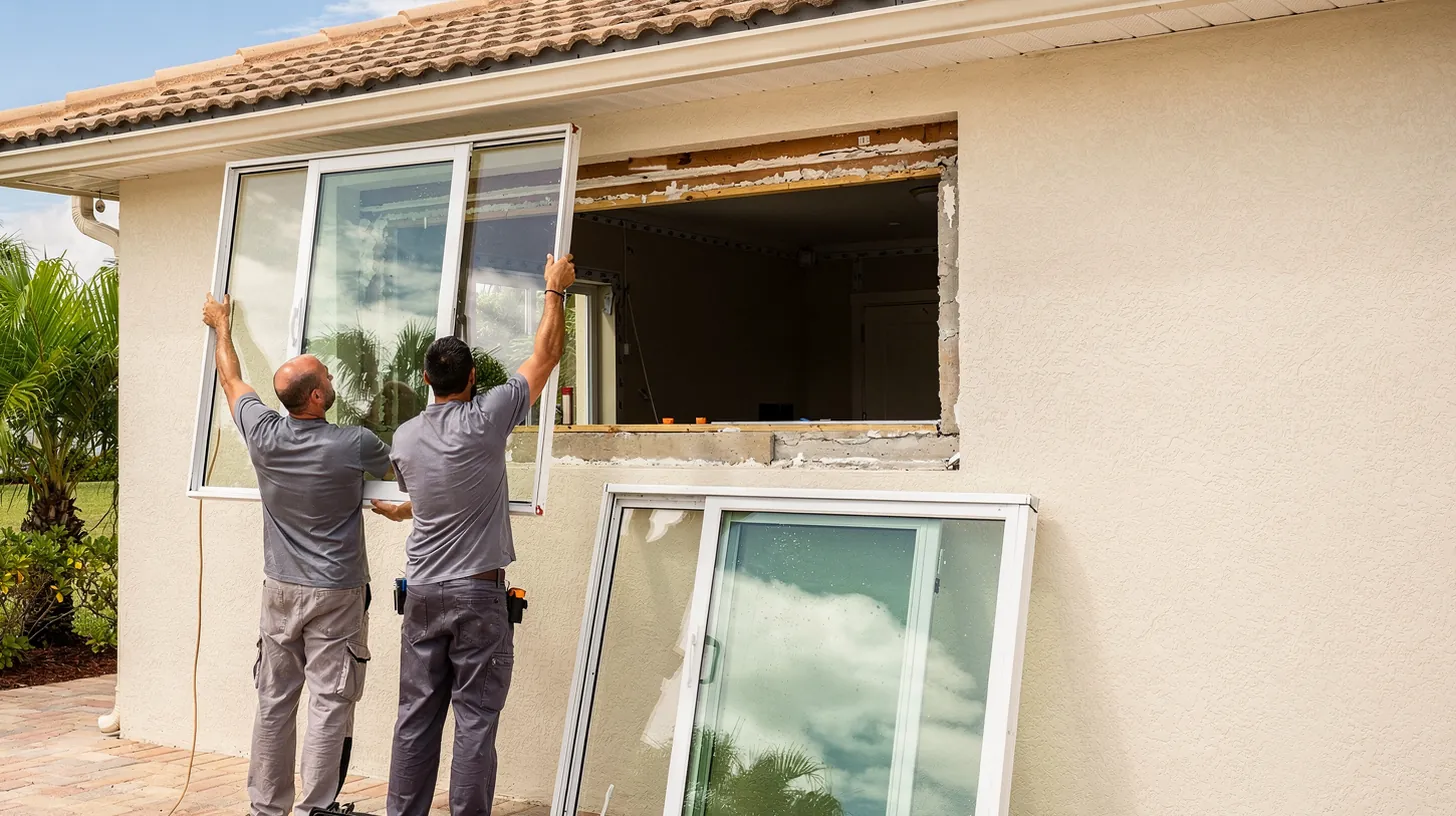
My Safe Florida Home No Longer Keeps a Contractor List. Here Is How Impact Window Companies Get Found Instead
My Safe Florida Home no longer keeps a list of authorized contractors, so a homeowner with a grant has to find a contractor on their own. The impact window companies that get those jobs are the ones whose sites answer the program's rules, show a license number and explain the 2-to-1 match.
The grant pays for the window. The homeowner still has to find the company that installs it.
In one paragraph
My Safe Florida Home is the Florida Department of Financial Services program that pays for a free wind mitigation inspection and, for eligible owners, a matching grant toward hurricane improvements such as impact windows and doors. The state pays $2 for every $1 the homeowner puts in, up to $10,000 from the state (Florida Statutes 215.5586, 2026).
Check the terms
Does this home meet the grant terms? A quick check for your customer
Answer four questions about the home. Each answer shows the program term it maps to. The program, not this page, decides eligibility.
Was the home built before January 1, 2008?
Meets the build-date term: the home must have been built before January 1, 2008, as shown on the county property appraiser's website.
Does not meet the build-date term in the 2026 statute.
Does the owner live there with a homestead exemption?
Meets the occupancy terms: site-built, owner-occupied, with a homestead exemption.
The program requires a homestead exemption on the home.
Is the insured value $700,000 or less?
Meets the value term: an insured value of $700,000 or less.
Above the $700,000 insured-value limit in the 2026 statute.
Did the program's initial inspection recommend opening protection?
Opening protection (impact windows, doors, garage doors, skylights) can be funded when the initial inspection recommends it.
Grant money only pays for improvements the initial inspection recommends.
Terms from Florida Statutes 215.5586 (2026) and the My Safe Florida Home FAQ, read October 23, 2026. The statute also requires low- or moderate-income status and an inspection within the prior 24 months. Not legal advice.
01 / 08
Does My Safe Florida Home still keep a list of approved contractors?
No. The program's own FAQ says: "The MSFH Program no longer maintains a list of authorized contractors." It adds that the homeowner is solely responsible for selecting and managing the contractor, and that the contractor's license must be certified or registered with the Florida Department of Business and Professional Regulation (My Safe Florida Home, 2026).
Contractors still search for a My Safe Florida Home contractor list, and some still ask how to get on it. There is no list to get on. The program says it "is not involved in or responsible for the contractor selection process, construction, or payment" (My Safe Florida Home, 2026).
That changes where the lead comes from. A homeowner with an approved grant now finds a contractor the same way anyone finds one: by searching, asking a neighbor, or calling the company whose truck they saw. The program's only check on the contractor is the license. The FAQ tells homeowners to "Verify your contractor's license status at MyFloridaLicense.com" before they enter it (My Safe Florida Home, 2026).
The FAQ lists the license types it accepts: General Contractor, Building Contractor, Residential Contractor, Specialty Contractor and Roofing Contractor (My Safe Florida Home, 2026). If your license is one of those, your website should say so in those words.
02 / 08
Who qualifies for a My Safe Florida Home grant under the statute?
Under the 2026 Florida Statutes, a grant applicant's home must be site-built and owner-occupied with a homestead exemption, built before January 1, 2008, insured for $700,000 or less, and inspected through the program within the prior 24 months. The applicant must also be a low-income or moderate-income person as defined in state law (Florida Statutes 215.5586, 2026).
| Term | What the statute requires |
|---|---|
| Type of home | Site-built and owner-occupied; detached, or attached and not over three stories |
| Homestead | A homestead exemption on the home |
| Age | Built before January 1, 2008, as shown on the county property appraiser's website |
| Value | An insured value of $700,000 or less |
| Inspection | An initial program inspection within the 24 months before the application |
| Income | A low-income or moderate-income person as defined in s. 420.0004 |
The value line matters in Collier County. Census puts the median owner-occupied home value at $540,700 in Collier and $362,200 in Lee for 2020 to 2024 (Census QuickFacts, 2025). Market value and insured value are not the same number, so check the insured value on the policy, not a sale price, before you tell a customer they qualify.
The income line is the one contractors miss. A homeowner can get the free inspection without qualifying for a grant, and the statute says so: an applicant "may receive an inspection of the home through the program without being eligible for a grant" (Florida Statutes 215.5586, 2026). Do not promise a grant because a customer had the inspection.
03 / 08
How does the grant money split between the state and the homeowner?
Grants are matched "$1 provided by the applicant for $2 provided by the state up to a maximum state contribution of $10,000 toward the actual cost of the mitigation project." So the state covers two-thirds of the project until its share reaches $10,000, and the homeowner pays the rest. Low-income applicants can receive up to $10,000 with no match (Florida Statutes 215.5586, 2026).
Run the numbers for your customer before they ask. The table applies the statute's 2-to-1 formula to four project sizes.
| Project cost | State pays (two-thirds, capped at $10,000) | Homeowner pays |
|---|---|---|
| $6,000 | $4,000 | $2,000 |
| $12,000 | $8,000 | $4,000 |
| $15,000 | $10,000 | $5,000 |
| $24,000 | $10,000 | $14,000 |
The break point is $15,000. Below it, every dollar of project cost is two-thirds state money. Above it, the state share is fixed at $10,000 and every extra dollar is the homeowner's. That is the number to put on a quote page, because it is the number the homeowner is trying to work out.
The project costs in the table are examples to show the formula, not prices. Your own pricing, and the program's own maximum allowances, decide what a real job costs. The statute lets the department set "the maximum grant allowances for any improvement" by rule (Florida Statutes 215.5586, 2026).
04 / 08
Why does the inspection report decide which work the grant covers?
The grant pays only for improvements the program's initial inspection recommends. The FAQ lists four eligible improvements "when recommended in an Initial Inspection Report": opening protection, roof-to-wall attachment, roof deck attachment and secondary water resistance. Opening protection means impact-resistant windows, doors, garage doors and skylights (My Safe Florida Home, 2026).
The statute says the same thing from the other end: "Improvements must be identified by the final hurricane mitigation inspection to receive grant funds" (Florida Statutes 215.5586, 2026). An improvement that was not recommended at the start, or not seen at the end, does not get paid.
Hurricane shutters are not named in either list. The statute's opening protection list is exterior doors, garage doors, windows and skylights, and the FAQ describes it as impact-resistant windows, doors, garage doors and skylights (My Safe Florida Home, 2026). A shutter company should not market a My Safe Florida Home grant as shutter money without the program confirming it.
Timing is the other trap. The FAQ is blunt: "Do not begin any mitigation construction PRIOR to receiving your official grant approval notice." It says that starting early "will disqualify you from reimbursement" (My Safe Florida Home, 2026). A contractor who starts a grant job early can cost the customer the whole grant.
05 / 08
What does the application need from the contractor?
The homeowner's grant application must name the contractor and its state license number, and the program verifies that the license is valid before approving the grant. All work must be "performed by properly licensed contractors" with the required local permits and inspections. After approval, the homeowner has 18 months to finish the work and request a final inspection (Florida Statutes 215.5586, 2026).
The statute's words: the application must contain "the name and state license number of the contractor that the applicant acknowledges as the intended contractor," and "The program must verify that the contractor's state license number is valid" (Florida Statutes 215.5586, 2026).
So the homeowner has to type your license number into a state portal. Make that easy. Put the license number, the license type and a link to the state lookup on every page a grant homeowner is likely to land on.
The 18-month clock is the homeowner's, but it becomes your schedule. The statute says a grantee "shall finalize construction and request a final inspection within 18 months after grant application approval," or the application "is deemed abandoned and the grant money reverts to the department" (Florida Statutes 215.5586, 2026). Product lead times, permits and storm-season delays all eat into it.
Permits are part of the deal. In Collier County, a window, door or shutter permit lists "Florida Product Approvals or Miami-Dade NOA numbers" for every product, and Collier says "Copies of Product Approvals and Miami-Dade NOAs not required" (Collier County, 2026).
06 / 08
How do impact window companies get found by grant homeowners now?
With no state list, a grant homeowner finds an impact window company through search, the Google map results and referrals. The companies that get those calls have a page that explains the program in the statute's terms, shows their license number and type, works through the 2-to-1 match, and is clear about the inspection, approval and 18-month rules.
Think about what that homeowner just went through. They had an inspection, read a report full of terms like opening protection, and got an approval notice that tells them to find their own contractor. Their next search is not for a brand. It is for someone who clearly does this work under this program.
- Build one program page. Use the statute's terms, the four eligible improvements and the 2-to-1 table, and say plainly what the grant does not cover.
- Show the license. Number, type and a link to MyFloridaLicense.com, on that page and in the footer.
- Name the products. List the Florida Product Approval or Miami-Dade NOA numbers you install, because the permit asks for them.
- Put it in the Business Profile. Describe impact window and door installation for grant homeowners in your profile description and services, without promising approval.
- Answer the follow-ups. Start dates, the 18-month clock and what happens at the final inspection.
A line that says "we work with My Safe Florida Home" does not answer any of those questions. The page that earns the call is the one that does the homeowner's homework for them. That is the work in our impact window and door SEO plans, and the shutter version is on our hurricane shutter SEO page.
07 / 08
What changed in 2026, and what is still unconfirmed?
Two 2026 laws amended the program's statute, ch. 2026-174 and ch. 2026-233. The Florida Statutes note that the ch. 2026-233 amendments "expire July 1, 2027" and revert to the June 30, 2026 text unless other law preserves them. The program is "subject to annual legislative appropriations," and its site gives no current funding total (Florida Statutes 215.5586, 2026).
For a contractor, that means two things. The rules in this post are the 2026 text, read October 23, 2026, and some of them can change on July 1, 2027. And the money is set each year by the Legislature, so availability can change between one season and the next (My Safe Florida Home, 2026).
The statute also sets an order of service. Applications open "no earlier than the effective date of a legislative appropriation," and are reviewed in priority groups, starting with low-income applicants who are at least 60 years old (Florida Statutes 215.5586, 2026).
The building code is changing too. The Ninth Edition (2026) of the Florida Building Code has an effective date of December 31, 2026 (ICC Digital Codes, 2026), so any page you publish about windows and permits should name the edition it describes. Under the current 2023 code, Collier and Lee are not in the High Velocity Hurricane Zone, which it defines as "Broward and Miami-Dade counties" (Florida Building Code, 2023).
08 / 08
What should an impact window company avoid saying about the program?
Do not say you are an approved or authorized My Safe Florida Home contractor, because the program keeps no such list. Do not promise a grant, a grant amount or approval, because the program decides eligibility. Do not tell a customer to start before the approval notice. And do not call shutters grant-eligible unless the program confirms it.
Each of those claims can cost a homeowner money, and each one is easy to check against the program's own FAQ. An ad or page that says "MSFH approved contractor" is advertising a status the program says it no longer grants (My Safe Florida Home, 2026).
What you can say is better anyway. "Licensed Florida contractor, license number shown, installing impact windows and doors recommended in My Safe Florida Home inspection reports" is true, specific and exactly what a grant homeowner needs to hear.
There is also an insurance angle worth explaining. Florida law requires residential property rate filings to "include actuarially reasonable discounts, credits, or other rate differentials" for windstorm loss-reducing construction (Florida Statutes 627.0629, 2026). Tell homeowners to ask their insurer what their discount would be, rather than quoting one.
If you want a second pair of eyes on how your site handles the program, start with our free SEO audit. We will tell you what a grant homeowner sees when they land on your site, and what is missing.
Watch it work
Turn on what makes AI recommend you.
AI recommends the businesses it can read, trust and quote. Flip on the four signals we engineer, and watch your visibility climb and the answer rewrite itself.
THE FOUR SIGNALS WE ENGINEER
Illustrative · the four signals are the real system we build
Questions
This article, answered.
Jamie Kloncz · SEO Elite Agency, Naples
No. The program's FAQ says, "The MSFH Program no longer maintains a list of authorized contractors," and that the homeowner is solely responsible for selecting and managing their contractor (My Safe Florida Home, 2026). Any list you find online is not the program's. The program checks one thing about the contractor: that the state license named on the application is valid. Homeowners are told to verify a license at MyFloridaLicense.com before entering it, so make your license number easy to find.
Jamie Kloncz · SEO Elite Agency, Naples
The program's FAQ describes no contractor registration. Instead, the homeowner names the contractor and its state license number on the grant application, and the program verifies that the license is valid (Florida Statutes 215.5586, 2026). The FAQ lists the license types it accepts: General Contractor, Building Contractor, Residential Contractor, Specialty Contractor and Roofing Contractor, certified or registered with the Florida Department of Business and Professional Regulation. Keep your license current and visible on your website.
Jamie Kloncz · SEO Elite Agency, Naples
They are not named in the program's lists. The statute lists opening protection improvements as exterior doors, garage doors, windows and skylights, and the FAQ describes opening protection as impact-resistant windows, doors, garage doors and skylights (My Safe Florida Home, 2026). Ask the program directly before telling a customer a grant will pay for shutters, and never put that claim in an ad without the program confirming it in writing.
Jamie Kloncz · SEO Elite Agency, Naples
Eighteen months. The statute says a grantee "shall finalize construction and request a final inspection within 18 months after grant application approval," or the application is deemed abandoned and the money goes back to the state (Florida Statutes 215.5586, 2026). Product lead times, permits and the hurricane season all count against that clock, so agree on a schedule with the homeowner as soon as the approval notice arrives.
Jamie Kloncz · SEO Elite Agency, Naples
No. The FAQ says, "Do not begin any mitigation construction PRIOR to receiving your official grant approval notice," and that starting early will disqualify the homeowner from reimbursement (My Safe Florida Home, 2026). Book the job, order nothing that commits the customer, and wait for the approval notice in writing. A company that starts early can cost its customer the whole grant, and that customer will tell their neighbors.
Jamie Kloncz · SEO Elite Agency, Naples
No, and it is not in it. The 2023 Florida Building Code defines the High Velocity Hurricane Zone as Broward and Miami-Dade counties (Florida Building Code, 2023). Collier County permit submittals list either Florida Product Approval numbers or Miami-Dade NOA numbers for the windows, doors and shutters being installed, and Collier says copies of those approvals are not required (Collier County, 2026). Say which code edition your pages describe, because the code changes.
Sources
- 1Florida Statutes 215.5586: My Safe Florida Home Program, 2026 Florida Statutes, read October 23, 2026 - grant eligibility (site-built, owner-occupied, homestead, built before January 1, 2008, insured value $700,000 or less, inspection within 24 months, low or moderate income); $1 applicant for $2 state up to $10,000; low-income up to $10,000 with no match; contractor named with license number and verified; 18 months to finish; ch. 2026-233 amendments expire July 1, 2027
- 2My Safe Florida Home: Frequently Asked Questions, read October 23, 2026 - no longer maintains a list of authorized contractors; accepted license types; do not begin construction before the grant approval notice; four eligible improvements when recommended in the Initial Inspection Report; subject to annual legislative appropriations
- 3Florida Statutes 627.0629: Residential property insurance; rate filings, 2026 Florida Statutes - rate filings must include actuarially reasonable discounts, credits, or other rate differentials for windstorm loss-reducing construction
- 4Collier County: Windows, Doors, Shutters (PRSD) submittal requirements, read October 23, 2026 - list Florida Product Approvals or Miami-Dade NOA numbers; copies not required
- 5Florida Building Code: 2023 Florida Building Code, Building, 8th Edition, Chapter 2 Definitions - the High Velocity Hurricane Zone consists of Broward and Miami-Dade counties
- 7ICC Digital Codes: 2026 Florida Building Code, Building, Ninth Edition, read October 23, 2026 - Effective Date: December 31, 2026
- 6Census QuickFacts: Collier County and Lee County, vintage 2025 - median value of owner-occupied housing units, 2020 to 2024: Collier $540,700; Lee $362,200

Written by
SEO Elite Agency, Naples FL. Published .
Check this page has not changed
Every article is hashed when the site is built. This recomputes the hash of its text in your browser and compares it with the published record.
Related services