SCREEN ENCLOSURES · SEO SERVICES
Screen Enclosure Company SEO for Pool Cages Built to Florida Code
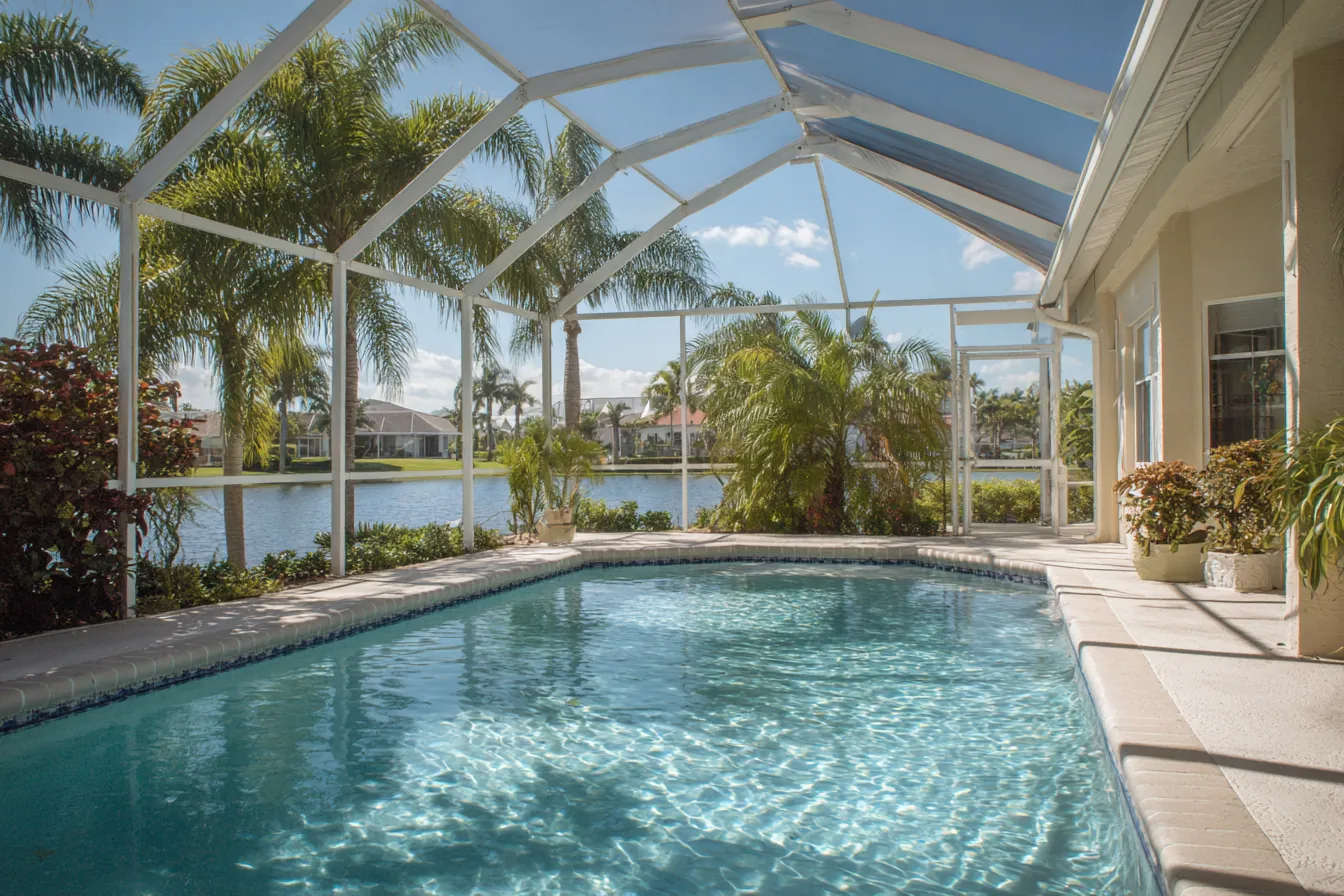
Screen enclosure company SEO in Southwest Florida starts with a fact none of the marketing pages we read for this trade mention: the Florida Building Code writes a hurricane procedure into the product. Panels that come off at 75 mph, screen designed to be cut, a pool barrier that has to keep working, and a new state license named for the trade. The company that explains those rules clearly gives a homeowner a reason to trust it with the cage over their pool.
 Jamie Kloncz, founder. Does the work himself, from Naples.
★★★★★ 5.0 on GoogleNaples, FloridaMonth to month
In one paragraph
Screen enclosure company SEO is the work of making a pool cage, lanai and screen room company the most credible search and AI answer for homeowners replacing, repairing or adding an enclosure, built on the Florida Building Code, the pool barrier law, contractor licensing and the permit rules of each place it works. SEO Elite Agency builds that for screen enclosure companies across Naples and Southwest Florida, month to month, starting with a free audit.
01 / 10
How Many People Search for Pool Cages and Screen Enclosures Here?
In the Ft. Myers-Naples market, "pool cage" averaged 170 Google searches a month and "screen enclosure" 140, with top-of-page bids reaching $16.01 and $18.12 (Google Keyword Planner, 2026). Add "lanai screen repair" at 90, "pool enclosure" at 70 and "pool cage repair" at 50, and the cluster runs about 520 searches a month (Google Keyword Planner, 2026), split between new cages and repairs.
We read these numbers ourselves in Google Keyword Planner on October 15, 2026, for the Ft. Myers-Naples DMA, covering October 2025 through September 2026.
The repair side is small and volatile. "Pool cage repair" averaged only 50 searches a month but showed a 750 percent rise over the latest three months and 325 percent year over year, while "screen enclosure" fell 81 percent year over year (Google Keyword Planner, 2026). Percentages on a base that small swing hard, so we plan around the averages and treat the swings as a reason to have both a replacement page and a repair page ready, not as a forecast.
The click is not cheap for a small market. The top-of-page bid range ran from $3.36 to $16.01 for "pool cage" and from $4.23 to $18.12 for "screen enclosure" (Google Keyword Planner, 2026). Organic pages that answer the real questions are how a company stops renting every one of those clicks.
There is no agency-side search worth chasing. "Pool cage company marketing" and "screen enclosure marketing" returned no data in a United States read the same day (Google Keyword Planner, 2026). This page is written to show you what your own site should say to the homeowners who do search, because that content decides who gets the call.
What Southwest Florida types
The homeowner’s words, counted.
Average searches a month. Google Keyword Planner, Ft. Myers-Naples FL DMA, October 2025 to September 2026, read October 15, 2026.
- “the cluster runs about 520 searches a month”
- “"Pool cage repair" averaged only 50 searches a month but showed a 750 percent rise over the latest three months”
- “The top-of-page bid range ran from $3.36 to $16.01 for "pool cage" and from $4.23 to $18.12 for "screen enclosure"”
02 / 10
What Does the Florida Building Code Require of a Screen Enclosure?
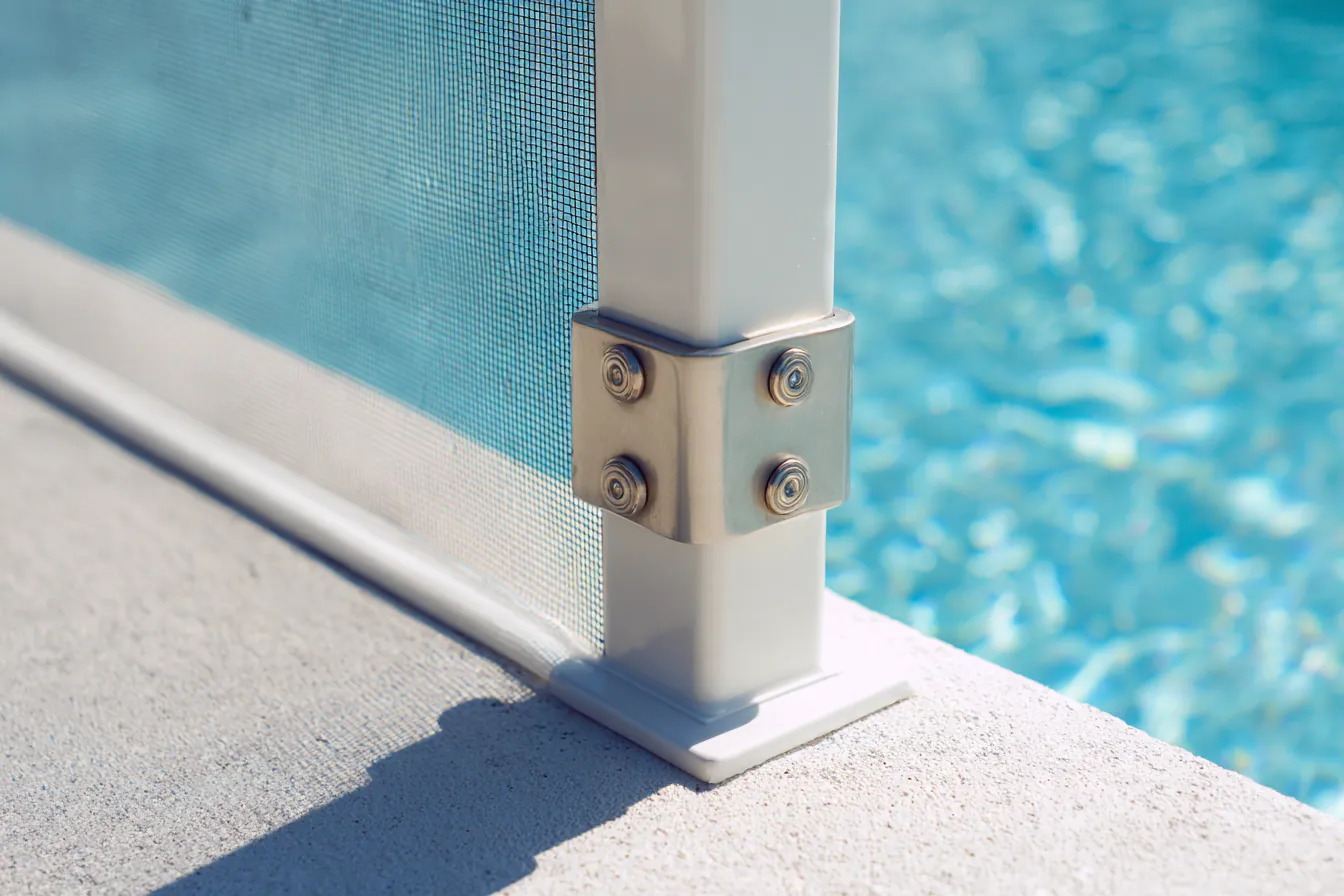
The 2023 Florida Building Code treats a screen enclosure as its own building type, not habitable space, and sets the floor for how it is built. Extruded aluminum members must have a wall thickness of at least 0.040 inch (Florida Building Code Building section 2002, 2023), primary members must carry a 300-pound point load, and the frame is designed to the code's wind pressure table.
The code defines a screen enclosure as "A building or part thereof, in whole or in part self-supporting, and having walls of insect screening with or without removable vinyl or acrylic wind break panels and a roof of insect screening, plastic, aluminum or similar lightweight material" (Florida Building Code Building definitions, 2023). The same chapter lists screen enclosures among areas that "are not considered habitable spaces" (Florida Building Code Building definitions, 2023), which is why a screen room is not a living room on paper, however it is used.
Chapter 20 sets the structure: "Actual wall thickness of extruded aluminum members shall be not less than 0.040 inch" (Florida Building Code Building section 2002, 2023). Members are designed "for wind in both of two orthogonal directions using the pressures given in Table 2002.4," and each primary member must also carry "a 300 pound (1.33 kN) load applied vertically downward along any 1 foot (305 mm) of any member, not occurring simultaneously with wind load" (Florida Building Code Building section 2002, 2023). Purlins get a 200-pound load on the same terms (Florida Building Code Building section 2002, 2023).
The wind table has assumptions a homeowner should know about. Its pressures "apply to enclosures with a mean enclosure roof height of 30 feet (10 m)," with multipliers for other heights, and they are written for standard 20 by 20 mesh, with heavier screen densities designed as enclosed buildings (Florida Building Code Building section 2002, 2023). Choosing a denser screen is a structural decision, not just a look.
The code names a design guide: "The AAF Guide to Aluminum Construction in High Wind Areas shall be accepted as conforming to accepted engineering practices" (Florida Building Code Building section 2002, 2023). The residential code adds that "Screen enclosures shall be permitted to be designed in accordance with the Florida Building Code, Building Section 2002" (Florida Building Code Residential section R301.2.1.1, 2023). And in the residential fire separation rules, "Screen enclosure walls of insect screening with a maximum of 25-percent solid flexible finishes" are an exception (Florida Building Code Residential section R302.1, 2023).
None of that is marketing copy, and all of it is useful. A page that explains, in plain words, what wall thickness, point load and design guide your cages are built to is evidence that you build to code rather than a promise that you do.
03 / 10
What Must Homeowners Do With a Screen Enclosure Before a Hurricane?
It depends on how the enclosure was designed. Vinyl, tempered glass and acrylic panels must be removable and carry a decal saying the panel "SHALL be removed when wind speeds exceed 75 mph" (Florida Building Code Building section 2002, 2023). Under the code's screen removal design option, designated screen must be retracted, removed or cut, and the contractor must tell the owner so in writing.
Section 2002.3.3 says "Vinyl, tempered glass, and acrylic panels shall be removable," that "Removable panels shall be identified as removable by a decal," and that the decal must be visible when the panel is installed (Florida Building Code Building section 2002, 2023). The decal text is set by the code: "Removable panel SHALL be removed when wind speeds exceed 75 mph (34 m/s)" (Florida Building Code Building section 2002, 2023).
Section 2002.7 adds an alternative design method. Frames designed to the screen removal alternates "shall be designed using signed and sealed site-specific engineering," and "The method applies only to walls and roofs with 100-percent screen" (Florida Building Code Building section 2002, 2023). Under it, "Screen designated in the design to be cut shall be completely cut when wind speeds are forecast to exceed 75 mph" (Florida Building Code Building section 2002, 2023).
The contractor carries duties under that method. "The contractor shall provide replacement screen for a one-time replacement of all screen and spline designated by the design to be cut," and "the contractor shall provide written notice to the owner and the local building code enforcement department that the owner must retract, remove, or cut a panel or panels of the screen enclosure" when wind speeds are expected to exceed 75 mph (Florida Building Code Building section 2002, 2023). Panels to be retracted, removed or cut must be marked "with highly visible permanent labels," and the work "shall not require the use of ladders or scaffolding" (Florida Building Code Building section 2002, 2023).
This is the most distinctive content a screen enclosure company can publish. It answers the question an owner has when a storm is forecast, and a company that posts its own written notice, a photo of its labels and a short video of a panel coming out shows it built the cage the code way. It also gives you a reason to contact past customers every June.
One limit on what to say. The code sends buildings "located within the high-velocity hurricane zone" to its stricter Section 2003 as well (Florida Building Code Building section 2002, 2023), and we have not confirmed for this page which Southwest Florida counties, if any, fall inside it. Do not publish a local wind speed or zone claim without reading the code map for the address.
04 / 10
Can a Pool Cage Be the Pool Barrier in Florida?
Yes. The residential code says standard screen enclosures meeting Section R4501.17 "may be utilized as part of or all of the" pool barrier (Florida Building Code Residential section R4501.17, 2023), and Florida law lets a new pool pass final inspection when it is isolated by an enclosure that meets the barrier requirements (Florida Statutes section 515.27, 2026). That makes every screen door on the cage a pool gate.
The full code sentence reads "Standard screen enclosures which meet the requirements of Section R4501.17 may be utilized as part of or all of the 'barrier' and shall be considered a 'nondwelling' wall" (Florida Building Code Residential section R4501.17, 2023). The barrier rules then apply in full. "The top of the barrier shall be at least 48 inches (1219 mm) above grade measured on the side of the barrier which faces away from the swimming pool," the gap at the bottom can be no more than 2 inches, and "Openings in any barrier shall not allow passage of a 4-inch-diameter (102 mm) sphere" (Florida Building Code Residential section R4501.17, 2023).
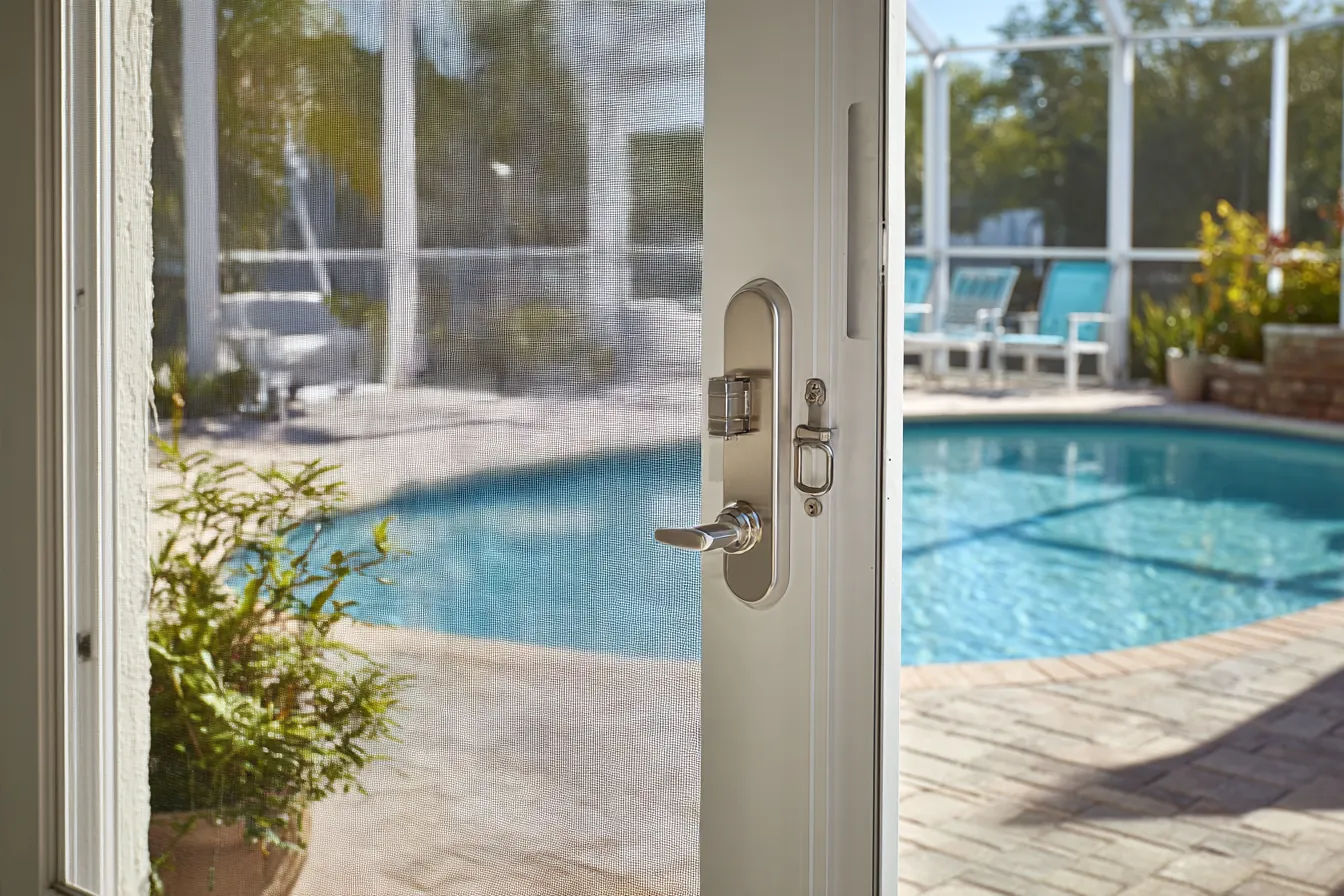
Gates are the part customers miss. Access gates "shall be self-closing" with "a self-latching locking device located on the pool side of the gate," and "Gates that provide access to the swimming pool must open outward away from the pool" (Florida Building Code Residential section R4501.17, 2023). The statute says the same: gates "must open outward away from the pool and be self-closing and equipped with a self-latching locking device" (Florida Statutes section 515.29, 2026), and the barrier "must be at least 4 feet high on the outside" (Florida Statutes section 515.29, 2026). The code text says gates, not screen doors, but where the cage is the barrier its doors are how the pool is reached, so the gate rules are the ones to build to.
Under the Residential Swimming Pool Safety Act, a new pool must meet "at least one of the following requirements relating to pool safety features," and the first is that "The pool must be isolated from access to a home by an enclosure that meets the pool barrier requirements of s. 515.29" (Florida Statutes section 515.27, 2026). A person who fails to equip a new residential pool with a safety feature "commits a misdemeanor of the second degree" (Florida Statutes section 515.27, 2026). The Act defines "young child" as "any person under the age of 6 years" (Florida Statutes section 515.25, 2026).
The hurricane rules and the barrier rules meet in one sentence. Where an enclosure designed under the screen removal alternates serves as the pool barrier, "the required minimum height of the barrier shall be maintained when screen panels are retracted, removed, moved to the open position, or cut" (Florida Building Code Building section 2002, 2023). The code also allows a screen enclosure barrier to sit "as close to the water's edge as permitted by this code," while removable child barriers must be at least 20 inches from the water (Florida Building Code Residential section R4501.17, 2023).
For a website, that means a pool barrier page written for parents and grandparents: what the cage has to do, why the door must swing out and latch itself, and how a rescreen or door replacement keeps the barrier intact. Link it from your pool builder partners' pages, because a new pool cannot pass final without a safety feature.
05 / 10
What License Does a Screen Enclosure Contractor Need in Florida?
Florida now has a state category named for the trade. The legislature directed the licensing board to create a voluntary certified specialty category for "Structural aluminum or screen enclosures" (Florida Statutes section 489.113, 2026), and the board's rule defines a "structural aluminum or screen enclosures specialty contractor" (Florida Administrative Code Rule 61G4-15.100, 2024). The statute says the category does not create a mandatory licensing requirement.
The statute says a certified specialty category established by board rule "exists as a voluntary statewide licensing category and does not create a mandatory licensing requirement" (Florida Statutes section 489.113, 2026). The board's rule says the new specialty contractor may perform "any work involving aluminum screened porches, screened enclosures, pool enclosures, pre-formed panel-post and beam roofs" and related enclosures (Florida Administrative Code Rule 61G4-15.100, 2024).
The rule also sets limits a contractor's site should respect. The contractor "shall not perform any work that alters the structural integrity of the building including but not limited to roof trusses, lintels, load bearing walls and foundations," and the scope includes masonry concrete work "limited to foundations, slabs and block knee walls incidental to the aluminum and allied materials construction work" (Florida Administrative Code Rule 61G4-15.100, 2024). An older state rule for specialty structure contractors also covers "screened porches, screened enclosures, pool enclosures" (Florida Administrative Code Rule 61G4-15.015, 2007).
Local licensing sits beside it. Florida law says a local government may not require a license for a job scope that does not substantially correspond to a state contractor category or "the job scope of one of the certified specialty contractor categories established pursuant to s. 489.113 (6)" (Florida Statutes section 489.117, 2026). Collier County's May 2026 certificate of competency trades list includes "Aluminum Contractor" and "Aluminum Contractor Including Concrete" under specialty trades (Collier County Certificate of Competency Trades List, 2026). We have not read Collier's ordinance text for that card's scope, so ask the county what it requires for enclosure work before your site makes a licensing claim about Collier.
Cape Coral names the new category outright. Its January 2026 residential screen enclosure guidelines list who may apply: "General Contractor (CGC), Building Contractor (CBC), Residential Contractor (CRC), Structural Aluminum or Screen Enclosures Specialty Contractor (SCC), or Owner/Builder" (City of Cape Coral new screen enclosure guideline, 2026).
On a website, a license claim should name the license. A company that writes licensed and insured and stops there gives a homeowner nothing to check. One that prints its state certification type and number, its Collier card where it holds one, and a link to the state license lookup gives them something they can verify in a minute.
Southwest Florida, office by office
Same cage. Different paperwork.
01 / 06 · Collier County card
“Collier County's May 2026 certificate of competency trades list includes "Aluminum Contractor" and "Aluminum Contractor Including Concrete" under specialty trades”
Collier lists its own aluminum contractor cards.
02 / 06 · Unincorporated Collier
“Unincorporated Collier near Naples uses the Aluminum Structures permit and a final spot survey for pool cages”
One county permit, closed out with a survey of the pool area.
03 / 06 · City of Naples
“A Naples page should be built from the city's own form, read and dated.”
The city has its own form, and the page makes no claim about it.
04 / 06 · Lee County
“Residential Accessory Structure permit is required to add onto and/or remodel a non-habitable, non-agriculture structure”
From a 2021 guide, so check the current rules first.
05 / 06 · Fort Myers and Bonita Springs
“Fort Myers and Bonita Springs are incorporated cities with their own building departments, so their pages start from the city's rules, not Lee County's.”
Two cities inside Lee, each with its own building department.
06 / 06 · Cape Coral
“General Contractor (CGC), Building Contractor (CBC), Residential Contractor (CRC), Structural Aluminum or Screen Enclosures Specialty Contractor (SCC), or Owner/Builder”
The city's January 2026 guidelines name the new state license.
County lines: US Census Bureau.
06 / 10
Does a Pool Cage or Rescreen Job Need a Permit in Southwest Florida?
New and replacement enclosures do. Collier County permits screen enclosures under its Aluminum Structures application, and Cape Coral has separate residential guidelines for new, addition and replacement enclosures (City of Cape Coral screen enclosure replacement guideline, 2026). Whether rescreening alone needs a permit is not settled in any source we could read, so the honest answer is to ask the building department.
Collier County's Aluminum Structures (PRAS) application applies "For all occupancies, including: 1&2 Family, Multi-Family, and Commercial," and asks for "Plans reflecting the scope of work, signed and sealed, if applicable" (Collier County Aluminum Structures permit, 2026). For a pool deck, "A final spot survey shall be required for the screen enclosure with a note identifying it is a screen enclosed pool area" (Collier County Aluminum Structures permit, 2026). If new impervious area is over 400 square feet, the county asks for a new certified site plan "not older than 6 months" (Collier County Aluminum Structures permit, 2026).
Collier's permit exemptions for detached single-family homes include "Enclosure of existing covered patios/balconies/porches with screening" (Collier County permit exemption notice, 2026). That names screening an existing covered porch. It does not name rescreening a pool cage, and we would not stretch it.
Since July 1, 2026, Florida law exempts single-family work valued under $7,500 from building permits, but not "Work on a property that is partially or entirely located in a flood hazard area as defined by the Florida Building Code" or "Any electrical, plumbing, structural, mechanical, or gas work performed on property containing a single-family dwelling" (Florida Statutes section 553.79, 2026). Collier says that to qualify, "a written request must be submitted to the Collier County Building Division" (Collier County permit exemption notice, 2026). A frame repair is structural work, so the exemption does not reach it.
In Lee County, the county's 2021 residential guide says a "Residential Accessory Structure permit is required to add onto and/or remodel a non-habitable, non-agriculture structure," and lists "screen/glass/vinyl room, porch, greenhouse, pole barn and pool enclosure" among them (Lee County Residential Permitting Guide, 2021). That guide predates the current code edition, and Lee's dedicated enclosure guide would not load for us, so check the current requirements before you publish Lee details.
In Cape Coral, the replacement guideline "is used when replacing an existing screen enclosure on a residential property. With or without a pan roof," and always requires a site plan and an architectural structural plan (City of Cape Coral screen enclosure replacement guideline, 2026). The addition guideline notes that "This permit type can include a concrete slab and footers" (City of Cape Coral screen enclosure addition guideline, 2026).
We could not read the City of Naples screen enclosure application, so this page makes no claim about it. A Naples page should be built from the city's own form, read and dated.
Permit or not
Does this job need a permit?
Pick the job. Each answer is a line from the permit section above, with nothing added.
Ask your building department before work starts.
What is the job?
Does the repair touch the frame or any other structure?
Is any part of the property in a flood hazard area?
New and replacement cages need a permit.
“New and replacement enclosures do. Collier County permits screen enclosures under its Aluminum Structures application, and Cape Coral has separate residential guidelines for new, addition and replacement enclosures”
Not settled. Ask the building department first.
“Whether rescreening alone needs a permit is not settled in any source we could read, so the honest answer is to ask the building department.”
Collier's exemption list names this work.
“Collier's permit exemptions for detached single-family homes include "Enclosure of existing covered patios/balconies/porches with screening"”
Frame repairs fall outside the small-job exemption.
“A frame repair is structural work, so the exemption does not reach it.”
Flood hazard property is carved out of the exemption.
“Work on a property that is partially or entirely located in a flood hazard area as defined by the Florida Building Code”
The state small-job exemption may cover it.
“Since July 1, 2026, Florida law exempts single-family work valued under $7,500 from building permits”
07 / 10
What Did Hurricanes Charley and Ian Show About Pool Cages?
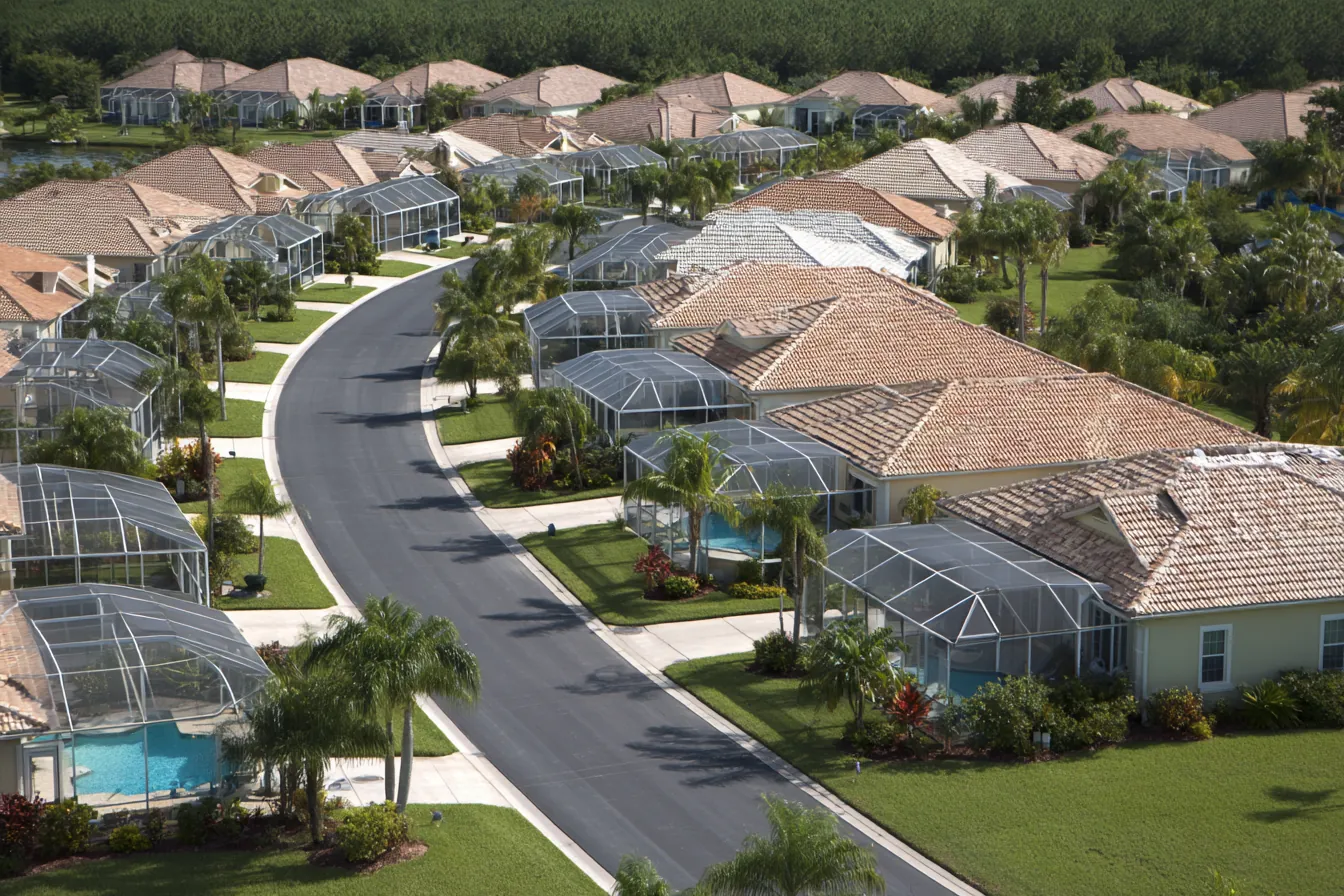
FEMA's Hurricane Charley team found that pool screen enclosures "incurred extensive damage," mostly on the windward side, and that windward outside corner posts detached from the slab in several failures (FEMA Hurricane Charley Mitigation Assessment Team Report, 2005). After Hurricane Ian, FEMA recorded a 2022-built house in St. James City whose only damage was its screened enclosure (FEMA Hurricane Ian Mitigation Assessment Team Report, 2023).
The Charley report is specific. "Screen enclosures around pools are common in Florida and incurred extensive damage as a result of Hurricane Charley. Damage typically occurred on the sides of buildings that received direct windward pressures" (FEMA Hurricane Charley Mitigation Assessment Team Report, 2005). In several cases, "the windward outside corner posts became detached from the slab," with corner posts attached using "only two #10 screws" (FEMA Hurricane Charley Mitigation Assessment Team Report, 2005).
The damage spread past the cage. FEMA found "several instances of aluminum debris from the pool enclosures breaking windows of the house to which the enclosures were attached, resulting in interior water damage" (FEMA Hurricane Charley Mitigation Assessment Team Report, 2005). It linked much of the damage to age: "The majority of the enclosures, attachments, and open canopy roofs were designed for substantially lower loads prior to the 2001 FBC" (FEMA Hurricane Charley Mitigation Assessment Team Report, 2005). The same report describes the AAF guide as "based on wind tunnel testing and rigorous engineering" while noting it "is not a consensus standard" (FEMA Hurricane Charley Mitigation Assessment Team Report, 2005).
A state field team after Charley reported "some anchoring bolts actually pulled from the concrete decking and aluminum vertical support members sheared off at the base," and its opinion was that "only stainless steel should be used" for connectors in that salt environment (Florida Building Code Triage Team, 2004). That was a field recommendation, not a code requirement, so say what fasteners you use and why without implying the code demands them.
Ian added a newer data point. In St. James City, FEMA described a house "built in 2022" whose owner "indicated the only damage sustained was to the screened enclosure at the back of the house" (FEMA Hurricane Ian Mitigation Assessment Team Report, 2023). The team also concluded that appurtenances such as screened porches "continue to be improperly attached to manufactured homes" (FEMA Hurricane Ian Mitigation Assessment Team Report, 2023).
For a contractor, these reports are content you can stand behind. A page that shows your corner post anchorage, the fasteners you use near salt water and how your replacement cage differs from a pre-2001 frame answers what a post-storm buyer wants to know without a single unsupported claim.
Rescreening, panel by panel
Torn on the windward side. Rescreened one wall at a time.
01 / 05 · After the storm
“Screen enclosures around pools are common in Florida and incurred extensive damage as a result of Hurricane Charley.”
02 / 05 · The windward wall first
“Damage typically occurred on the sides of buildings that received direct windward pressures”
03 / 05 · Screen designed to be cut
“Screen designated in the design to be cut shall be completely cut when wind speeds are forecast to exceed 75 mph”
04 / 05 · Replacement screen, from the contractor
“The contractor shall provide replacement screen for a one-time replacement of all screen and spline designated by the design to be cut”
05 / 05 · Every panel new
“in this trade the real review comes after the next storm”
08 / 10
Can an HOA or Condo Association Block a New Pool Cage?
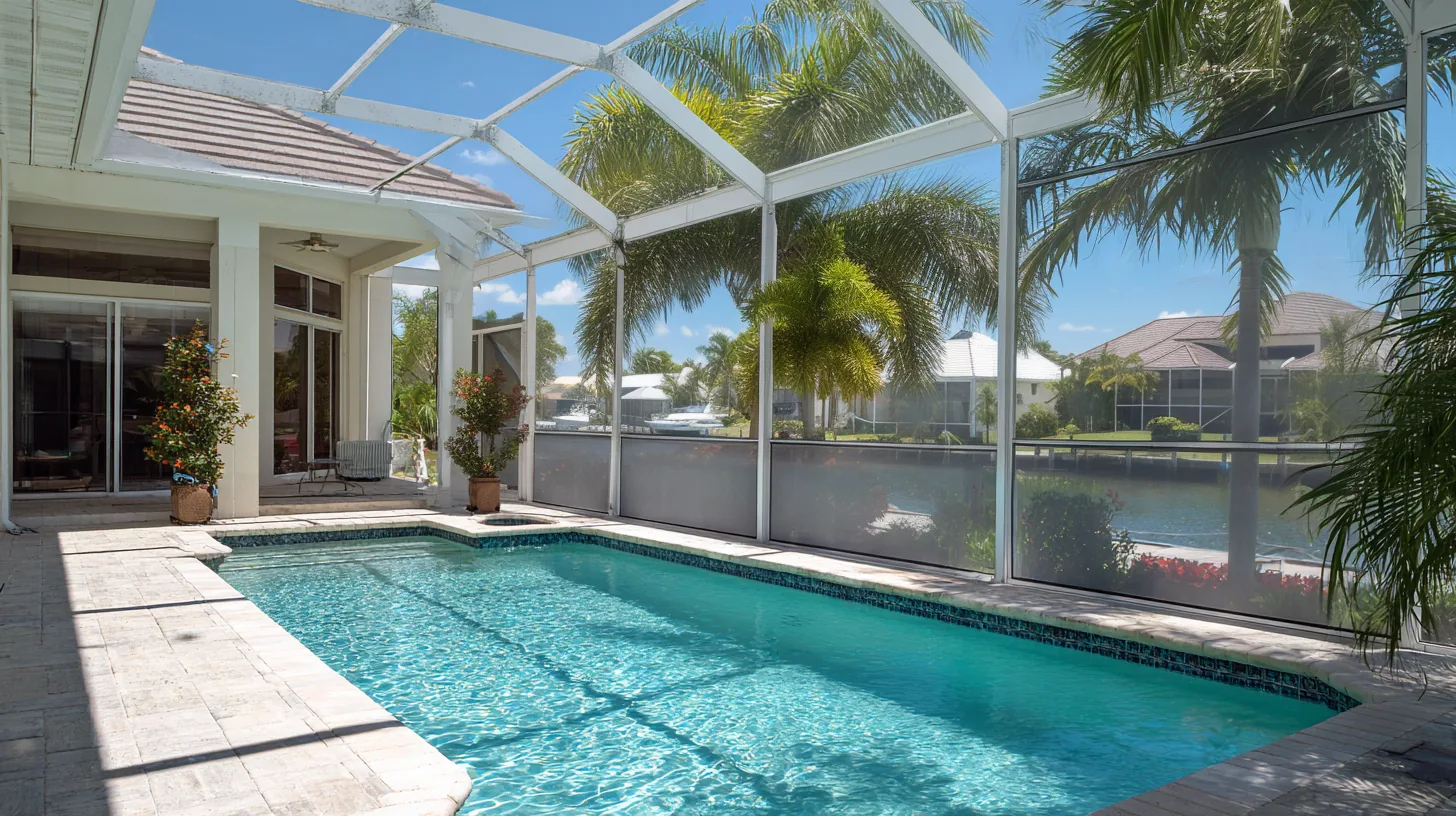
An HOA may review an enclosure only to the extent its declaration states or reasonably implies, may not demand a building permit before it reviews, and must explain a denial in writing (Florida Statutes section 720.3035, 2026). Condominiums are different: where the declaration is silent, a material alteration of common elements needs 75 percent of voting interests (Florida Statutes section 718.113, 2026).
Florida's homeowners association law limits review to what is "specifically stated or reasonably inferred as to such location, size, type, or appearance in the declaration of covenants or other published guidelines" (Florida Statutes section 720.3035, 2026). An association "may not require a building permit to be issued by a governmental authority to a parcel owner as a prerequisite for review" (Florida Statutes section 720.3035, 2026), so the owner can seek approval and the permit in parallel.
If the HOA says no, it "must provide written notice to the parcel owner stating with specificity the rule or covenant on which the association or committee relied when denying the request or application" (Florida Statutes section 720.3035, 2026). And where the declaration sets no setback, "the applicable county or municipal setback limitations shall apply" (Florida Statutes section 720.3035, 2026). The statute's protected list of hurricane protection items names shutters, impact windows, garage doors and generators, among others, and does not name screen enclosures (Florida Statutes section 720.3035, 2026).
For condominiums, if the declaration does not set a procedure, "75 percent of the total voting interests of the association must approve the alterations or additions before the material alterations or substantial additions are commenced" (Florida Statutes section 718.113, 2026). That statute does not mention screen enclosures, so whether a given cage is a material alteration depends on the declaration.
An HOA and condo approval guide is one of the most practical pages an enclosure company can publish: what the architectural committee usually asks to see, how long it takes in the communities you serve, what a denial letter must contain and when to start the permit.
09 / 10
What Should a Screen Enclosure Company Website Prove?
Four things a homeowner can check: the license, naming the state screen enclosure specialty category where you hold it (Florida Statutes section 489.113, 2026); the engineering, signed and sealed where the design needs it; the hurricane procedure for each cage you build; and the pool barrier details. Then real project photographs, by neighborhood, that match what the pages say.
Much of what a homeowner pays for is hidden once the screen is up: wall thickness, anchor bolts, the design method. The site has to show it.
Start with the license page: the state category, the number, the Collier card where you hold one, and what each covers. Then an engineering page that explains when your jobs carry signed and sealed site-specific engineering, which the code requires for the screen removal alternates (Florida Building Code Building section 2002, 2023), and which design guide you build to.
Then a hurricane procedure page for owners: which panels come off, which screen is designated to be cut, where the labels are, and a copy of your written notice. Then the pool barrier page. Then a replacement page and a rescreen and repair page, kept separate, because the search terms and the permit questions differ.
Reviews and the map pack confirm what the pages claim. A complete Business Profile with photographs of finished cages and steady reviews from real customers back up what the pages claim, and in this trade the real review comes after the next storm.
ChatGPT
Do I have to take my screen enclosure panels down before a hurricane?
If your enclosure has vinyl, tempered glass or acrylic panels, the code requires them to be removable and labeled with a decal saying the panel "SHALL be removed when wind speeds exceed 75 mph" (Florida Building Code Building section 2002, 2023). If it was designed for screen removal, your contractor must give you written notice of what to retract, remove or cut.
Google AI Mode
Can my pool cage count as the pool barrier?
Yes, if it meets the barrier rules. The code allows a standard screen enclosure to be part or all of the barrier, at least 48 inches high, with self-closing, self-latching gates that open outward away from the pool (Florida Building Code Residential section R4501.17, 2023). Florida law accepts an enclosure meeting those requirements as a pool safety feature (Florida Statutes section 515.27, 2026).
Perplexity
Is there a Florida license for screen enclosure contractors?
Yes, a voluntary one. Florida created a certified specialty category for structural aluminum or screen enclosures (Florida Statutes section 489.113, 2026), defined in board rule 61G4-15.100, and the statute says it does not create a mandatory licensing requirement. Collier County also issues a local Aluminum Contractor certificate. Ask any contractor which license they hold.
Gemini
Do I need a permit to rescreen my pool cage?
We could not find a primary source in Collier, Lee, Cape Coral or Naples that settles it. Collier exempts screening an existing covered porch on a detached single-family home (Collier County permit exemption notice, 2026), and frame or structural repairs fall outside the state small-job exemption. Ask your building department before work starts.
Copilot
Why did so many pool cages fail in past hurricanes?
FEMA's Hurricane Charley team found most damaged enclosures were designed for substantially lower loads before the 2001 Florida Building Code, and that windward corner posts often detached from the slab (FEMA Hurricane Charley Mitigation Assessment Team Report, 2005). Ask how a replacement cage is anchored and which fasteners are used.
The answer an engine can quote is the one on your page. These answers are this page’s own.
Pool cage questions in AI answers
Panels down, the barrier and the rescreen permit.
01 / 05 · Asked in ChatGPT
“Do I have to take my screen enclosure panels down before a hurricane?”
Reads fromOpenAI’s own search crawler, OAI-SearchBot. OpenAI says it is the bot used to surface websites in ChatGPT’s search answers.
02 / 05 · Asked in Google AI Mode
“Can my pool cage count as the pool barrier?”
Reads fromThe Google Search index, plus your Google Business Profile.
03 / 05 · Asked in Perplexity
“Is there a Florida license for screen enclosure contractors?”
Reads fromIts own index, built by PerplexityBot.
04 / 05 · Asked in Gemini
“Do I need a permit to rescreen my pool cage?”
Reads fromGoogle’s index, with one extra switch: Google-Extended.
05 / 05 · Asked in Copilot
“Why did so many pool cages fail in past hurricanes?”
Reads fromThe Bing index.
10 / 10
What to Build First: Screen Enclosure Company SEO in Naples and Fort Myers
Start with the hurricane procedure page and the pool barrier page, because no competitor has them. Then the license and engineering pages, the replacement and repair pages, and one permit page for each jurisdiction you work in, built from that jurisdiction's own documents. Then project pages by neighborhood, each with photographs of a real cage and the date it was built.
A concrete order of work for a Southwest Florida screen enclosure company.
First
the two pages built on the code: the 75 mph procedure, with your decal, labels and notice, and the pool barrier explainer.
Second
the license and engineering pages.
Third
separate replacement and repair pages.
Fourth
the HOA and condo approval guide.
Then
the places, each built from its own documents. Cape Coral publishes new, addition and replacement guidelines that name the state specialty license. Unincorporated Collier near Naples uses the Aluminum Structures permit and a final spot survey for pool cages, while the City of Naples has its own application, which we read before writing that page. Fort Myers and Bonita Springs are incorporated cities with their own building departments, so their pages start from the city's rules, not Lee County's.
Then
the project pages: cage replacements, new enclosures over new pools, lanai rescreens and screen rooms, each tied to a real job with photographs. If you work alongside pool builders or paver contractors on new pool decks, link each other's pages so the whole job is explained.
If you would rather have this built and maintained than written between jobs, that is what we do, month to month, from Naples.
Estimate it
What might SEO cost and take for you?
Three questions, an honest range. This uses real Southwest Florida market rates and observed timelines, not a canned package price. It is an estimate to orient you, never a quote. The real number comes from a free audit of your actual site.
1 · HOW COMPETITIVE IS YOUR MARKET?
2 · WHERE IS YOUR SITE TODAY?
3 · WHAT ARE YOU AFTER?
ILLUSTRATIVE ESTIMATE
TYPICAL MONTHLY INVESTMENT
$1,700 – $3,100
/ month · month-to-month
TIME TO MEANINGFUL RESULTS
3 – 6 months
map pack movement, then attributed leads
Estimate from Southwest Florida market rates. Not a quote. Your audit sets the actual scope and price.
Watch it work
Turn on what makes AI recommend you.
AI recommends the businesses it can read, trust and quote. Flip on the four signals we engineer, and watch your visibility climb and the answer rewrite itself.
THE FOUR SIGNALS WE ENGINEER
Illustrative · the four signals are the real system we build
Real results
Said by the people who hired us.
5.06 reviews on Google
Read them on Google (opens in a new tab)-
★★★★★
I met Jamie a few years ago and have worked with him a lot. When we made the decision to rebrand and focus on our new commercial pressure washing business, we decided to go with Jamie at SEO Elite Agency and he has been outstanding! If you’re looking to scale your business by using all of the new Google Analytics tools and services, Jamie is the best at helping your customers find your business. You have to be known before there is a need and he will make sure you stand out in a crowded market.
Zachary GeraciGoogle review -
★★★★★
I recently hired SEO Elite Agency in Naples, FL, and I couldn't be happier with the results! From the initial consultation to the implementation of their strategies, Jamie was professional, knowledgeable, and genuinely invested in my success.
He took the time to understand my business goals and tailored their approach to meet my specific needs. Since working with him, I've seen a significant increase in my website's rankings and traffic. His communication was excellent, keeping me updated throughout the entire process.
Nicole BilliotGoogle review -
★★★★★
I had an excellent experience with SEO Elite Agency! After working with Jamie for only a short time, my website's traffic increased noticeably. Their transparent reporting and regular updates kept me in the loop every step of the way. I highly recommend using them if you are looking to boost your online presence.
David PattockGoogle review -
★★★★★
SEO Elite did not disappoint! Jamie really took the time to listen to my goals and implement them. He was very knowledgeable about SEO and was able to teach me how it works, which I really liked. Because of Jamie, I am ranking on google and getting more business! I could not recommend him enough!
Lauren SmallGoogle review -
★★★★★
Jamie is amazing! Within two weeks my business was ranked #1 organically and top 3 in the map pack. We’re really pleased with the results, highly recommended.
Genaro VasquezGoogle review -
★★★★★
Jamie is fantastic to work with and really boosted my website and SEO traffic. I highly recommend working with him!
Robin GrayGoogle review
Questions
What screen enclosure, pool cage and lanai rescreening companies ask us first.
Jamie Kloncz · SEO Elite Agency, Naples
If your enclosure has vinyl, tempered glass or acrylic panels, the code requires them to be removable and labeled with a decal saying the panel "SHALL be removed when wind speeds exceed 75 mph" (Florida Building Code Building section 2002, 2023). If it was designed for screen removal, your contractor must give you written notice of what to retract, remove or cut.
Jamie Kloncz · SEO Elite Agency, Naples
Yes, if it meets the barrier rules. The code allows a standard screen enclosure to be part or all of the barrier, at least 48 inches high, with self-closing, self-latching gates that open outward away from the pool (Florida Building Code Residential section R4501.17, 2023). Florida law accepts an enclosure meeting those requirements as a pool safety feature (Florida Statutes section 515.27, 2026).
Jamie Kloncz · SEO Elite Agency, Naples
Yes, a voluntary one. Florida created a certified specialty category for structural aluminum or screen enclosures (Florida Statutes section 489.113, 2026), defined in board rule 61G4-15.100, and the statute says it does not create a mandatory licensing requirement. Collier County also issues a local Aluminum Contractor certificate. Ask any contractor which license they hold.
Jamie Kloncz · SEO Elite Agency, Naples
We could not find a primary source in Collier, Lee, Cape Coral or Naples that settles it. Collier exempts screening an existing covered porch on a detached single-family home (Collier County permit exemption notice, 2026), and frame or structural repairs fall outside the state small-job exemption. Ask your building department before work starts.
Jamie Kloncz · SEO Elite Agency, Naples
FEMA's Hurricane Charley team found most damaged enclosures were designed for substantially lower loads before the 2001 Florida Building Code, and that windward corner posts often detached from the slab (FEMA Hurricane Charley Mitigation Assessment Team Report, 2005). Ask how a replacement cage is anchored and which fasteners are used.
Jamie Kloncz · SEO Elite Agency, Naples
No. SEO Elite Agency works month-to-month from our Naples office at 1950 Mayfair Street, Suite 313. Long contracts protect agencies from their own results, and we would rather earn the next month. Reach us at (843) 955-7727 or [email protected].
Sources
- Google Keyword Planner: Ft. Myers-Naples FL DMA and United States, October 2025 to September 2026, read by SEO Elite Agency October 15 2026 - pool cage 170 (bid $3.36 to $16.01), screen enclosure 140 (bid $4.23 to $18.12, year over year -81%), lanai screen repair 90, pool enclosure 70, pool cage repair 50 (three-month +750%, year over year +325%); pool cage company marketing and screen enclosure marketing returned no data (US)
- Florida Building Code Building definitions: 2023 (8th Edition) Chapter 2, read October 15 2026 - screen enclosure defined; screen enclosures not habitable space
- Florida Building Code Building section 2002: 2023 (8th Edition) Chapter 20 Aluminum, sections 2001.1, 2002.3, 2002.4, 2002.7, read October 15 2026 - 0.040 inch wall thickness; removable panel decal at 75 mph; 300 and 200 pound loads; Table 2002.4 notes; AAF guide; screen removal alternates, contractor notice and replacement screen; barrier height maintained
- Florida Building Code Residential section R301.2.1.1: 2023 (8th Edition) Chapter 3, read October 15 2026 - screen enclosures may be designed to FBC Building Section 2002
- Florida Building Code Residential section R302.1: 2023 (8th Edition) Chapter 3, Exception 6, read October 15 2026 - screen enclosure walls excepted from Table R302.1
- Florida Building Code Residential section R4501.17: 2023 (8th Edition) Chapter 45 Private Swimming Pools, read October 15 2026 - screen enclosure as barrier; 48 inches; 2 inches; 4-inch sphere; self-closing, self-latching, outward-opening gates; 20 inches for removable child barriers
- Florida Statutes section 515.27: 2026 edition, read October 15 2026 - pool safety feature options for final inspection; enclosure meeting s. 515.29; second-degree misdemeanor
- Florida Statutes section 515.29: 2026 edition, read October 15 2026 - barrier at least 4 feet high on the outside; outward-opening, self-closing, self-latching gates
- Florida Statutes section 515.25: 2026 edition, read October 15 2026 - definitions, young child under 6
- Florida Statutes section 489.113: 2026 edition, read October 15 2026 - voluntary certified specialty category for structural aluminum or screen enclosures; no mandatory licensing requirement
- Florida Administrative Code Rule 61G4-15.100: Certified Specialty Contractors, effective August 28 2024, read October 15 2026 - structural aluminum or screen enclosures specialty contractor scope and limits
- Florida Administrative Code Rule 61G4-15.015: Certification of Specialty Structure Contractors, effective November 15 2007, read October 15 2026 - scope includes screened porches, screened enclosures and pool enclosures
- Florida Statutes section 489.117: 2026 edition, read October 15 2026 - local governments may not license job scopes outside the state contractor and certified specialty categories
- Collier County Certificate of Competency Trades List: PDF created May 18 2026, read October 15 2026 - Aluminum Contractor and Aluminum Contractor Including Concrete under specialty trades
- City of Cape Coral new screen enclosure guideline: Screen Enclosure (New) residential guideline, revised January 2026, read October 15 2026 - eligible applicants including the Structural Aluminum or Screen Enclosures Specialty Contractor (SCC)
- City of Cape Coral screen enclosure replacement guideline: Screen Enclosure (Replacement) residential guideline, revised January 2026, read October 15 2026 - site plan and architectural structural plan always required
- City of Cape Coral screen enclosure addition guideline: Screen Enclosure (Addition) residential guideline, revised January 2026, read October 15 2026 - permit type can include a concrete slab and footers
- Collier County Aluminum Structures permit: PRAS application requirements, read October 15 2026 - all occupancies; signed and sealed plans if applicable; final spot survey for screen enclosed pool areas; new certified site plan over 400 sq ft of new impervious area
- Collier County permit exemption notice: certain qualifying work under $7,500 exempt from building permits, read October 15 2026 - written request required; exemption list for detached single-family residences includes screening existing covered patios and porches
- Florida Statutes section 553.79: 2026 edition, read October 15 2026 - single-family work under $7,500 exempt from building permits, except in flood hazard areas and for electrical, plumbing, structural, mechanical or gas work
- Lee County Residential Permitting Guide: Residential Building Application and Permitting Guide, last updated June 30 2021, read October 15 2026 - Residential Accessory Structure permit for screen rooms and pool enclosures
- FEMA Hurricane Charley Mitigation Assessment Team Report: FEMA 488, April 2005, read October 15 2026 - screen enclosure damage on windward sides; corner posts detached from the slab; debris breaking windows; pre-2001 FBC loads; AAF guide origin
- FEMA Hurricane Ian Mitigation Assessment Team Report: FEMA P-2342, December 2023 (revised May 2025), read October 15 2026 - 2022-built St. James City house with damage only to its screened enclosure; screened porches improperly attached to manufactured homes
- Florida Building Code Triage Team: After Action Report, Hurricane Charley (Department of Community Affairs team, hosted by the Florida Building Commission; no date printed, written after Hurricane Charley, which FEMA 488 dates to August 13 2004), read October 15 2026 - anchoring bolts pulled from decking; field recommendation for stainless steel connectors
- Florida Statutes section 720.3035: 2026 edition, read October 15 2026 - HOA review limited to the declaration; no building permit prerequisite; written denial with specificity; county or municipal setbacks apply; hurricane protection list
- Florida Statutes section 718.113: 2026 edition, read October 15 2026 - condominium material alterations need 75 percent of voting interests where the declaration is silent
Keep reading
Written by Jamie Kloncz, founderSEO Elite Agency, Naples FL. Last updated .
Start with the audit.
About 60 seconds, no email, and you get named findings for your own site, not a score out of a hundred.