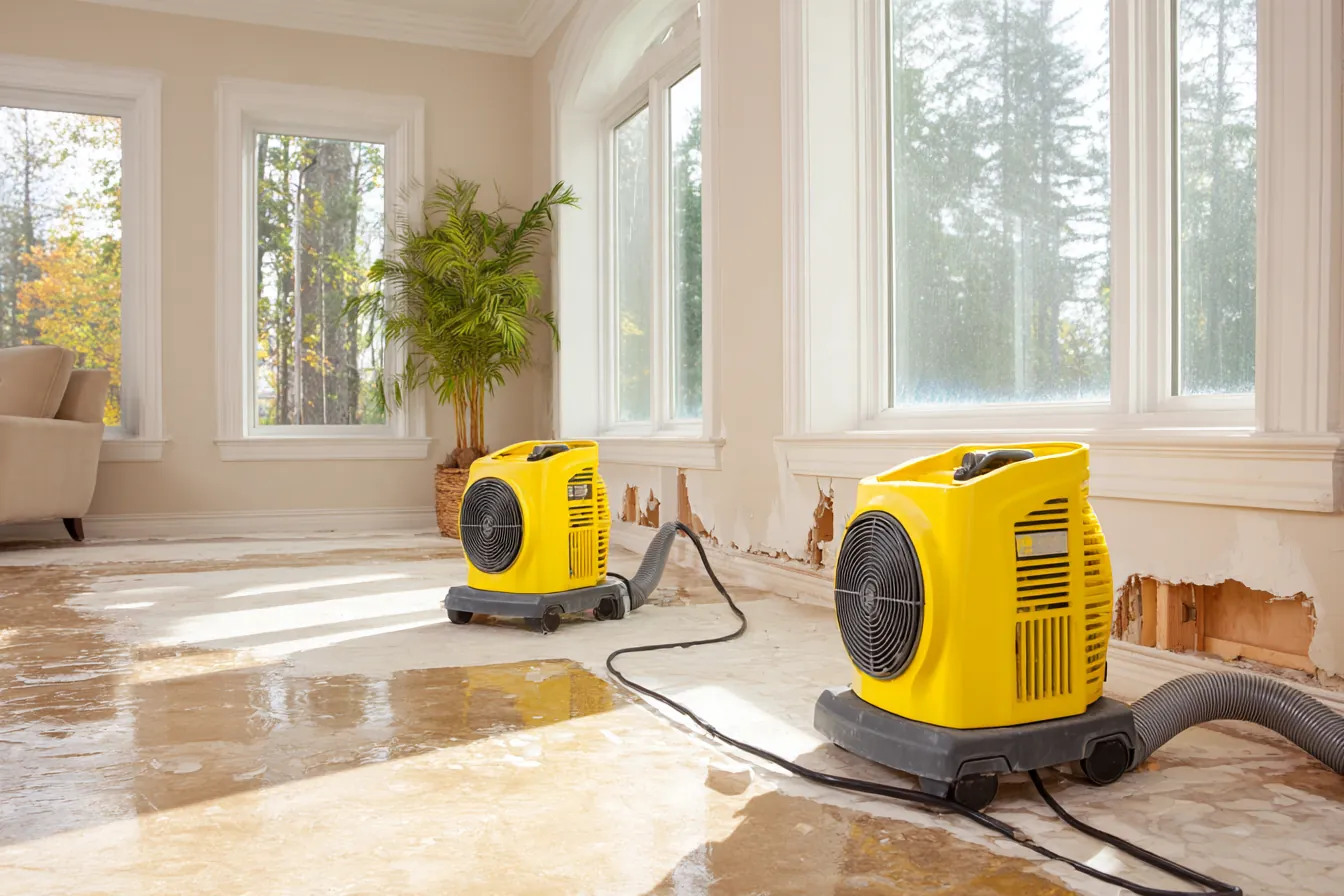
WATER DAMAGE RESTORATION · SEO SERVICES
Water Damage Restoration SEO After Florida Ended Assignment of Benefits
Water damage restoration SEO in Florida was built for a payment model that no longer exists. For years the winning website said "we work directly with your insurance" and put an assignment of benefits in front of the homeowner. Florida closed that door for policies issued from 2023, and the content that wins now is the content that helps a homeowner handle their own claim correctly, at two in the morning, with water on the floor.
 Jamie Kloncz, founder. Does the work himself, from Naples.
★★★★★ 5.0 on GoogleNaples, FloridaMonth to month
In one paragraph
Water damage restoration SEO is the work of making a restoration company the most trusted search and AI answer for an urgent, insurance-adjacent emergency, within the Florida rules on assignment of benefits, contractor advertising and deductibles. SEO Elite Agency builds that for restoration companies across Naples and Southwest Florida, month to month, starting with a free audit.
01 / 10
What Changed When Florida Ended Assignment of Benefits?
For residential and commercial property policies "issued on or after January 1, 2023," a policyholder "may not assign, in whole or in part, any post-loss insurance benefit," and an attempt to do so "is void, invalid, and unenforceable" (Florida Statutes section 627.7152, 2026). The insurance-billing funnel most restoration sites were built around no longer works for those policies.
Start with the law, because it rewrote the business model the trade marketed itself on.
Florida's assignment of benefits statute defines an assignment agreement to include benefits transferred to "a person providing services, including, but not limited to, inspecting, protecting, repairing, restoring, or replacing the property or mitigating against further damage to the property" (Florida Statutes section 627.7152, 2026). Restoration and mitigation are named in the definition. Then the operative subsection: "a policyholder may not assign, in whole or in part, any post-loss insurance benefit under any residential property insurance policy or under any commercial property insurance policy," for policies "issued on or after January 1, 2023," and any attempt "is void, invalid, and unenforceable" (Florida Statutes section 627.7152, 2026).
The older rules still exist for a shrinking set of policies. They apply to policies "issued on or after July 1, 2019, and before January 1, 2023," and include an emergency cap of "the greater of $3,000 or 1 percent of the Coverage A limit" (Florida Statutes section 627.7152, 2026). Note the exact wording. The statute says "issued," while the Department of Financial Services describes contracts "issued or renewed" on or after that date (Florida Department of Financial Services, 2026), so a page that flatly says assignments ended in 2023 is simplifying a rule homeowners will read closely.
For marketing, the consequence is direct. A site whose main conversion path is "sign here and we deal with your insurer" is selling a product the law has taken off the shelf for most current policies. The sites that win now explain how payment works without an assignment, what the homeowner does and what the company does, and they say it plainly on the first screen.
This is a description of the statute, not legal advice. Restoration companies should have their contracts and website language reviewed by a Florida attorney.
Assignment of benefits, by policy date
Can this job still run on an AOB?
Pick the policy date, then what the homeowner is being asked to do. Each answer is the page's own wording.
This is a description of the statute, not legal advice. Restoration companies should have their contracts and website language reviewed by a Florida attorney.
When was the homeowner's property policy issued?
What is the homeowner being asked to do?
Post-loss benefits cannot be assigned on this policy.
“a policyholder may not assign, in whole or in part, any post-loss insurance benefit under any residential property insurance policy or under any commercial property insurance policy”
The state says the homeowner makes that first call.
“Do not allow a third party, such as a water remediation firm or contractor, to contact your insurance company for you”
No AOB is needed to get the home repaired.
“You do not need to sign an AOB in order to get your insurance claim processed or your residence repaired”
The older rules apply, emergency cap included.
“the greater of $3,000 or 1 percent of the Coverage A limit”
Issued or renewed? The two sources word it differently.
“The statute says "issued," while the Department of Financial Services describes contracts "issued or renewed" on or after that date”
02 / 10
Why Florida Tells Homeowners Not to Let a Water Remediation Firm Call Their Insurer
The state is explicit: "Do not allow a third party, such as a water remediation firm or contractor, to contact your insurance company for you. You should be the one to make the first contact with your insurance company" (Florida Department of Financial Services, 2026). A restoration site that coaches homeowners through that first call is aligned with the regulator.
If you run a restoration company in Florida, your customers have been told by the state, in writing, to keep you out of the first insurance call. That is not a reason to hide from the subject. It is the opening for the most useful content in your market.
The Department of Financial Services tells homeowners: "Do not allow a third party, such as a water remediation firm or contractor, to contact your insurance company for you," and adds, "You do not need to sign an AOB in order to get your insurance claim processed or your residence repaired" (Florida Department of Financial Services, 2026). The same page tells them they have a duty to mitigate, including "temporary repairs such as covering the roof or removing standing water," and to "document any existing damage with photographs prior to making any repairs," but "do not make permanent repairs prior to an inspection by the insurance company adjuster" (Florida Department of Financial Services, 2026).
Read those instructions together and they describe exactly what an honest emergency restorer does: stop the water, dry the structure, photograph everything, leave permanent repairs until the adjuster has seen the damage, and let the homeowner own the claim. A page that walks a homeowner through that sequence, in that order, in plain words, is the page the panicked homeowner reads, trusts and calls from.
It also matches what an AI assistant is likely to say when asked what to do after a pipe bursts in Florida, because the assistant is drawing on the same public guidance. Being the clear, local version of that answer is the strongest position available in this category.
03 / 10
What a Restoration Website Can and Cannot Say About Insurance
Florida bars contractors from "interpreting policy provisions or advising an insured regarding coverages or duties under the insured's property insurance policy" unless they are licensed public adjusters, and allows fines of "up to a $10,000 fine for each violation" (Florida Statutes section 489.147, 2026). Coverage advice belongs nowhere in your marketing.
National restoration SEO guides routinely recommend an FAQ entry like "do you bill insurance directly?" and content "answering insurance questions." In Florida, that advice needs a legal filter before it goes anywhere near a website.
Section 489.147 prohibits "interpreting policy provisions or advising an insured regarding coverages or duties under the insured's property insurance policy or adjusting a property insurance claim on behalf of the insured, unless the contractor holds a license as a public adjuster" (Florida Statutes section 489.147, 2026). It also prohibits offering or accepting "any compensation, inducement, or reward, for the referral of any services for which property insurance proceeds are payable," and providing a repair agreement "without providing a good faith estimate of the itemized and detailed cost of services and materials" (Florida Statutes section 489.147, 2026). The statute adds that "an unlicensed person who engages in an act prohibited by this section is guilty of unlicensed contracting" (Florida Statutes section 489.147, 2026).
The deductible is its own line, and it is criminal. A contractor "may not knowingly or willfully and with intent to injure, defraud, or deceive, pay, waive, or rebate all or part of an insurance deductible," and a violation is "a third degree felony" (Florida Statutes section 817.234, 2026). Any ad, landing page or sales script that implies "we cover your deductible" should be removed before any SEO work begins.
What a contractor may do is spelled out too: suggest "that the consumer consider contacting his or her insurer to determine if the proposed repair is covered," and "discuss or explain a bid for construction or repair of covered property" (Florida Statutes section 626.854, 2026). That is enough to build honest, useful insurance-adjacent content: what to tell your carrier, what documents you will provide, what an itemized estimate from you will contain. We review every page against these lines before we publish anything for a restoration client. How these statutes apply to a particular company is a question for its attorney.
04 / 10
How Long Does a Florida Insurer Have to Respond? Publish the Timeline
Florida law sets the clock: an insurer must acknowledge a claim communication "within 7 calendar days," conduct any physical inspection "within 30 days after its receipt of the proof-of-loss statements," and "pay or deny such claim or a portion of the claim" within 60 days of notice (Florida Statutes section 627.70131, 2026). Homeowners search for exactly this.
After the water is out, the homeowner's next question is how long the insurance side will take. Most restoration sites leave it unanswered, which sends that homeowner to a law firm's page or a forum.
The statute answers it. On receiving a communication about a claim, the insurer "shall, within 7 calendar days, review and acknowledge receipt of such communication" (Florida Statutes section 627.70131, 2026). Within 7 days after receiving proof-of-loss statements, the insurer "shall begin such investigation as is reasonably necessary," and "an insurer must conduct any such physical inspection within 30 days after its receipt of the proof-of-loss statements" (Florida Statutes section 627.70131, 2026). The insurer "must send the policyholder a copy of any detailed estimate of the amount of the loss within 7 days after the estimate is generated" (Florida Statutes section 627.70131, 2026).
The pay-or-deny deadline is the one homeowners care about most: "Within 60 days after an insurer receives notice of an initial, reopened, or supplemental property insurance claim from a policyholder, the insurer shall pay or deny such claim or a portion of the claim," unless the delay is caused by factors beyond its control (Florida Statutes section 627.70131, 2026).
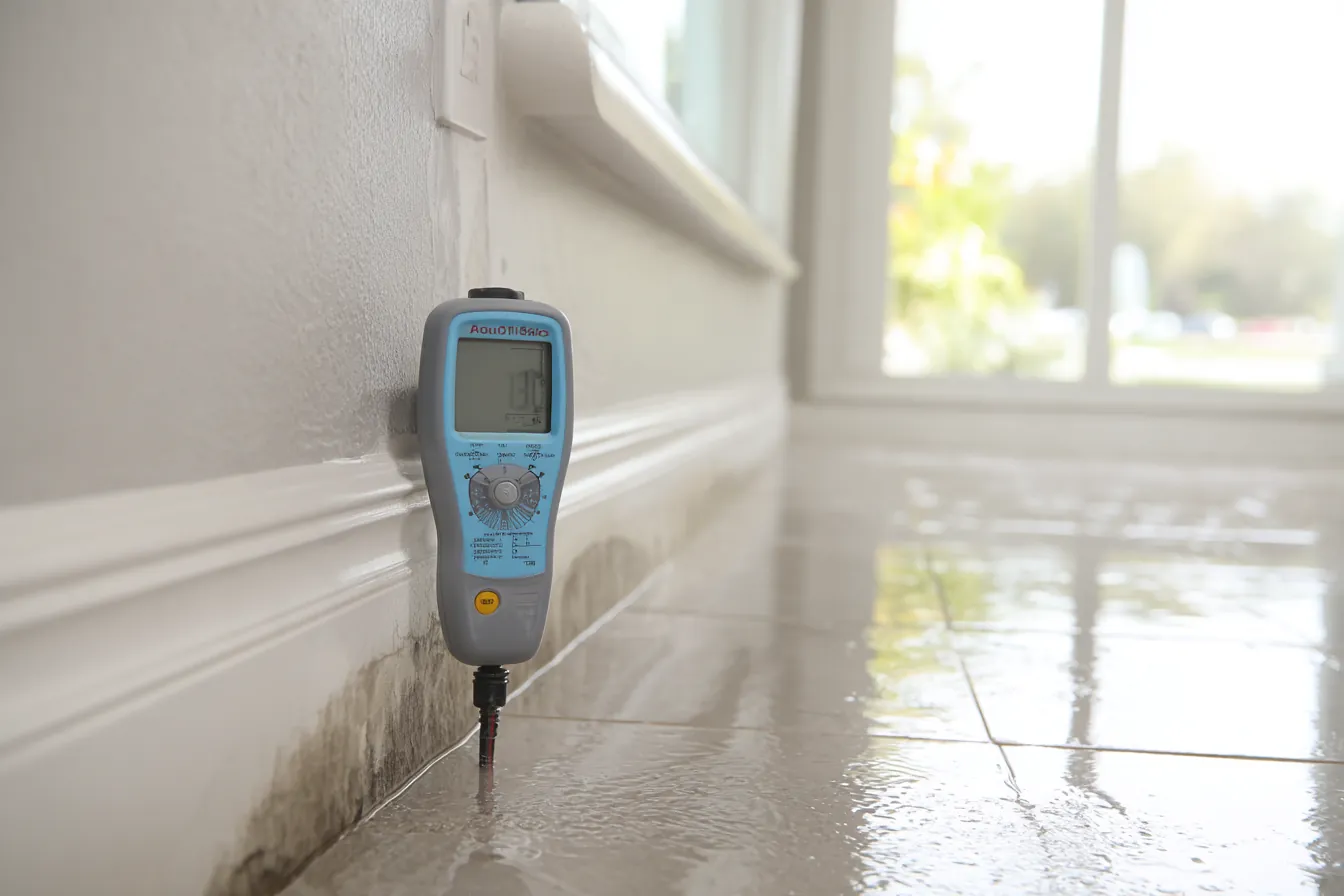
Publish this as a plain timeline with the statute named, and pair it with what your company does at each step: the moisture readings, photographs and itemized estimate the homeowner will need. That stays on the right side of the coverage-advice line, because it explains a public statute and your own documentation, not the homeowner's policy.
The claim clock, by statute
What the homeowner is waiting for.
Days the insurer has, under Florida law. Florida Statutes section 627.70131, 2026 edition, read October 15, 2026.
- “unless the delay is caused by factors beyond its control”
- “Publish this as a plain timeline with the statute named, and pair it with what your company does at each step”
- “That stays on the right side of the coverage-advice line, because it explains a public statute and your own documentation, not the homeowner's policy.”
05 / 10
Category 3 Does Not Mean Every Hurricane Leak
The IICRC S500 Consensus Body said in February 2026 that "top-down water ingress, wind-driven rain and water from weather related events are not automatically considered Category 3 Water" (IICRC, 2026). Restorers who explain water categories honestly, instead of defaulting to the most expensive one, earn trust in a storm market.
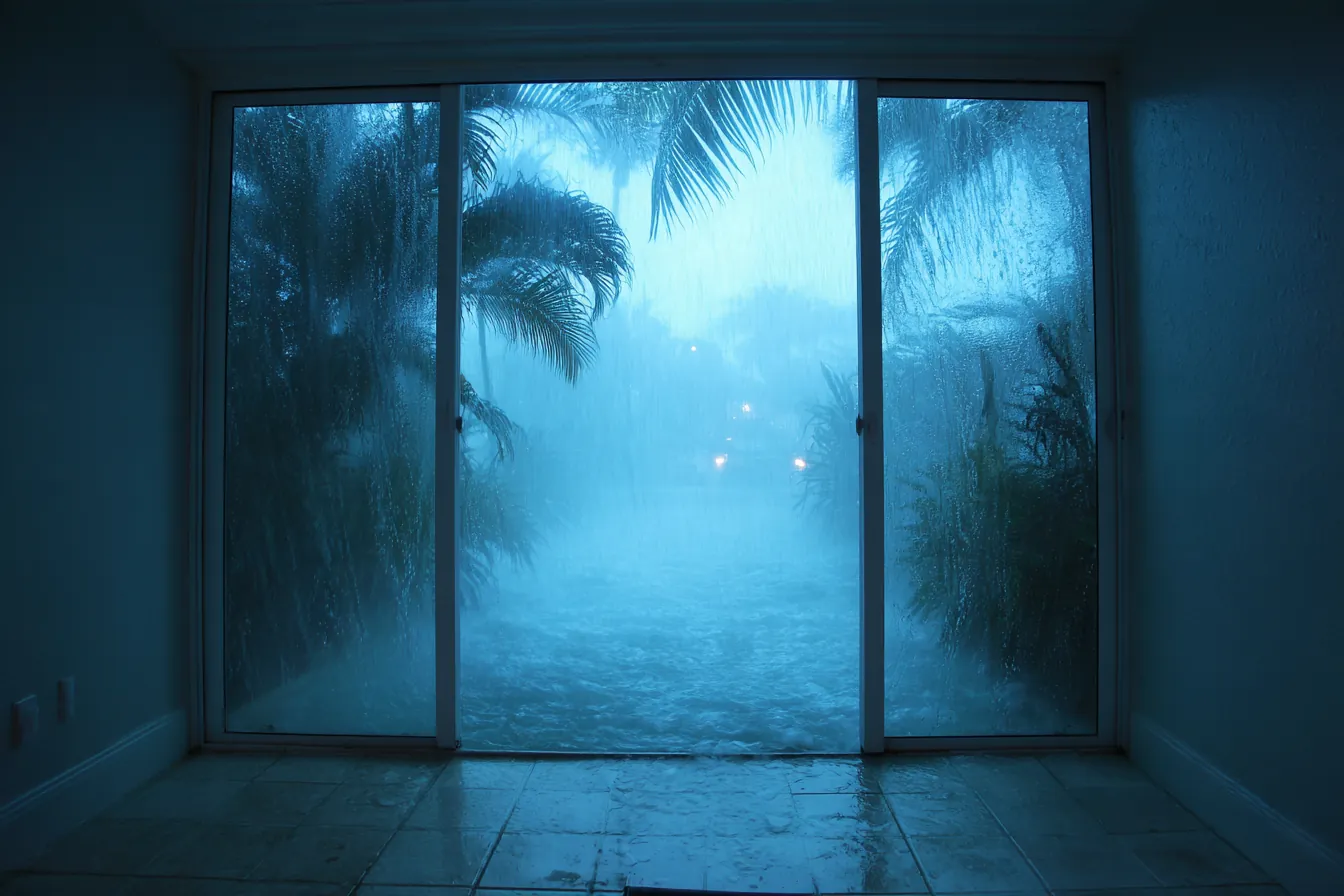
Southwest Florida restoration is storm restoration a large part of the year, and the water category conversation follows every storm.
The ANSI/IICRC S500 standard describes "the procedures to be followed and the precautions to be taken when performing water damage restoration in residential, commercial, and institutional buildings" (IICRC, 2026). It defines Category 3 water as "grossly contaminated" and lists examples including "sewage," "all forms of flooding from seawater" and "rising water from rivers or streams" (IICRC, 2026). It also assumes that "the determination and correction of the underlying source or cause of the water intrusion" is the property owner's responsibility, not the restorer's (IICRC, 2026).
The 2026 position statement matters for hurricane country because it heads off a common overreach: wind-driven rain and weather-related water "are not automatically considered Category 3 Water" (IICRC, 2026). The category has to be determined, not assumed.
That gives a careful restorer a content advantage. A page that explains what each category means for the job, how the determination is made on site, and why a storm leak is not automatically treated as sewage is a page an adjuster, a property manager and a homeowner can all respect. It also protects the company from the reputation that follows inflated categories. We write those pages from the standard's own language, and we cite the edition, because the S500 Consensus Body has said it has begun work on a revision (IICRC, 2026).
06 / 10
Flood Is a Different Policy, and Your Pages Should Say So
FEMA's flood program states that "most homeowners insurance does not cover flood damage" and that flood coverage "will go into effect 30 days after your date of purchase," with four exceptions (FEMA FloodSmart, 2026). In Collier and Lee, where flood and water damage arrive together, the distinction is the first thing a restoration page should explain.
A homeowner standing in water after a storm does not know whether they have a water damage claim or a flood claim. Your website can tell them how the two differ before they call anyone.
The National Flood Insurance Program says plainly: "Most homeowners insurance does not cover flood damage. Only flood insurance covers the cost of rebuilding after a flood" (FEMA FloodSmart, 2026). It defines a flood as "an excess of water on land that is normally dry, affecting two or more acres of land or two or more properties" (FEMA FloodSmart, 2026). Coverage "will go into effect 30 days after your date of purchase" unless an exception applies, and building policies "cover up to $250,000 of flood damage and contents policies cover up to $100,000" (FEMA FloodSmart, 2026).
The counties add local detail. Collier County's March 2026 floodplain newsletter says "large portions of Collier County are in a high-risk flood zone," that the county "maintains a Class 5 CRS rating" earning eligible policies "a 25% discount to the flood insurance premium," and that its flood maps "became effective on 02/08/2024" (Collier County, 2026). Lee County states that "permits are required for any repairs or renovations to structures in the Special Flood Hazard Area" (Lee County, 2026).
Restorers working the rebuild phase also meet the substantial damage rule. Collier's newsletter describes it as requiring a structure "to be brought into compliance with the current elevation requirements" when repair costs reach 50 percent of the building's market value (Collier County, 2026). We cover how that rule plays out for roofers in our Fort Myers guide to the substantial damage rule; restorers should explain it in their own words for their own jobs.
Collier and Lee, rule by rule
Same storm. Local flood rules.
01 / 06 · Collier and Lee
“In Collier and Lee, where flood and water damage arrive together, the distinction is the first thing a restoration page should explain.”
Flood and water damage arrive together here, so the page leads with the difference.
02 / 06 · Collier County
“large portions of Collier County are in a high-risk flood zone”
Large parts of the county sit in a high-risk flood zone.
03 / 06 · Collier County, Class 5 CRS
“a 25% discount to the flood insurance premium”
The county's Class 5 CRS rating earns eligible policies that discount.
04 / 06 · The substantial damage rule
“to be brought into compliance with the current elevation requirements”
Once repairs reach 50 percent of market value, the structure must meet current elevation rules.
05 / 06 · Lee County
“permits are required for any repairs or renovations to structures in the Special Flood Hazard Area”
In the flood hazard area, any repair or renovation needs a permit.
06 / 06 · Every city page
“should name the local building department that actually issues the permit”
Each city page names the department that issues the permit there.
County lines: US Census Bureau.
07 / 10
Drying and Rebuilding Are Different Jobs, With Different Credentials
Florida defines a contractor as one who, for pay, will "construct, repair, alter, remodel, add to, demolish, subtract from, or improve any building or structure" (Florida Statutes section 489.105, 2026). The rebuild side of restoration fits that description; the state's own consumer guidance says to verify a vendor's license "if one is required."
Restoration has two halves, and the credentials question splits along the same line.
Florida's contractor definition reaches anyone who, for compensation, will "construct, repair, alter, remodel, add to, demolish, subtract from, or improve any building or structure" (Florida Statutes section 489.105, 2026). The licensed categories in that section cover general, building, residential and the specialty trades; none is named for water extraction or drying. The Department of Financial Services phrases its own advice carefully: "Verify the license (if one is required) of any contractor or vendor that you hire to make repairs to your property" (Florida Department of Financial Services, 2026). We do not tell restorers which license their drying work needs, because the primary sources do not say, and neither should your website.
What the sources do say is useful. The exemption for small jobs under $2,500 "does not apply" to "a person who advertises that he or she is a contractor or otherwise represents that he or she is qualified to engage in contracting" (Florida Statutes section 489.103, 2026). The construction licensing board adds that "typically, work requiring a permit is not of a casual, minor, or inconsequential nature" (Florida Department of Business and Professional Regulation, 2026).
So build two sets of pages. Emergency mitigation pages describe extraction, drying, monitoring and documentation, with the technician certifications you hold. Rebuild pages describe drywall, flooring and cabinetry work and show the contractor license that covers it, with the number, consistently, everywhere. A homeowner who sees both clearly separated understands what they are buying at each stage, which is the confusion that most often turns into a complaint.
Drying out, zone by zone
Water out, documented, then rebuilt.
01 / 05 · The funnel that stopped working
“The insurance-billing funnel most restoration sites were built around no longer works for those policies.”
02 / 05 · The duty to mitigate
“temporary repairs such as covering the roof or removing standing water”
03 / 05 · Mitigation: extract, dry, document
“Emergency mitigation pages describe extraction, drying, monitoring and documentation, with the technician certifications you hold.”
04 / 05 · The homeowner owns the claim
“the homeowner contacts their carrier first, you document everything and provide an itemized estimate, and you do not interpret their policy”
05 / 05 · The whole sequence, in order
“stop the water, dry the structure, photograph everything, leave permanent repairs until the adjuster has seen the damage, and let the homeowner own the claim”
08 / 10
One of the Most Expensive Clicks in the Trades, and What That Means for Your Site
In Google Keyword Planner for the Ft. Myers-Naples market, "water damage restoration" averaged 210 searches a month with a top-of-page bid range of $15.00 to $87.26, against $60.00 for "impact windows" and $31.98 for "hurricane shutters" in the same read on October 15, 2026, and searches were up 51 percent year over year (Google Keyword Planner, 2026).
The economics of this trade explain why search position matters so much in it.
We measured the Ft. Myers-Naples market in Google Keyword Planner on October 15, 2026. "Water damage restoration" averaged 210 searches a month, rose 181 percent over the most recent three months and 51 percent year over year, and carried a top-of-page bid range of $15.00 to $87.26 (Google Keyword Planner, 2026). Among the home-trade terms whose bids we recorded that day, only "garage door repair" carried a higher top-of-page bid, at $91.00 (Google Keyword Planner, 2026).
When the market prices a single click that high, every organic and map position you earn is worth real money each month, and every month you rent the position instead costs real money. That is the business case for search in this trade, and it is why a restorer's site should be built to win the urgent query on its own merits.
The search results show who you are up against. When we searched "water damage restoration naples fl" on October 15, 2026, the first organic results were held largely by multi-location brands, including SERVPRO, Paul Davis, COIT and 911 Restoration, alongside a Yelp list. An independent restorer will not outspend those brands. It can out-explain them, with Florida-specific pages on the claim timeline, water categories, flood versus water damage and what happens in the first hour, and it can out-review them locally through a steady review habit and a well-kept Business Profile.
09 / 10
What Happens in the First Hour: The Page That Converts at 2 A.M.
The emergency page should mirror the state's own sequence: stop the water and mitigate, photograph the damage, make no permanent repairs before the adjuster inspects, and let the homeowner contact their insurer first (Florida Department of Financial Services, 2026). Speed and clarity convert; insurance promises do not.
Every restoration company has an emergency page. Few are written for the person actually reading it.
That reader is on a phone, often at night, often with water still moving. They want to know three things fast: whether you can come now, what to do until you arrive, and whether calling you will cause problems with their insurance. A page that answers those questions in that order, in short sentences, converts better than any banner.
The content of the section on what to do until the crew arrives can follow the state's guidance almost line by line, because it is the right advice: take "temporary repairs such as covering the roof or removing standing water," photograph the damage "prior to making any repairs," and do not make "permanent repairs prior to an inspection by the insurance company adjuster" (Florida Department of Financial Services, 2026). Add the practical items a technician would tell them, such as shutting off the water supply and moving valuables, in your own words.
Then make the insurance section short and true: the homeowner contacts their carrier first, you document everything and provide an itemized estimate, and you do not interpret their policy. That is reassuring precisely because it is not a sales pitch. It also tells an AI assistant, which is summarizing your page for someone in the same situation, exactly what kind of company you are.
ChatGPT
Can a water damage company bill my insurance directly in Florida?
Not through an assignment of benefits on most current policies. For residential and commercial property policies issued on or after January 1, 2023, Florida provides that a policyholder "may not assign, in whole or in part, any post-loss insurance benefit" (Florida Statutes section 627.7152, 2026). You keep control of your claim, and the restorer provides documentation and an itemized estimate. This is not legal advice.
Google AI Mode
Should I let the restoration company call my insurer?
Florida's Department of Financial Services advises against it: "Do not allow a third party, such as a water remediation firm or contractor, to contact your insurance company for you" (Florida Department of Financial Services, 2026). You make the first contact. A reputable restorer will still document the damage, take moisture readings and give you the paperwork your carrier asks for.
Perplexity
Will a restoration company cover my deductible?
It should not, and in Florida it is a crime. A contractor may not knowingly pay, waive or rebate all or part of an insurance deductible with intent to defraud, and doing so is "a third degree felony" (Florida Statutes section 817.234, 2026). Treat an offer to cover your deductible as a reason to look elsewhere.
Gemini
Does homeowners insurance cover flood damage?
Usually not. FEMA's flood program says "most homeowners insurance does not cover flood damage" and only flood insurance covers rebuilding after a flood, with coverage starting 30 days after purchase unless an exception applies (FEMA FloodSmart, 2026). Check which policy applies before work begins, because the claim path differs.
Copilot
Is storm water always Category 3?
No. The IICRC S500 Consensus Body said in 2026 that wind-driven rain and water from weather-related events "are not automatically considered Category 3 Water" (IICRC, 2026). The category is determined on site from the source and contamination, and it decides how the job is handled.
Claude
How long does an insurer have to pay or deny a water damage claim in Florida?
Generally 60 days. Florida requires an insurer to "pay or deny such claim or a portion of the claim" within 60 days after receiving notice, unless factors beyond its control cause the delay, and to conduct any physical inspection within 30 days of receiving proof-of-loss statements (Florida Statutes section 627.70131, 2026).
The answer an engine can quote is the one on your page. These answers are this page’s own.
Claim questions asked of AI
Direct billing, deductibles and Category 3.
01 / 06 · Asked in ChatGPT
“Can a water damage company bill my insurance directly in Florida?”
Reads fromOpenAI’s own search crawler, OAI-SearchBot. OpenAI says it is the bot used to surface websites in ChatGPT’s search answers.
02 / 06 · Asked in Google AI Mode
“Should I let the restoration company call my insurer?”
Reads fromThe Google Search index, plus your Google Business Profile.
03 / 06 · Asked in Perplexity
“Will a restoration company cover my deductible?”
Reads fromIts own index, built by PerplexityBot.
04 / 06 · Asked in Gemini
“Does homeowners insurance cover flood damage?”
Reads fromGoogle’s index, with one extra switch: Google-Extended.
05 / 06 · Asked in Copilot
“Is storm water always Category 3?”
Reads fromThe Bing index.
06 / 06 · Asked in Claude
“How long does an insurer have to pay or deny a water damage claim in Florida?”
Reads fromAnthropic’s Claude-SearchBot, and Brave Search.
10 / 10
What to Build First: Water Damage Restoration SEO in Naples and Fort Myers
Start with a compliance pass on insurance and deductible language, then the emergency page, the claim timeline, the water category explainer and the flood versus water damage page. Separate mitigation from rebuild, and run the Business Profile and reviews as their own track.
A concrete order of work for a Southwest Florida restoration company.
First
the compliance pass: remove any assignment-of-benefits funnel for current policies, any coverage advice, any deductible language and any referral incentive, and replace them with honest process content.
Second
the first-hour emergency page described above.
Third
the claim timeline page built on section 627.70131 and the water category page built on the IICRC standard.
Fourth
the flood versus water damage page with the NFIP and county facts, and separate mitigation and rebuild pages with the right credentials on each.
Fifth
the map pack. Emergency restoration is won partly on proximity and responsiveness, so service areas should reflect where crews actually respond, and photographs should show real equipment on real jobs. Our Local Services Ads management fits this trade's pay-per-lead, emergency profile well, alongside organic work.
Then
the places. Pages for unincorporated Lee County near Fort Myers and Cape Coral can cite the county's flood-zone permit rule, pages around Naples can speak to Collier's floodplain program, and every city page, Bonita Springs included, should name the local building department that actually issues the permit. A page about a place should contain things only a crew that works there would write.
If you would rather have this built and maintained than written between emergencies, that is what we do, month to month, from Naples.
Estimate it
What might SEO cost and take for you?
Three questions, an honest range. This uses real Southwest Florida market rates and observed timelines, not a canned package price. It is an estimate to orient you, never a quote. The real number comes from a free audit of your actual site.
1 · HOW COMPETITIVE IS YOUR MARKET?
2 · WHERE IS YOUR SITE TODAY?
3 · WHAT ARE YOU AFTER?
ILLUSTRATIVE ESTIMATE
TYPICAL MONTHLY INVESTMENT
$1,700 – $3,100
/ month · month-to-month
TIME TO MEANINGFUL RESULTS
3 – 6 months
map pack movement, then attributed leads
Estimate from Southwest Florida market rates. Not a quote. Your audit sets the actual scope and price.
Watch it work
Turn on what makes AI recommend you.
AI recommends the businesses it can read, trust and quote. Flip on the four signals we engineer, and watch your visibility climb and the answer rewrite itself.
THE FOUR SIGNALS WE ENGINEER
Illustrative · the four signals are the real system we build
Real results
Said by the people who hired us.
5.06 reviews on Google
Read them on Google (opens in a new tab)-
★★★★★
I met Jamie a few years ago and have worked with him a lot. When we made the decision to rebrand and focus on our new commercial pressure washing business, we decided to go with Jamie at SEO Elite Agency and he has been outstanding! If you’re looking to scale your business by using all of the new Google Analytics tools and services, Jamie is the best at helping your customers find your business. You have to be known before there is a need and he will make sure you stand out in a crowded market.
Zachary GeraciGoogle review -
★★★★★
I recently hired SEO Elite Agency in Naples, FL, and I couldn't be happier with the results! From the initial consultation to the implementation of their strategies, Jamie was professional, knowledgeable, and genuinely invested in my success.
He took the time to understand my business goals and tailored their approach to meet my specific needs. Since working with him, I've seen a significant increase in my website's rankings and traffic. His communication was excellent, keeping me updated throughout the entire process.
Nicole BilliotGoogle review -
★★★★★
I had an excellent experience with SEO Elite Agency! After working with Jamie for only a short time, my website's traffic increased noticeably. Their transparent reporting and regular updates kept me in the loop every step of the way. I highly recommend using them if you are looking to boost your online presence.
David PattockGoogle review -
★★★★★
SEO Elite did not disappoint! Jamie really took the time to listen to my goals and implement them. He was very knowledgeable about SEO and was able to teach me how it works, which I really liked. Because of Jamie, I am ranking on google and getting more business! I could not recommend him enough!
Lauren SmallGoogle review -
★★★★★
Jamie is amazing! Within two weeks my business was ranked #1 organically and top 3 in the map pack. We’re really pleased with the results, highly recommended.
Genaro VasquezGoogle review -
★★★★★
Jamie is fantastic to work with and really boosted my website and SEO traffic. I highly recommend working with him!
Robin GrayGoogle review
Questions
What water damage restoration and mitigation companies ask us first.
Jamie Kloncz · SEO Elite Agency, Naples
Not through an assignment of benefits on most current policies. For residential and commercial property policies issued on or after January 1, 2023, Florida provides that a policyholder "may not assign, in whole or in part, any post-loss insurance benefit" (Florida Statutes section 627.7152, 2026). You keep control of your claim, and the restorer provides documentation and an itemized estimate. This is not legal advice.
Jamie Kloncz · SEO Elite Agency, Naples
Florida's Department of Financial Services advises against it: "Do not allow a third party, such as a water remediation firm or contractor, to contact your insurance company for you" (Florida Department of Financial Services, 2026). You make the first contact. A reputable restorer will still document the damage, take moisture readings and give you the paperwork your carrier asks for.
Jamie Kloncz · SEO Elite Agency, Naples
It should not, and in Florida it is a crime. A contractor may not knowingly pay, waive or rebate all or part of an insurance deductible with intent to defraud, and doing so is "a third degree felony" (Florida Statutes section 817.234, 2026). Treat an offer to cover your deductible as a reason to look elsewhere.
Jamie Kloncz · SEO Elite Agency, Naples
Usually not. FEMA's flood program says "most homeowners insurance does not cover flood damage" and only flood insurance covers rebuilding after a flood, with coverage starting 30 days after purchase unless an exception applies (FEMA FloodSmart, 2026). Check which policy applies before work begins, because the claim path differs.
Jamie Kloncz · SEO Elite Agency, Naples
No. The IICRC S500 Consensus Body said in 2026 that wind-driven rain and water from weather-related events "are not automatically considered Category 3 Water" (IICRC, 2026). The category is determined on site from the source and contamination, and it decides how the job is handled.
Jamie Kloncz · SEO Elite Agency, Naples
Generally 60 days. Florida requires an insurer to "pay or deny such claim or a portion of the claim" within 60 days after receiving notice, unless factors beyond its control cause the delay, and to conduct any physical inspection within 30 days of receiving proof-of-loss statements (Florida Statutes section 627.70131, 2026).
Jamie Kloncz · SEO Elite Agency, Naples
No. SEO Elite Agency works month-to-month from our Naples office at 1950 Mayfair Street, Suite 313. Long contracts protect agencies from their own results, and we would rather earn the next month. Reach us at (843) 955-7727 or [email protected].
Sources
- Florida Statutes section 627.7152: 2026 edition, read October 15 2026 - definition of assignment agreement naming restoring and mitigating; post-loss benefits under policies issued on or after January 1 2023 may not be assigned and any attempt is void; older rules for policies issued July 1 2019 to December 31 2022 including the emergency cap
- Florida Department of Financial Services: Assignment of Benefits consumer page and Contractors and Residential Property FAQs, read October 15 2026 - do not allow a water remediation firm to contact your insurer; duty to mitigate; photograph damage; no permanent repairs before the adjuster inspects; contracts issued or renewed on or after January 1 2023; verify the license if one is required
- Florida Statutes section 489.147: 2026 edition, read October 15 2026 - prohibited property insurance practices: referral compensation, interpreting policy provisions, repair agreements without an itemized estimate; fines up to $10,000 per violation; unlicensed persons guilty of unlicensed contracting
- Florida Statutes section 817.234: 2026 edition, read October 15 2026 - a contractor may not pay, waive or rebate an insurance deductible; third degree felony
- Florida Statutes section 626.854: 2026 edition, read October 15 2026 - licensed contractors may not perform public adjuster services but may suggest the consumer contact the insurer and may discuss or explain a bid
- Florida Statutes section 627.70131: 2026 edition, read October 15 2026 - acknowledge within 7 calendar days, begin investigation within 7 days of proof of loss, physical inspection within 30 days, estimate copy within 7 days, pay or deny within 60 days
- IICRC: S500 standard page and the S500 Consensus Body position statement on Category of Water Damage and Weather-related Events (February 10 2026), read October 15 2026 - scope of S500, Category 3 definition, weather-related water not automatically Category 3, revision underway
- FEMA FloodSmart: National Flood Insurance Program pages, read October 15 2026 - most homeowners insurance does not cover flood; definition of flood; 30-day waiting period with four exceptions; building coverage up to $250,000 and contents up to $100,000
- Collier County: March 2026 Floodplain protection newsletter, read October 15 2026 - large portions in a high-risk flood zone, Class 5 CRS rating and 25% discount, DFIRM effective 02/08/2024, the 50 percent rule
- Lee County: Flood information, read October 15 2026 - permits are required for any repairs or renovations to structures in the Special Flood Hazard Area
- Florida Statutes section 489.105: 2026 edition, read October 15 2026 - definition of contractor
- Florida Statutes section 489.103: 2026 edition, read October 15 2026 - the minor work exemption under $2,500 does not apply to a person who advertises as a contractor
- Florida Department of Business and Professional Regulation: Construction Industry Licensing FAQs, read October 15 2026 - work requiring a permit is typically not casual, minor or inconsequential
- Google Keyword Planner: Ft. Myers-Naples FL DMA, October 2025 to September 2026, read by SEO Elite Agency October 15 2026 - water damage restoration 210 average monthly searches, +181% three-month change, +51% year over year, top-of-page bid $15.00 to $87.26; impact windows high bid $60.00, hurricane shutters $31.98, garage door repair $91.00
Keep reading
Written by Jamie Kloncz, founderSEO Elite Agency, Naples FL. Last updated .
Start with the audit.
About 60 seconds, no email, and you get named findings for your own site, not a score out of a hundred.