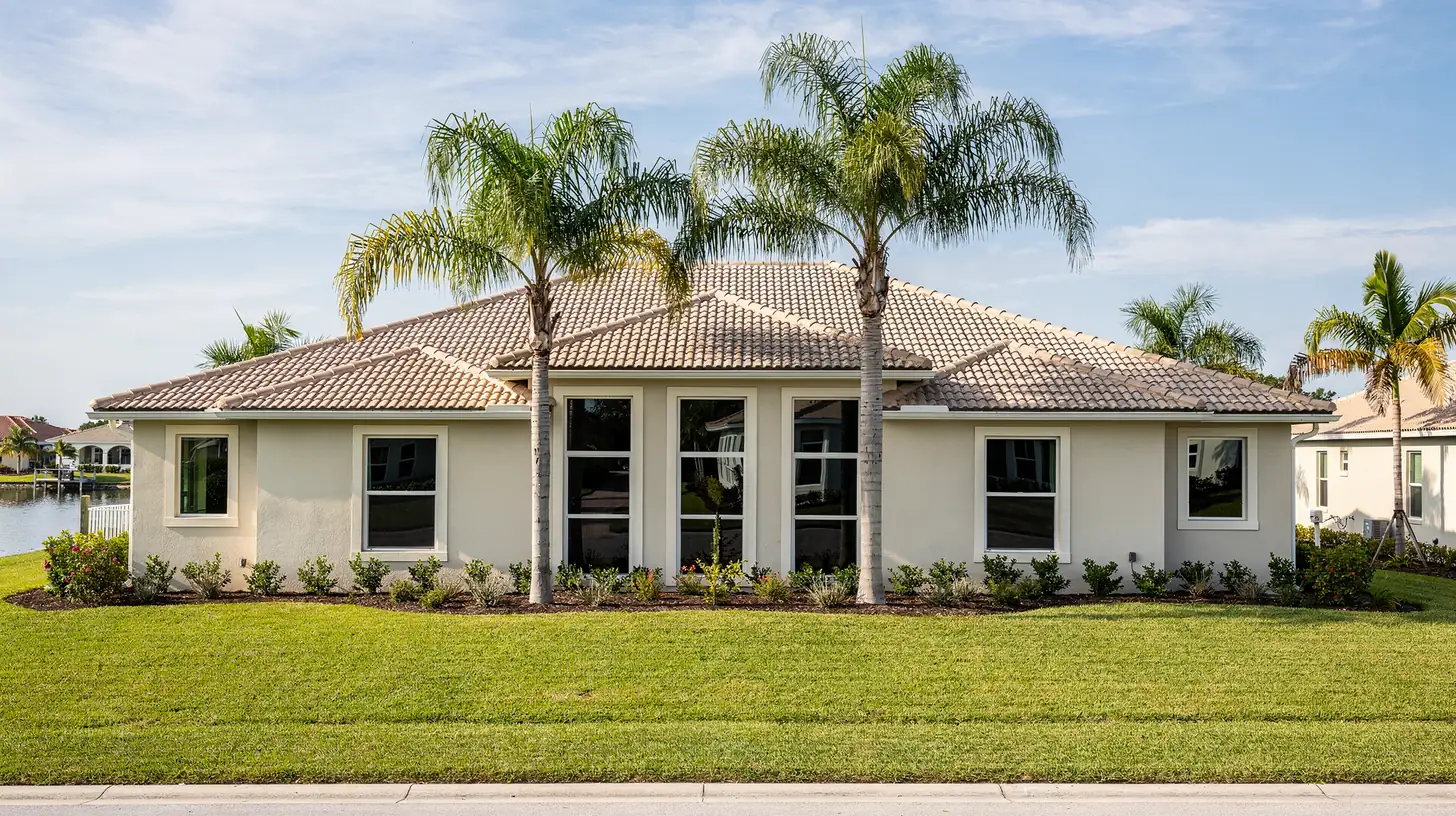
The Naples Homes Citizens Cannot Insure Are Your Best Clients
Every Florida homeowner has heard of Citizens, the state-created insurer that is supposed to be there when the private market is not. Far fewer know that the statute creating it also sets limits on which homes it will cover at all. Some limits turn on what the house would cost to rebuild, some on its windows and doors, and some on how close it sits to the Gulf. The owners of homes that run into those limits are the clients an independent agency should most want to reach.
The state insurer of last resort has a ceiling. Owners of homes above it need somebody who knows the private market.
In one paragraph
Insurance agency SEO in Naples means ranking for the eligibility, coverage and property questions high-value homeowners research when Citizens is not an option, built around the published Florida rules that decide which homes the state insurer can and cannot cover.
01 / 06
The Insurer of Last Resort Has a Ceiling
Florida provides that, effective January 1, 2017, a structure with a dwelling replacement cost of $700,000 or more, or a single condominium unit with a combined dwelling and contents replacement cost of $700,000 or more, is not eligible for coverage by Citizens (Florida Statutes section 627.351, 2025). The fallback most homeowners assume they have does not exist above that line.
Start with the rule most homeowners have never read, because it reshapes the whole local market.
Florida provides that, effective January 1, 2017, a structure that has a dwelling replacement cost of $700,000 or more, or a single condominium unit that has a combined dwelling and contents replacement cost of $700,000 or more, is not eligible for coverage by the corporation, meaning Citizens (Florida Statutes section 627.351, 2025).
There is an exception. The limit does not apply in counties where the state insurance regulator determines there is not a reasonable degree of competition, and in those counties a structure or condominium unit with a replacement cost of less than $1 million is eligible (Florida Statutes section 627.351, 2025). Which counties that covers at any moment is a regulatory determination, and this page makes no claim about any particular county.
The practical meaning is simple and underappreciated. Above the line, Citizens is not a safety net for that home. The owner is dealing with the private market whether they like it or not, and the private market for high-value coastal property in Southwest Florida is exactly where an experienced independent agent earns their commission.
That is a very specific audience with a very specific problem. It is also, commercially, the most valuable book of business in the region, and almost no agency website speaks to it directly.
A necessary caution before going further. This page describes published statute. It is not insurance or legal advice, eligibility for any particular home is decided by Citizens and by the insurer, and the statute is amended often. Treat everything here as the start of a conversation with a licensed agent.
02 / 06
Replacement Cost Is Not What the House Is Worth
The limit is written in terms of dwelling replacement cost, which is what it would cost to rebuild the structure, not what the home would sell for (Florida Statutes section 627.351, 2025). Owners routinely confuse the two, and that confusion is one of the most useful things an agency can clear up in public.
The word that matters in the statute is replacement. The limit is expressed as a dwelling replacement cost, and for a condominium unit as a combined dwelling and contents replacement cost (Florida Statutes section 627.351, 2025).
Replacement cost is what it would take to rebuild the structure after a total loss. It is not the price the home would fetch on the market, which in Naples is heavily driven by land, location and water access. A modest house on an extraordinary lot can sell for far more than it would cost to rebuild. A large, custom-built home on an ordinary lot can cost more to rebuild than an owner expects.
Owners get this wrong in both directions. Some assume their home must be over the limit because of what neighbors sold for. Others assume they are safely under it because they bought years ago at a lower price, while the cost of rebuilding to current code has moved on. Neither assumption answers the question, and the gap between them is precisely what a homeowner goes looking for online.
An agency page that explains replacement cost plainly, says why it differs from market value, and describes how it is actually estimated during underwriting is answering a question the homeowner cannot easily answer anywhere else. It is also the natural lead-in to a conversation about whether their current coverage is adequate at all, which is a conversation worth having whatever the answer turns out to be.
03 / 06
Two More Doors That Close: Openings and the Coastline
A residential structure in the wind-borne debris region with an insured value of $750,000 or more is not eligible for Citizens unless it has opening protections as required by the Florida Building Code for new construction there, and major structures newly built or substantially enlarged seaward of the coastal construction control line are also ineligible (Florida Statutes section 627.351, 2025).
The replacement cost ceiling is not the only rule that matters here, and the other two land hardest on exactly the homes Naples is known for.
Florida provides that, effective January 1, 2009, a personal lines residential structure located in the wind-borne debris region with an insured value on the structure of $750,000 or more is not eligible for Citizens coverage unless it has opening protections as required under the Florida Building Code for a newly constructed residential structure in that area (Florida Statutes section 627.351, 2025).
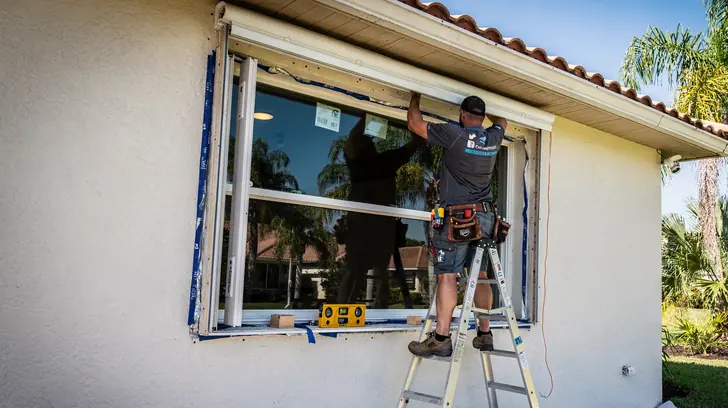
Opening protections means the windows and doors, which ties this directly to the impact glass and shutter decisions homeowners are already researching. We covered the insurance side of those products, and why they matter to the premium, in the three questions impact window buyers ask. An agency and an openings contractor are, in effect, answering two halves of the same homeowner question.
The coastline rule is sharper still. A major structure that is newly constructed, or rebuilt, repaired, restored or remodeled to increase its total finished area by more than 25 percent under a permit applied for after July 1, 2015, is not eligible for Citizens if it sits seaward of the coastal construction control line or within the Coastal Barrier Resources System (Florida Statutes section 627.351, 2025).
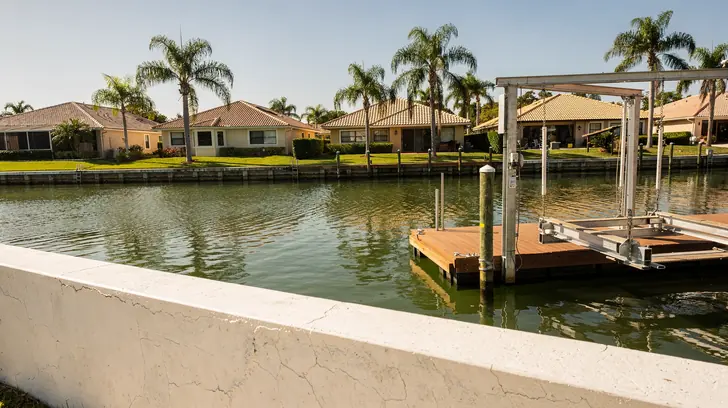
That catches new Gulf-front construction and substantial renovations, which are also the projects where owners are already working with marine and coastal contractors, a world we covered in the permit questions waterfront owners ask. The same property questions keep surfacing across trades, and an agency that answers the insurance half clearly is well placed to be referred by the other half.
As before, whether a particular home falls inside any of these rules is for Citizens and the insurer to decide. A page explaining that the rules exist, what they turn on and why they matter is what earns the search.
04 / 06
Why These Owners Search Before They Call
High-value homeowners usually meet these rules at a specific moment: a renewal problem, a purchase, or a renovation. Each moment produces predictable questions, and an agency with a clear page for each is the one they call.
Think about when a Naples homeowner actually discovers any of this. It is almost never by reading the statute.
It is a renewal letter that does not look like last year’s, or a carrier that is leaving the state, or a closing on a new home where the lender wants proof of coverage by a date. It is a renovation that turns into a question about whether the house will still be insurable once it is bigger. Each of those moments produces a search, and the searches are remarkably consistent.
Is my home eligible for Citizens. What happens if my home is worth more than seven hundred thousand dollars. Does a condo count differently. Do I need impact windows to keep my coverage. Can I insure a new house on the beach. Those are the questions, and the owners asking them are among the most valuable prospects in the county.
Most agency websites answer none of them. They list lines of business, show carrier logos and invite a quote. That works for a renter or a first car. It does very little for the owner of a three million dollar home trying to understand why their options just narrowed.
Write the pages that answer those questions directly, one question at a time, in plain language, with the rule stated and the caveat clear. They will be read by exactly the people whose premiums make an agency’s year.
05 / 06
What Florida Says About How You Advertise It
Florida treats as an unfair practice placing before the public any statement with respect to the business of insurance that is untrue, deceptive or misleading (Florida Statutes section 626.9541, 2025). The state also runs a public license search anyone can use to check an agent (Florida Department of Financial Services, 2026).
Insurance is one of the regulated categories where marketing copy carries legal weight, and the rule is broad.
Florida defines as an unfair method of competition or deceptive act knowingly making, publishing, disseminating or placing before the public an advertisement, announcement or statement containing any assertion, representation or statement with respect to the business of insurance which is untrue, deceptive or misleading (Florida Statutes section 626.9541, 2025).
Read that against the phrases local insurance sites like to rank for. Cheapest home insurance in Naples. Guaranteed savings. Lowest rates in Florida. Those are claims, and a claim about the business of insurance that the agency cannot stand behind is the kind of statement the rule describes. The better page explains how pricing is actually built and what drives it, which is also the page an answer engine is more likely to quote.
The credential side is easier and far more underused. Florida’s Department of Financial Services runs a public licensee search where anyone can look up an agent or agency by name or license number and see the license type, including property and casualty, and whether it is valid (Florida Department of Financial Services, 2026). Linking to your own record from your team page turns the word licensed into something a cautious buyer can check, which is the same principle we set out for other regulated trades in what Florida requires your website to say.
None of this is legal advice, and specific advertising questions belong with your own counsel and the department. The marketing point is that the pages built on checkable facts are both the safer pages and the stronger ones.
06 / 06
What to Publish, and in What Order
Lead with the Citizens eligibility explainer, then replacement cost, then the openings and coastline rules, then your license link. Keep the map results on their own track, and date every page that quotes the statute.
A short order of work for an agency whose site is currently a list of carriers and a quote form.
First, an eligibility page. What Citizens can and cannot cover, the replacement cost ceiling, the condominium rule, and a clear statement that eligibility for a particular home is decided by Citizens and the insurer. This is the page high-value owners are looking for and it barely exists.
Second, a plain explanation of replacement cost against market value, written so an owner can understand why their own assumption might be wrong in either direction.
Third, the openings and coastline pages, each linking out to the contractors and topics that sit beside them. These are small, specific, low-competition pages with extremely valuable readers.
Fourth, your license. Link every agent to their record in the state’s licensee search.
Alongside all of it, treat the map results as a separate track. Category, service area, accurate hours and a steady flow of reviews decide who gets called first, and no amount of writing replaces them.
Put a visible date on every page that quotes a threshold, and review it when the law changes, because this statute changes more often than most. That habit is what keeps a reference page trustworthy, and it is the difference between helping a worried homeowner and misleading one.
If you would like to see what your site currently answers and how it reads against other agencies in Naples, our free audit measures it at no cost, and the ongoing work is described on our insurance agency SEO page.
Watch it work
Turn on what makes AI recommend you.
AI recommends the businesses it can read, trust and quote. Flip on the four signals we engineer, and watch your visibility climb and the answer rewrite itself.
THE FOUR SIGNALS WE ENGINEER
Illustrative · the four signals are the real system we build
Questions
This article, answered.
Jamie Kloncz · SEO Elite Agency, Naples
The limit is based on dwelling replacement cost, not market value. Florida provides that a structure with a dwelling replacement cost of $700,000 or more is not eligible for Citizens coverage, with an exception in counties where the regulator determines there is not a reasonable degree of competition, where the threshold is under $1 million (Florida Statutes section 627.351, 2025). A home can sell for more than that and still cost less to rebuild, or the reverse. Eligibility for a specific home is decided by Citizens and the insurer.
Jamie Kloncz · SEO Elite Agency, Naples
For a single condominium unit, Florida applies the limit to the combined dwelling and contents replacement cost, so a unit with a combined replacement cost of $700,000 or more is not eligible for Citizens coverage, subject to the same county exception (Florida Statutes section 627.351, 2025). This describes the published statute and is not insurance advice.
Jamie Kloncz · SEO Elite Agency, Naples
For a personal lines residential structure in the wind-borne debris region with an insured value of $750,000 or more, Florida provides that it is not eligible for Citizens coverage unless it has opening protections as required by the Florida Building Code for a newly constructed residential structure in that area (Florida Statutes section 627.351, 2025). Whether a particular home is in that region and meets the requirement is a question for the insurer and a qualified contractor.
Jamie Kloncz · SEO Elite Agency, Naples
A major structure that is newly constructed, or remodeled to increase its finished area by more than 25 percent, under a permit applied for after July 1, 2015, is not eligible for Citizens if it is seaward of the coastal construction control line or within the Coastal Barrier Resources System (Florida Statutes section 627.351, 2025). Owners of those homes are working in the private market, which is where an experienced independent agent matters most.
Jamie Kloncz · SEO Elite Agency, Naples
Florida’s Department of Financial Services runs a public licensee search where you can look up an agent or agency by name or license number and see the license type, including property and casualty, and whether the license is valid (Florida Department of Financial Services, 2026). A well-run agency will link to its own record so you do not have to go looking.
Sources
- 1Florida Statutes section 627.351 (Insurance risk apportionment plans): 2025 edition, read September 11, 2026 - subsection (6), Citizens Property Insurance Corporation, provides that effective January 1, 2017 a structure with a dwelling replacement cost of $700,000 or more, or a single condominium unit with a combined dwelling and contents replacement cost of $700,000 or more, is not eligible for coverage by the corporation, except in counties where the office determines there is not a reasonable degree of competition, where a structure or unit under $1 million is eligible; that effective January 1, 2009 a personal lines residential structure in the wind-borne debris region with an insured value of $750,000 or more is not eligible unless it has opening protections as required under the Florida Building Code for a newly constructed residential structure in that area; and that a major structure newly constructed, or rebuilt, repaired, restored or remodeled to increase total finished area by more than 25 percent under a permit applied for after July 1, 2015, is not eligible if seaward of the coastal construction control line or within the Coastal Barrier Resources System
- 2Florida Statutes section 626.9541 (Unfair methods of competition and unfair or deceptive acts or practices defined): 2025 edition, read September 11, 2026 - paragraph (1)(b) addresses knowingly making, publishing, disseminating, circulating or placing before the public an advertisement, announcement or statement containing any assertion, representation or statement with respect to the business of insurance which is untrue, deceptive or misleading
- 3Florida Department of Financial Services licensee search: read September 11, 2026 - a public search for licensed insurance individuals and entities by name, license number, license status and other criteria, with license categories including Property & Casualty and status filters for valid and invalid licenses

Written by
SEO Elite Agency, Naples FL. Published .
Check this page has not changed
Every article is hashed when the site is built. This recomputes the hash of its text in your browser and compares it with the published record.