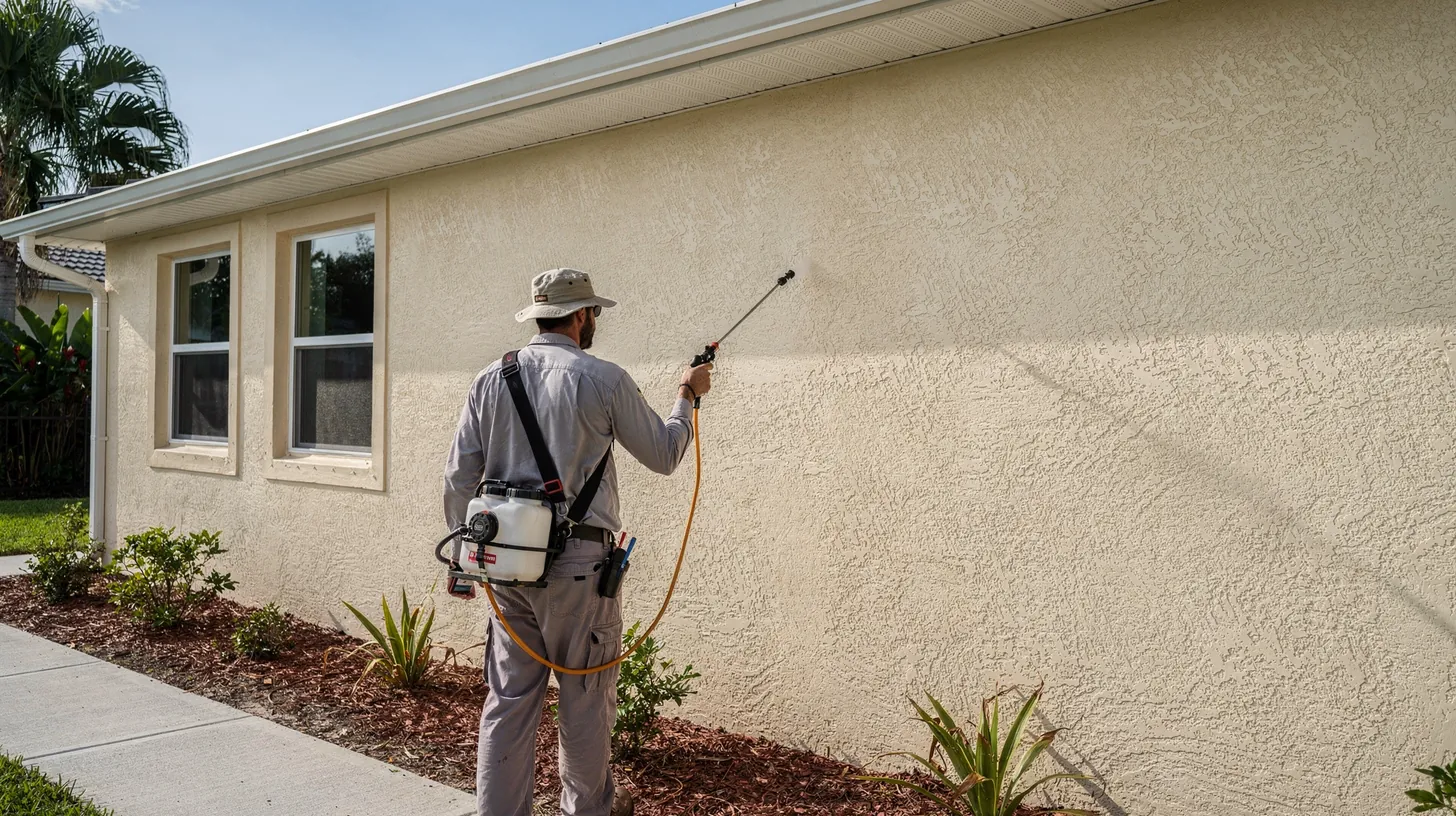
How Florida Pest Control Companies Should Match SEO to Seasonal Pest Cycles
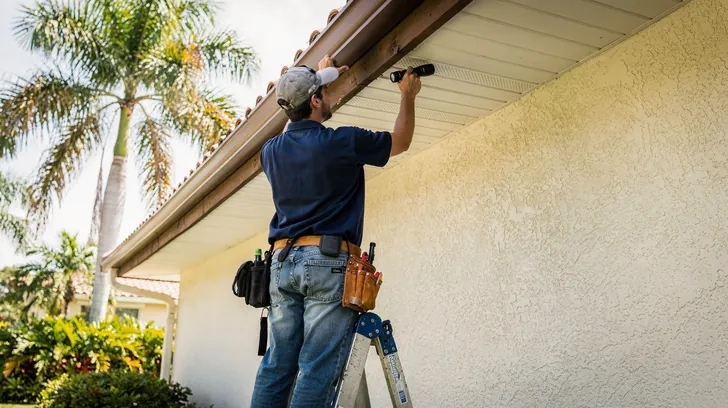
Florida is one of the few markets where the pests never take a season off, and that is exactly why so much pest control SEO is built wrong. Because there is no hard winter freeze to reset populations, something is always active, so a lot of companies publish one flat page about general pest control and leave it there year round. The problem is that homeowner demand does not stay flat. It moves. Termites swarm in spring, mosquitoes and general pests surge through the wet summer, rodents press in as the weather cools, and the search volume for each one climbs and falls with the calendar. A Florida pest control SEO plan that ignores that rhythm is visible for the wrong pest at the wrong moment, competing hardest in a lull and going quiet right as demand peaks. This guide lays out how to fix that: keep an evergreen service base ranking all twelve months, then layer pest-specific content and Google Business Profile activity that is timed to each species demand spike so you are already ranking when the swarm arrives, not scrambling to publish after it does. The goal is not more content. It is content that peaks in sync with the searches, so the work you did in the quiet weeks is what captures the rush.
In one paragraph
Florida pest control companies rank by keeping an evergreen service base visible year-round, then timing pest-specific content and Google Business Profile activity to each species demand spike, from spring termite swarms to summer mosquitoes and cooler-season rodents. Because the subtropical climate keeps pests active every month, ongoing pest control SEO beats a single one-time push.
01 / 05
How Florida's Pest Calendar Should Drive Your Content
Pests stay active in Florida all twelve months, but they do not all peak at once. Termites swarm in spring, mosquitoes and general pests surge through the summer wet season, and rodents press indoors as it cools. Mapping your content to that calendar means each pest page is strongest in the weeks its searches climb, instead of one flat page that never matches the moment.
Start with the biology, because the demand follows it. Florida's subtropical climate keeps pests active every month, and termite colonies in particular stay active year-round rather than resetting each winter (UF/IFAS Extension, 2021)[2], so unlike a northern market there is no true off-season. What there is instead is a rotating sequence of peaks. Subterranean termites drive the first big one: Asian subterranean termites begin large swarms in South Florida around March, Formosan termites swarm from roughly early April into June with peak activity in May, and native eastern subterranean termites swarm through the cooler months into spring (UF/IFAS Extension, 2026)[3]. Those swarm windows are when a homeowner first sees winged insects on a windowsill and searches in a panic, and they are predictable enough to plan content around a year ahead.
The demand data from the field matches the biology. In one Southeast Florida operator's analysis of thousands of service calls across spring and early summer, termites were the single largest reason for calls at 36 percent of the total, and termite call volume rose 47 percent in June compared with March (Nozzle Nolen, 2026)[1]. General pest control calls climbed even faster over the same stretch, which is the summer wet-season surge showing up in the phones. Read that as one operator's book of business in one region, not a statewide census, but the shape is the point: the calls concentrate in specific months, so the content that earns them has to be ranking before those months, not published during them.
The practical move is to give each major pest its own genuinely useful page and treat the calendar as a publishing schedule. A termite page needs to be live, indexed, and building authority in late winter so it is ready for the spring swarm, not drafted the week the swarms start. A mosquito and general-pest page needs to be settled before the summer rains. Building that cadence is the same discipline behind any Florida seasonal SEO calendar, applied to the specific species that drive your calls. The infographic below plots the sequence using only the documented swarm and activity windows.
02 / 05
Why You Need an Evergreen Base Plus Seasonal Spikes
Seasonal content alone leaves you invisible in the troughs, and evergreen content alone never peaks with demand. The durable answer is both: a stable base of service and location pages that ranks every month, and seasonal pest pages that are built ahead of each spike. The base earns the steady quarterly-service business while the spikes capture the rush.
Think of it as two layers doing two different jobs. The evergreen base is your core service pages and service-area coverage: general pest control, the neighborhoods and cities you serve, and the recurring quarterly service that many Florida homes stay on because the pressure never fully stops. That layer is what ranks in the quiet weeks and feeds the steady, unglamorous revenue that keeps a route profitable. It is also slow to build and slow to erode, which is exactly why it has to be maintained continuously rather than rebuilt each spring.
The seasonal layer is where timing does the work. A termite page, a mosquito page, and a rodent page each need to be live and gaining authority weeks before their season, because local ranking signals take time to be crawled, trusted, and reflected in results. Publishing a termite guide the week the swarms hit is publishing too late: you are asking Google to trust a brand-new page during the exact window your established competitors are already ranking. The practitioner rule is to work one season ahead. Build and settle the spring content in late winter, the summer content in spring, and so on, so the page is warmed up when the searches arrive.
The two layers reinforce each other rather than compete. Seasonal pages send internal links and topical relevance back to the core service pages, and the core pages lend their accumulated authority to the fresh seasonal ones. Done consistently, this is also how you keep leads flowing when any single pest is quiet, the same logic that keeps a landscaping calendar productive off-peak, covered in our look at building year-round demand across Florida's seasons. The base keeps the lights on. The spikes are the upside.
03 / 05
How to Capture Urgent, Same-Day Pest Searches
A homeowner who just found a termite swarm or a rodent in the kitchen is not researching. They want someone today, and they search with urgency and proximity in mind. Winning those searches is less about clever content and more about being the closest, most relevant, best-established option Google can surface in the map pack right then.
Urgent pest searches are won on the fundamentals Google weighs for every local result. Google says its local results are based mainly on relevance, distance, and popularity (Google, 2026)[4], and for an emergency query all three tighten at once. The searcher wants a company whose profile clearly matches the exact problem, is physically near the address, and has enough of a track record that both the algorithm and the panicked homeowner trust it. A generic listing that lists ten services and specializes in none is at a disadvantage the moment the search gets specific and time-sensitive.
Relevance is the lever you control most directly. When your service pages and Google Business Profile name the specific pest and the specific urgency, an emergency termite or rodent search has something exact to match. That means having real content for the high-intent, same-day phrasing a homeowner actually types, not only the broad category term. It also means the seasonal timing above pays off twice: the termite page you settled in late winter is the one ranking when a spring swarm sends a wave of urgent searches, so you are already the relevant result rather than trying to become one overnight.
Distance decides the rest, and it is why a single office does not automatically own a wide service territory. A polished profile can still lose an urgent search to a closer competitor with a thinner listing, which is the honest limit of optimization and the reason genuine service-area coverage matters alongside it. For a company serving several Southwest Florida cities, that is a case for real local presence in each, the kind of ongoing local SEO that keeps you eligible for the emergency call in every neighborhood you actually cover, not just the one nearest the shop.
04 / 05
Why Your Google Business Profile Does the Seasonal Heavy Lifting
For a local pest control company the Google Business Profile is the single highest-leverage asset in the map pack, and it is also the fastest surface to work seasonally. Refreshing the profile ahead of each pest spike, with the right primary category and timely posts, keeps you matched to demand as it rotates through the year.
Put your effort where the ranking weight sits. The Google Business Profile carries the largest single share of local-pack ranking influence, roughly 32 percent, and the primary category is the strongest single factor within it (Whitespark, 2026)[5]. For a pest control company that means the profile comes before any content play: if the primary category and services do not clearly reflect pest control and the specific problems you solve, no seasonal post rescues your visibility. Confirm the primary category is right, use secondary categories for adjacent services like termite or rodent control, and keep the service area honest so you appear where your crews actually go.
The seasonal advantage of the profile is speed. Unlike a page that has to be crawled and earn trust over weeks, a profile update and a fresh post surface quickly, so the profile is the right place to signal each season in near real time. Ahead of the spring swarm you can post about termite warning signs and swarm season; heading into summer you can shift the posts and photos toward mosquito and general-pest work. This is genuinely useful to the searcher and it keeps the listing looking active, which is the unglamorous maintenance that a busy operator most often lets slide.
Treat the profile as a seasonal instrument, not a set-and-forget setup. Auditing the category, services, service area, hours, and photos on a regular cadence, and lining the posts up with the pest calendar, is low-effort work with outsized return because it sits on top of the map pack's heaviest ranking factor. For operators who would rather hand off that recurring upkeep, that is what an ongoing pest control SEO engagement covers, and in a seasonal market the timing of it matters as much as the doing.
05 / 05
How Reviews Build Trust Across Every Pest Season
Pest control is a repeat, trust-heavy service, so reviews carry weight that spans the whole calendar. A steady, recent stream of reviews reinforces both your map-pack standing and the confidence of a homeowner comparing options during a spike, which is why review velocity belongs in the routine of every completed job rather than a once-a-year push.
Reviews are a durable asset that pays off in every season at once. They feed the popularity signal Google weighs in local results, and they are often the deciding factor for a homeowner choosing between two nearby companies during a demand spike. Because pest control is recurring, quarterly-service work rather than a one-time purchase, you have a natural and frequent moment to ask, and a satisfied recurring customer is the easiest review you will ever earn. The discipline is to make the request a standing part of closing out each visit so the flow never depends on remembering.
What matters is recency and steadiness, not just a large historical count. A stream of recent reviews outperforms a big but stale one, and in a seasonal business it is tempting to let review-gathering lapse in the quiet months and lose the habit entirely. Keeping it steady year-round means that when a spike arrives and new customers are actively comparing, your profile shows a business that is clearly active and currently trusted, not one that peaked two summers ago. That freshness is part of what keeps you competitive exactly when the searches are heaviest.
The reinforcing effect is the point. The same reviews you gather to win the map pack are the trust signal a homeowner reads before they call, and the recurring nature of pest control gives you more chances to build them than most local trades ever get. If you would rather have that habit built into a broader plan alongside the seasonal content and profile work, SEO Elite Agency can map your pest calendar to a content and review cadence. The tactics in this guide are the same ones we would start from.
Watch it work
Turn on what makes AI recommend you.
AI recommends the businesses it can read, trust and quote. Flip on the four signals we engineer, and watch your visibility climb and the answer rewrite itself.
THE FOUR SIGNALS WE ENGINEER
Illustrative · the four signals are the real system we build
Questions
This article, answered.
Jamie Kloncz · SEO Elite Agency, Naples
Florida does not have a single pest season because the subtropical climate keeps pests active every month, and termite colonies in particular stay active year-round rather than resetting each winter (UF/IFAS Extension, 2021). Instead demand rotates by species. Subterranean termites drive the first big spike in spring: Asian subterranean termites begin swarming in South Florida around March, Formosan termites swarm from roughly early April into June with peak activity in May, and native eastern subterranean termites swarm through the cooler months into spring (UF/IFAS Extension, 2026). Mosquitoes and general pests surge through the summer wet season, and rodent pressure rises as the weather cools. For a pest control company the takeaway is that there is always demand for something, but the specific pest that drives calls shifts month to month, so content and marketing should follow that calendar rather than treating the year as flat.
Jamie Kloncz · SEO Elite Agency, Naples
Run two layers at once. Keep an evergreen base of core service and service-area pages ranking every month for the steady, year-round and quarterly-service demand, then build pest-specific seasonal pages, a termite page, a mosquito and general-pest page, a rodent page, that are live and gaining authority weeks before each species spikes. Because local ranking signals take time to be crawled and trusted, the practitioner rule is to work one season ahead: settle the spring termite content in late winter, the summer content in spring, and so on, so each page is already ranking when its searches climb. Layer timely Google Business Profile posts on top, since the profile surfaces changes quickly. The base keeps leads flowing in the troughs while the seasonal spikes capture the rush.
Jamie Kloncz · SEO Elite Agency, Naples
You need both, because they do different jobs. Evergreen service and location pages rank in the quiet weeks and earn the steady quarterly-service business, but they never peak with any single pest, so relying on them alone leaves demand on the table during spikes. Seasonal pest pages peak with demand, but only if they are built ahead of the season rather than during it, and on their own they leave you invisible in the troughs. The durable approach is an evergreen base plus seasonal spikes that reinforce each other through internal links and shared authority. In Florida specifically, the subtropical climate means the base always has something to rank for while the spikes rotate through termites, mosquitoes, and rodents across the year.
Jamie Kloncz · SEO Elite Agency, Naples
A homeowner who just found a termite swarm or a rodent indoors searches with urgency and proximity, and those searches are won on the fundamentals Google weighs for local results, which it describes as relevance, distance, and popularity (Google, 2026). Relevance is the lever you control most: name the specific pest and the same-day urgency clearly in your service pages and Google Business Profile so an emergency query has an exact match. Distance is why genuine service-area coverage matters, since a closer competitor with a thinner listing can still win a nearby urgent search. Popularity is where a steady stream of recent reviews pays off. Being already ranked when a seasonal spike hits, rather than trying to rank once it starts, is what turns a swarm into booked calls.
Jamie Kloncz · SEO Elite Agency, Naples
It is the single highest-leverage asset in the map pack. The Google Business Profile carries the largest single share of local-pack ranking influence, roughly 32 percent, and its primary category is the strongest factor within it (Whitespark, 2026), so getting the category, services, and service area right comes before any content play. It is also the fastest surface to work seasonally, because profile updates and posts surface quickly rather than needing weeks to be crawled and trusted. That makes it the right place to signal each pest season in near real time, shifting posts and photos toward termites ahead of spring and mosquitoes ahead of summer. If you want help matching your Florida pest calendar to a content, profile, and review plan, SEO Elite Agency offers a free audit. Call (843) 955-7727 or email [email protected].
Sources
- 1Nozzle Nolen: Spring and early-summer pest-call trends in Southeast Florida - analysis of thousands of service calls (termites 36% of calls; termite call volume up 47% in June vs March; single-operator, Southeast Florida)↩
- 2UF/IFAS Extension (IFAS News, 2021): As Florida enters termite swarm season - termite colonies are always active and stay active year-round in Florida; Asian subterranean swarm from early March, Formosan from late April↩
- 3UF/IFAS Fort Lauderdale Research and Education Center: Termites in Florida - Swarming Events (Asian subterranean from March; Formosan early April to June, peak May; eastern subterranean cooler months into spring)↩
- 4Google: How Google's local search results are determined (relevance, distance, and popularity)↩
- 5Whitespark: Local Search Ranking Factors, 2026 (Google Business Profile signals ~32% of local-pack weight; primary category the strongest single factor)↩

Written by
SEO Elite Agency, Naples FL. Published .
Check this page has not changed
Every article is hashed when the site is built. This recomputes the hash of its text in your browser and compares it with the published record.
Related services