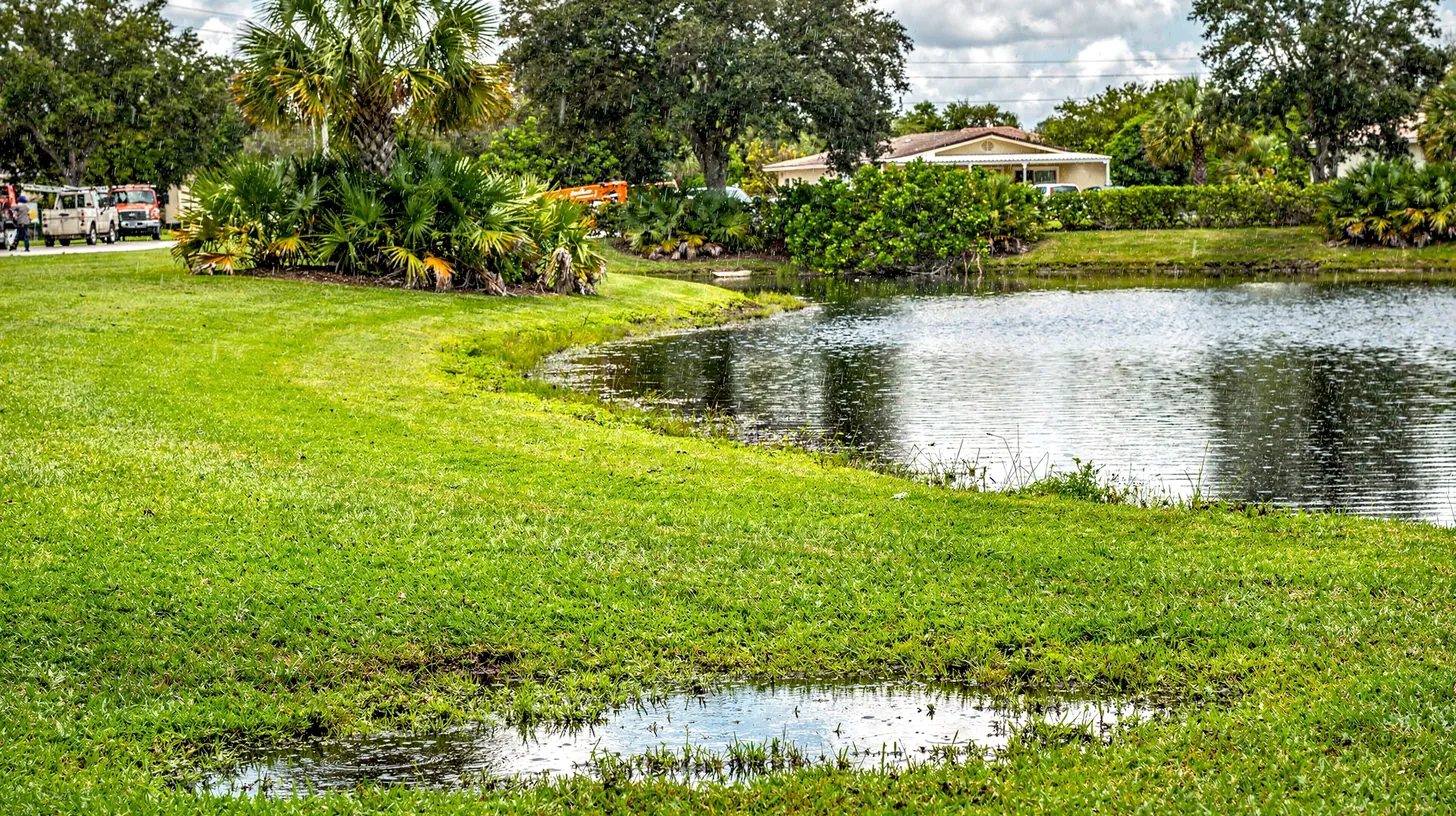
The Four Months Naples Landscapers Cannot Fertilize
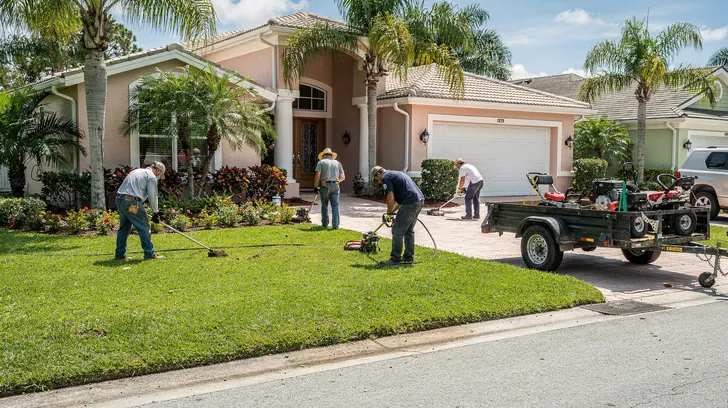
Every summer a Naples homeowner types some version of the same question into a phone, and every summer the landscaping companies competing for that customer answer it vaguely or not at all. The City publishes exactly what may be applied, when, how close to the water and by whom. Those rules are stricter than the state template, they change at the city line, and they are the most durable content advantage a Naples landscaper can own.
In one paragraph
Naples landscaper SEO means building a site around the city’s published fertilizer and landscape rules, because they are stricter than the state model, they differ across the city line, and the homeowner searching them is a buyer in the moment of need. SEO Elite Agency builds that content for Naples landscaping and lawn companies, month to month, starting with a free audit.
01 / 07
The Ban Runs June 1 Through September 30, and It Is Not the Only Timing Rule
The City of Naples states that "no fertilizer containing nitrogen or phosphorus may be applied from June 1 through September 30" (City of Naples, 2026). The rule most competitors miss is the second half of that sentence, which also bars application during severe-weather advisories and ahead of heavy rain.
Start with the fact a Naples homeowner is most likely to search, because it is also the one most often half-reported.
The City of Naples states that "no fertilizer containing nitrogen or phosphorus may be applied from June 1 through September 30, nor can they be applied during severe-weather advisories and when there’s a 60% or greater chance of at least 2 inches of rain in a 24-hour period" (City of Naples, 2026). Most competing pages stop at the four-month window. The rain clause means the calendar ban is a floor rather than the whole rule, and it applies on days outside the summer window too.
There is a third timing rule that catches new installs. Nitrogen-containing fertilizer "cannot be applied before, or within the first 30 days of seeding/sodding" (City of Naples, 2026). A company selling new sod and a fertilization program in the same visit needs to know that, and a homeowner who has just had a lawn installed is actively looking for the answer.
Read as a content problem rather than a compliance one, this is a gift. There is a seasonal question with a precise published answer, asked by people who own lawns in an expensive market, and the companies competing for them are answering it approximately. A page that states the rule exactly, names its source, and dates the check will outrank vague advice written by somebody who has never read the ordinance.
02 / 07
Your Certification Decides Which Service Pages You Are Allowed to Build
Florida requires that "any person applying commercial fertilizer to an urban landscape must be certified" (Florida Statutes section 482.1562, 2025), and that certification "does not authorize ... the application of pesticides to turf or ornamentals, including pesticide fertilizer mixtures" (Florida Statutes section 482.1562, 2025).
This is where a marketing decision becomes a licensing decision, and it is the one we check first on any landscaping account.
Florida provides that "beginning January 1, 2014, any person applying commercial fertilizer to an urban landscape must be certified under this section" (Florida Statutes section 482.1562, 2025). The certificate "expires 4 years after the date of issuance", and recertification requires "4 classroom hours of acceptable continuing education, of which at least 2 hours address fertilizer best management practices" (Florida Statutes section 482.1562, 2025).
The limits attached to it are what matter for a website. That certification "does not authorize" three things: "the application of pesticides to turf or ornamentals, including pesticide fertilizer mixtures", "the operation of a pest control business", and "the application of pesticides or fertilizers by unlicensed or uncertified personnel under the supervision of the certified person" (Florida Statutes section 482.1562, 2025).
Each of those maps to a page somebody wants to publish. A weed-and-feed service page is a pesticide fertilizer mixture. A grub or chinch bug page is pest control. And the third limit is the one owners most often get wrong: holding the certificate yourself does not let you send an uncertified crew member out to apply under your supervision.
So the service architecture has to be drawn against what the business is actually licensed to do. Advertising work you cannot lawfully perform generates leads you must refuse, which is the same trap we describe for pest control operators coming at it from the other direction. Build the pages your certifications support, and get the certification first if you want the page.
03 / 07
Naples Is Stricter Than the State Template, and That Is the Moat
Florida requires local governments in an impaired watershed to "at a minimum, adopt the department’s Model Ordinance for Florida-Friendly Fertilizer Use on Urban Landscapes" (Florida Statutes section 403.9337, 2025), while permitting more demanding requirements. So the rules legitimately differ by jurisdiction.
Here is the structural reason a Naples page cannot be written from a national template, and it is written into the statute.
Florida provides that each county and municipal government "located within the watershed of a water body or water segment that is listed as impaired by nutrients ... shall, at a minimum, adopt the department’s Model Ordinance for Florida-Friendly Fertilizer Use on Urban Landscapes" (Florida Statutes section 403.9337, 2025). Local governments may go further than the model where they can demonstrate a science-based need (Florida Statutes section 403.9337, 2025).
The phrase at a minimum is doing the work. The model is a floor, not a ceiling, which means the rules genuinely change as you cross a municipal boundary. A company working both inside the city and in the unincorporated county is operating under two sets of requirements on the same afternoon.
We will not tell you what the county currently requires, because its ordinance documents were not readable at the source when we checked and we do not publish regulatory specifics we have not verified. Confirm your own jurisdictions directly. That caveat is not a weakness in the content, it is the content: a page that is precise about what it knows and explicit about what it has not verified reads as written by somebody who actually works here.
04 / 07
The Reclaimed Water Rule Almost Nobody Publishes
The City states that "if you irrigate with reclaimed water, you must count the nitrogen and phosphorus already present in that water toward your fertilizer totals" (City of Naples, 2026). In a city where reclaimed irrigation is common, that quietly changes the arithmetic on a lot of properties.
If one detail on this page is worth publishing before any other, it is this one.
The City states plainly that "if you irrigate with reclaimed water, you must count the nitrogen and phosphorus already present in that water toward your fertilizer totals" (City of Naples, 2026). Those totals are specific: nitrogen fertilizer "must contain at least 50 percent slow-release nitrogen" and is "limited to 1 pound / 1,000 square feet per application and 4 pounds / 1,000 square feet per year", with centipedegrass capped lower at "a max of 3 pounds / 1,000 square feet per year" (City of Naples, 2026).
Put those together and a property on reclaimed irrigation has less headroom than its square footage suggests, before a single bag is opened. A landscaper who can explain that to a community association, with the rule quoted, is having a different conversation from one quoting a price per visit.
Phosphorus has its own gate. Phosphorus-containing fertilizers "are prohibited unless soil tests show a deficiency, and City approval is obtained" (City of Naples, 2026), which makes soil testing a billable service with a regulatory reason to exist rather than an upsell nobody asked for. That is a service page most competitors do not have because they do not know the rule creates demand.
05 / 07
The Exemptions Tell You Who Your Commercial Buyer Is
The City states that "golf courses, bona-fide agricultural operations, and sports fields are exempt from the City’s fertilizer ordinance" (City of Naples, 2026). In a city built around golf, that single sentence separates two very different commercial markets.
Exemptions are usually boring. This one draws a line straight through the Naples commercial market.
The City states that "golf courses, bona-fide agricultural operations, and sports fields are exempt from the City’s fertilizer ordinance" (City of Naples, 2026). Naples is a golf town, so a large share of the most valuable turf in the city sits outside the rule that governs everything else.
That matters commercially in both directions. A company chasing golf and sports turf is selling agronomy into a market with different constraints and different buyers, and should not be building its site around a residential ordinance that does not apply to the work. A company serving residential properties and community associations is in the opposite position, where the ordinance is the whole conversation.
Most landscaping websites blur the two and win neither. The exemption is the cleanest available test for which business you are actually in, and the page structure should follow the answer rather than listing every service a crew could physically perform.
06 / 07
What the Rules Imply for the Rest of the Site
Application-method rules give you content most competitors never think to publish: deflector shields on broadcast spreaders, no fertilizer within 10 feet of any waterway, and clippings kept off streets, sidewalks and driveways (City of Naples, 2026).
The remaining rules look operational rather than editorial, which is exactly why publishing them works.
The City requires that "deflector shields must be in place when broadcast spreaders are used", that "no fertilizer may be applied within 10 feet of any waterway", and that fertilizer and grass clippings "may not be left on impervious surfaces such as streets, sidewalks, or driveways" (City of Naples, 2026). It separately notes that a 10-foot low-maintenance zone beside waterbodies is "highly encouraged" (City of Naples, 2026), which is a recommendation rather than a requirement and should be described as one.
In a market this full of canals, lakes and golf-course water features, the 10-foot waterway setback touches a large share of properties. A company that explains how it works around water, and shows it, is answering the unspoken question a waterfront owner has about whoever is spreading product near their seawall. That dovetails with the way we approach waterfront trades generally.
The point is not to publish a compliance manual. It is that these specifics are the raw material for pages that read as written by an operator, and the reason a Naples landscaper can beat a national franchise site on local terms without outspending anybody.
07 / 07
What to Publish, and In What Order
The seasonal rule first because it is the most searched, then the services your certification actually supports, then the waterfront and reclaimed-water pages, and date every one so the accuracy is checkable.
A concrete order of work for a Naples landscaping company with a thin services page and no local content.
First, one page on the seasonal rules: the June 1 to September 30 window, the rain and severe weather clause, and the seeding and sodding restriction. Quote the ordinance, link the City page, and state the date you checked. This is the page that will collect the summer searches every year without being rewritten.
Second, audit your service pages against your certifications and remove anything your credentials do not support. This is the step that protects the business, and it usually shortens the site before it lengthens it.
Third, the pages the rules create demand for: soil testing, because phosphorus needs a documented deficiency and City approval; reclaimed-water properties, because the irrigation counts toward the totals; and waterfront maintenance, because of the setback.
Fourth, decide whether you are chasing exempt turf or ordinance-governed properties, and build to one. Then wire it together so the local pages feed the services you actually sell, the way we structure Naples SEO work generally, with the landscaping page as the commercial destination.
Then keep it current. An ordinance page that names its source and its check date compounds, and it is the one asset a competitor cannot copy without doing the same reading. If you would rather have it built and maintained than do it between jobs, that is the work we do as a Naples SEO agency, month to month.
Watch it work
Turn on what makes AI recommend you.
AI recommends the businesses it can read, trust and quote. Flip on the four signals we engineer, and watch your visibility climb and the answer rewrite itself.
THE FOUR SIGNALS WE ENGINEER
Illustrative · the four signals are the real system we build
Questions
This article, answered.
Jamie Kloncz · SEO Elite Agency, Naples
Not between June 1 and September 30. The City states that "no fertilizer containing nitrogen or phosphorus may be applied from June 1 through September 30, nor can they be applied during severe-weather advisories and when there’s a 60% or greater chance of at least 2 inches of rain in a 24-hour period" (City of Naples, 2026). The rain clause applies outside the summer window too, so the calendar ban is a floor rather than the whole rule. Confirm the current ordinance with the City before relying on any summary, including this one.
Jamie Kloncz · SEO Elite Agency, Naples
Yes. Florida provides that "beginning January 1, 2014, any person applying commercial fertilizer to an urban landscape must be certified under this section" (Florida Statutes section 482.1562, 2025), and the City requires applicators to carry that certification with them whenever they are applying. The certificate "expires 4 years after the date of issuance" and recertification requires continuing education including fertilizer best management practices (Florida Statutes section 482.1562, 2025).
Jamie Kloncz · SEO Elite Agency, Naples
No, and this is the most common mistake we find. That certification "does not authorize ... the application of pesticides to turf or ornamentals, including pesticide fertilizer mixtures" or "the operation of a pest control business" (Florida Statutes section 482.1562, 2025). It also does not authorize "the application of pesticides or fertilizers by unlicensed or uncertified personnel under the supervision of the certified person" (Florida Statutes section 482.1562, 2025), so holding the certificate yourself does not cover an uncertified crew member.
Jamie Kloncz · SEO Elite Agency, Naples
Not necessarily, and that is written into state law. Florida requires local governments in an impaired watershed to "at a minimum, adopt the department’s Model Ordinance" (Florida Statutes section 403.9337, 2025) while permitting more demanding local requirements. We deliberately do not state what Collier County currently requires, because its ordinance documents were not readable at the source when we checked and we do not publish regulatory specifics we have not verified. Confirm each jurisdiction you work in.
Jamie Kloncz · SEO Elite Agency, Naples
Yes. The City states that "if you irrigate with reclaimed water, you must count the nitrogen and phosphorus already present in that water toward your fertilizer totals" (City of Naples, 2026). Since nitrogen is "limited to 1 pound / 1,000 square feet per application and 4 pounds / 1,000 square feet per year" (City of Naples, 2026), a property on reclaimed irrigation has less headroom than its square footage suggests.
Jamie Kloncz · SEO Elite Agency, Naples
No. The City states that "golf courses, bona-fide agricultural operations, and sports fields are exempt from the City’s fertilizer ordinance" (City of Naples, 2026). In a golf market that separates two different commercial businesses, and a landscaping site should be built for one of them rather than blurring both.
Jamie Kloncz · SEO Elite Agency, Naples
No. SEO Elite Agency works month-to-month from our Naples office at 1950 Mayfair Street, Suite 313. Long contracts protect agencies from their own results, and we would rather earn the next month. Reach us at (843) 955-7727 or [email protected].
Sources
- 1City of Naples: Fertilizer Use and Maintenance of Landscapes, Natural Resources Division, read October 3 2026 - states the June 1 through September 30 ban on nitrogen and phosphorus fertilizer along with the severe weather and heavy rain clause, the requirement that commercial applicators carry their state certification at all times, the restriction on nitrogen before or within thirty days of seeding or sodding, the fifty percent slow-release nitrogen content rule with the per application and annual limits and the lower centipedegrass cap, the prohibition on phosphorus without a soil test deficiency and City approval, the requirement to count nutrients in reclaimed irrigation water toward fertilizer totals, deflector shields on broadcast spreaders, the ten foot waterway setback, the prohibition on leaving fertilizer and clippings on impervious surfaces, the highly encouraged low maintenance zone, and the exemption for golf courses, bona-fide agricultural operations and sports fields
- 2Florida Statutes section 482.1562: 2025 edition, read October 3 2026 - requires that beginning January 1 2014 any person applying commercial fertilizer to an urban landscape must be certified, sets a four year certificate expiry and continuing education for recertification of which at least two hours address fertilizer best management practices, and provides that the certification does not authorize the application of pesticides to turf or ornamentals including pesticide fertilizer mixtures, the operation of a pest control business, or the application of pesticides or fertilizers by unlicensed or uncertified personnel under the supervision of the certified person
- 3Florida Statutes section 403.9337: 2025 edition, read October 3 2026 - requires each county and municipal government located within the watershed of a water body or water segment listed as impaired by nutrients to at a minimum adopt the department Model Ordinance for Florida-Friendly Fertilizer Use on Urban Landscapes, while permitting more demanding local requirements where a science-based need is demonstrated

Written by
SEO Elite Agency, Naples FL. Published .
Check this page has not changed
Every article is hashed when the site is built. This recomputes the hash of its text in your browser and compares it with the published record.