Angi, Thumbtack or Your Own Search: Where Florida Roofers Should Spend Before the Next Storm Season
Angi vs SEO for roofers is really a question about who owns the customer. A marketplace sends a Florida roofer a homeowner fast, but the request starts on the platform and, on Angi, goes to no more than five pros (Angi Help Center, 2026). Your own search pages, Google Business Profile and reviews bring the homeowner to you directly, and they keep working after the storm. Hurricane season runs June 1 to November 30 (NOAA National Hurricane Center, 2026), so the owned side has to be built before June, not during it.
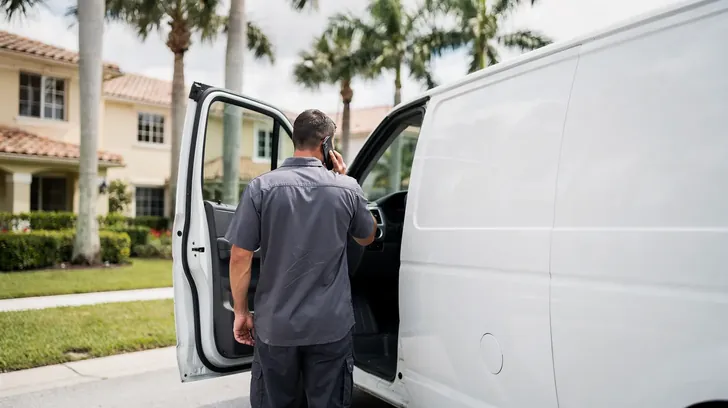
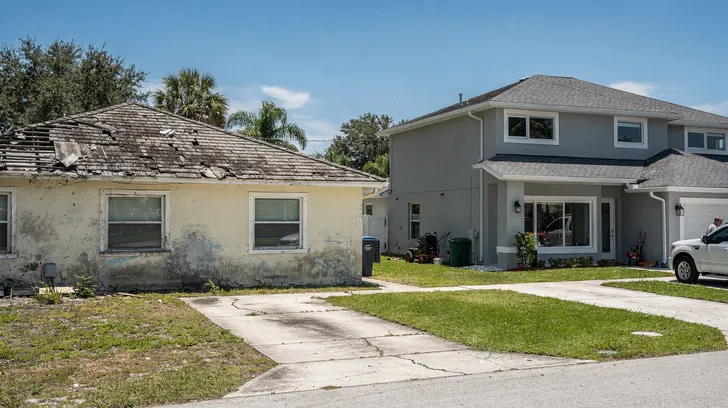
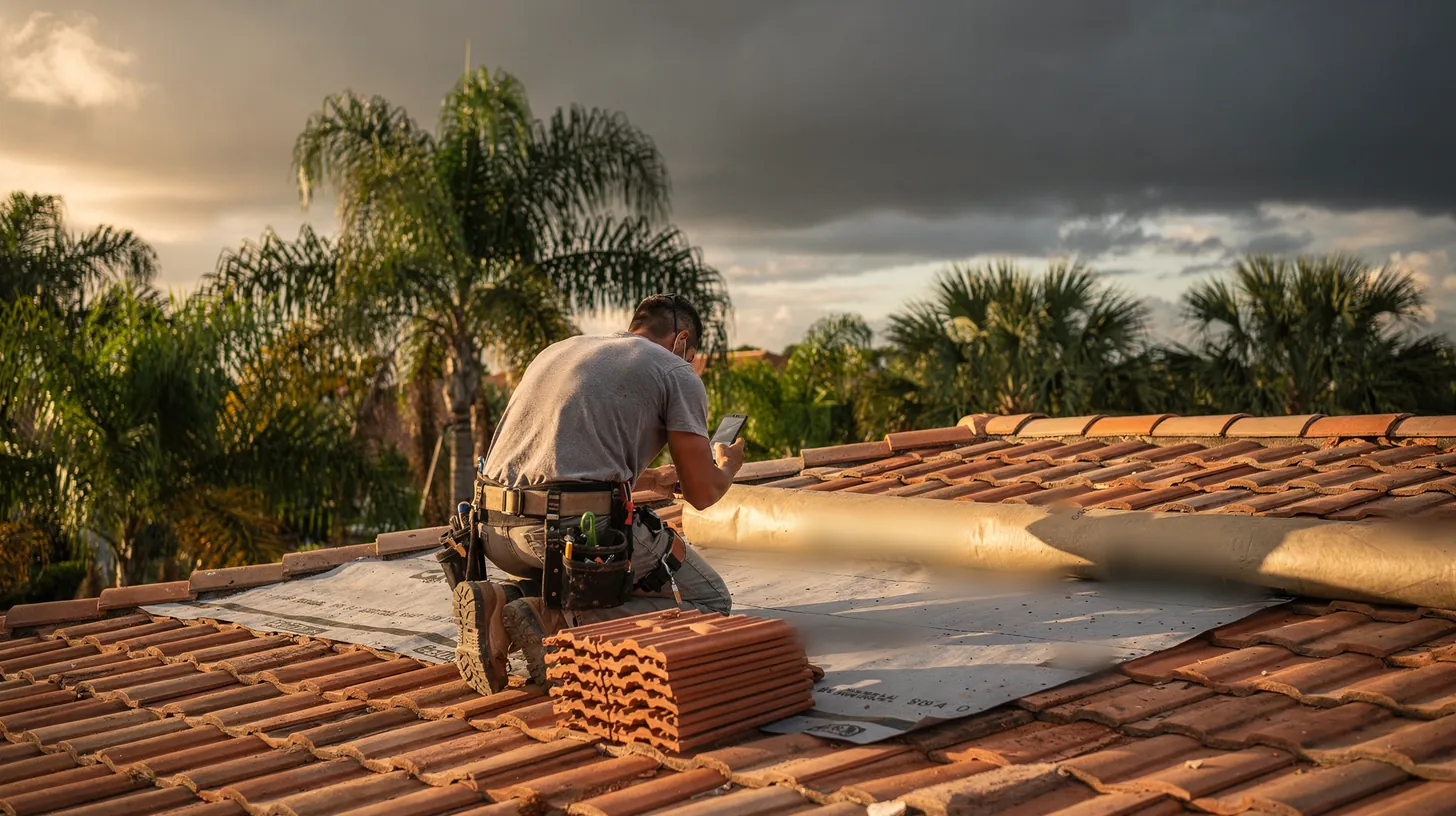
Storm season arrives on the same calendar every year. Where the next homeowner comes from is the roofer's choice. AI-generated illustration.
In one paragraph
Owned search is the set of places a homeowner finds a roofer without a marketplace in the middle: the roofer's own website, its Google Business Profile and its reviews. The homeowner contacts the roofer directly, no per-lead fee is charged for that contact, and the customer record starts in the roofer's own phone, inbox and job system rather than on a platform.
Check the terms
Lead-ownership picker: who owns this lead?
Pick one lead source you pay for and answer for it. Each answer says what kind of lead it is. It sends nothing anywhere.
Could the same homeowner request have gone to other roofers too?
That is a shared lead. On Angi a request is matched with no more than five pros; on Thumbtack a customer can contact up to five in the first four hours. Speed of reply decides it.
Good. If only you received it, it is an exclusive lead or an owned contact. Check the next question.
Do you pay a fee for each contact, whether or not you win the job?
That is a paid lead. Angi charges whether or not you open or respond to a lead; Thumbtack charges your lead price when a customer contacts you. Budget it per lead, not per job.
Good. A homeowner who found your site or Google Business Profile and called you costs nothing per contact. That is owned search.
Did the homeowner find your business by name before contacting you?
Then your own presence did the work: your profile, your reviews or your site. That is the asset to build before storm season.
Then the platform chose who the homeowner saw. That lead depends on the platform being paid and switched on.
If you stopped paying tomorrow, would this source keep sending homeowners?
That is owned search. Pages and reviews keep working when spend stops, which is why they belong ahead of June 1.
That is rented demand. Fine for filling a surge, but it stops when the budget does.
Is the homeowner's contact saved in your own job system, not only in the platform app?
Good. You own the customer record, so the reroof can lead to the gutter job and the next referral.
Move it now. Save every homeowner you win into your own system the day you win them.
Based on the Angi Help Center and Thumbtack Help pages, read November 2, 2026. Platforms change their terms; check the current pages before you sign.
02 / 08
Who owns the customer record on a marketplace and on your own website?
On a marketplace the homeowner's request starts on the platform, and you receive the contact when the platform makes the connection. On your own website the homeowner calls or writes to you, so the first record is yours. Either way, the roofer who saves every won customer into their own system owns the relationship that brings the next job.
Angi's lead is a connection: once both sides show interest, the pro is charged the lead fee and receives the homeowner's name, location, project details and contact information (Angi Help Center, 2026). Angi also charges for leads "whether or not you open or respond to them" (Angi Help Center, 2026).
Thumbtack's direct leads come from customers who found you in their search results and contacted you, and you pay your set lead price automatically when one arrives (Thumbtack Help, 2026). The conversation then runs in Thumbtack's Messages tab.
Both models are written plainly in the platforms' own help pages. What matters is after the job: a reroof customer who exists only as a thread inside an app will look there first next time. Our roofing contractor SEO page covers outranking the marketplaces in search.
03 / 08
How does Florida's storm calendar change where a roofer should spend?
It moves the deadline. Atlantic hurricane season runs June 1 to November 30 and peaks around September 10, so demand for roof repair rises when everyone else needs a roofer too. Marketplace pricing follows demand, while owned search pages take months to rank, so the owned side has to be built before June, not during a surge.
The season runs "June 1 to November 30" (NOAA National Hurricane Center, 2026). A roofer who starts building pages in August competes for attention with every crew in the state.
Both marketplaces say their prices move with conditions. Angi says lead pricing varies with "task, homeowner location, and demand for the work" (Angi Help Center, 2026). Thumbtack says a job's value, and so its lead price, can change with "how many pros are available, and your market" (Thumbtack Help, 2026). After a storm, demand rises and so can a lead's price.
After a declared emergency, a homeowner may cancel a roof contract signed within 180 days of it, within 10 days or by the official start date (Florida Statutes 489.147, 2026).
For timing by city, see our guides to Port Charlotte roofing SEO before storm season and the Fort Myers substantial improvement rule.
04 / 08
Which Florida roofing rules can a roofer's own site explain that a marketplace profile cannot?
The ones homeowners search before they call: the 25 percent roof rule (Florida Statutes 553.844, 2026), county permit paperwork, the 2026 code change, HOA limits and what an insurance-claim ad must say. A marketplace profile is built for a short pitch and reviews. Your own site can carry a page for each rule, which careful homeowners and AI assistants both read.
On a roof built to the 2007 Florida Building Code or later, repairing "25 percent or more" requires only that portion to meet current code, and local governments may not amend this (Florida Statutes 553.844, 2026).
Collier County requires a Hurricane Mitigation Affidavit for wood roof decks permitted before September 14, 1993 on homes appraised at $300,000 or more (Collier County, 2026). The Florida Building Code, 9th Edition, takes effect December 31, 2026 (ICC Digital Codes, 2026).
HOAs may not deny roof systems recognized by the Florida Building Code that meet ASCE 7-22 standards (Florida Statutes 720.3035, 2026).
An ad urging a roof insurance claim must state, in 12-point type or larger, that the homeowner pays the deductible and that insurance fraud is a felony; fines reach $10,000 per violation (Florida Statutes 489.147, 2026). This describes the statutes, not legal advice.
05 / 08
How should a Florida roofer compare marketplace spend with SEO spend?
Compare what each dollar leaves behind. A marketplace dollar buys one contact, often shared with up to four other roofers, and stops when the budget stops. An SEO dollar buys a page, a review or a stronger profile that keeps bringing homeowners to you after the storm. Track both by cost per signed job, not cost per lead.
Count the competition first. Collier County had 52 roofing contractor establishments and Lee County 123 in 2023 (U.S. Census Bureau County Business Patterns, 2023). On a shared lead, speed of reply decides a lot, so a marketplace budget is also a staffing commitment.
Then count the market. Lee County issued 13,547 building permits in 2025 and Collier 2,736, with median owner-occupied home values of $362,200 and $540,700 (U.S. Census Bureau QuickFacts, 2026). A reroof there is a large ticket, so homeowners read before calling.
A simple test: for the last three months, divide each source's spend by the jobs it signed, not the leads it sent, including calls from your own profile and site. If the owned side already wins jobs, grow it before June.
Our free audit shows where your own site and profile stand today.
06 / 08
Where do Local Services Ads fit between marketplaces and SEO?
In the middle. Local Services Ads are Google's pay-per-lead ads: you pay for leads related to your business and services, and Google checks the license before the ad runs. The homeowner calls or messages your business, not a pool of pros, but the leads still stop when the budget does. Treat them as rented demand with a verified badge.
Google describes the model in one line: "Pay only for leads related to your business and the services you offer" (Google Local Services Help, 2026). For licensed trades, Google says it "validates these licenses against the state or country databases" (Google Local Services Help, 2026).
That verification matters in Florida, where a roofing contractor's license covers work "unlimited in the roofing trade" (Florida Statutes 489.105, 2026) and a contract by an unlicensed contractor is unenforceable by that contractor (Florida Statutes 489.128, 2026). Homeowners have reason to look for proof.
Google is transitioning Local Services Ads to Performance Max campaigns with pay-per-lead goals in Google Ads (Google Ads Help, 2026). Our hub post explains how the Local Services Ads move into Google Ads works, and what it changes for budgets and reporting.
07 / 08
What should a roofer do with marketplace leads before the next storm season?
Use them to fill the calendar, then turn every won job into an owned asset. Save the customer in your own system, ask for a Google review, add the job to a service-area page and keep the before-and-after photos. By June 1 the goal is a site and profile that bring homeowners to you without a per-lead fee.
First, move the record. On the day you win a marketplace job, enter the homeowner into your own job system with the address, roof type and date. That record is what makes the next contact possible.
Second, ask for the review where you own it. A Google review on your Business Profile helps every future search for your company; a review that lives only on a platform helps you on that platform.
Third, publish the work. A short project page for each neighborhood you reroof, with the roof type and photos, gives Google and homeowners something specific. Keep it accurate: no invented storms, no claims you cannot show.
Fourth, count back from June 1 and give new pages a few months to be found. Our roofing contractor SEO page lists what they need.
08 / 08
How do you check a marketplace's current fees before you sign?
Read the platform's own help pages, not a third-party price list, and ask for the terms in writing. Angi and Thumbtack both say lead prices vary by job, location and demand, and both let you set a budget. Check how many pros receive each request, when you are charged and what qualifies for a credit or refund.
On Angi, the monthly budget is a target dollar value of leads, and you may exceed it when a matched lead is worth more than your remaining budget (Angi Help Center, 2026). Opportunities you accept are charged in addition to that budget.
On Thumbtack, you set your own lead prices and a weekly budget (Thumbtack Help, 2026). Its Fair Shot Refunds return the lead fee if a customer does not reply to any pro within 72 hours (Thumbtack Help, 2026).
Get claims about lead quality in writing. In 2023 the Federal Trade Commission approved a final order requiring HomeAdvisor, a company affiliated with Angi, to pay up to $7.2 million in redress and barring false or misleading claims about its leads (Federal Trade Commission, 2023). Keep every promise you are sold on file.
Watch it work
Turn on what makes AI recommend you.
AI recommends the businesses it can read, trust and quote. Flip on the four signals we engineer, and watch your visibility climb and the answer rewrite itself.
THE FOUR SIGNALS WE ENGINEER
Illustrative · the four signals are the real system we build
Questions
This article, answered.
Jamie Kloncz · SEO Elite Agency, Naples
It can be, as a way to fill gaps in the schedule, but it is rented demand. Angi matches each homeowner request with no more than five pros, charges for leads whether or not you respond, and prices leads by task, location and demand (Angi Help Center, 2026). For a Florida roofer, the test is cost per signed job, tracked for at least three months, and whether each won customer ends up saved in your own system. If your Google Business Profile and site already win jobs, spend more there before storm season.
Jamie Kloncz · SEO Elite Agency, Naples
Neither is better for every roofer; they work differently. Thumbtack lets you set your own lead prices and a weekly budget, limits a customer to five pros in the first four hours and refunds a lead if the customer replies to no one within 72 hours (Thumbtack Help, 2026). Angi matches each request with no more than five pros and works from a monthly budget (Angi Help Center, 2026). Compare them on your own numbers: cost per signed job and how fast you can answer.
Jamie Kloncz · SEO Elite Agency, Naples
Both marketplaces say their prices follow conditions, so expect them to move. Angi says lead pricing varies with task, homeowner location and demand for the work; Thumbtack says a lead's price reflects the job's value, which changes with how many pros are available and your market (Angi Help Center, 2026; Thumbtack Help, 2026). Neither publishes a storm price list. That uncertainty is the case for building owned search before June 1, when Atlantic hurricane season begins and runs to November 30 (NOAA National Hurricane Center, 2026).
Jamie Kloncz · SEO Elite Agency, Naples
It is the 25 percent roof rule, the roofing exception in Florida law (Florida Statutes 553.844, 2026). On a roof built, replaced or recovered to the 2007 Florida Building Code or later, when 25 percent or more is repaired, replaced or recovered, only that portion must meet the code in effect, and a local government may not change that exception by ordinance (Florida Statutes 553.844, 2026). It is one of the questions homeowners search before they call, which makes it a good page for a roofer's own site. This describes the statute, not legal advice.
Jamie Kloncz · SEO Elite Agency, Naples
You can make sure the relationship continues with you. Once you win the job, save the homeowner in your own job system, ask for a Google review on your Business Profile and send them to your own site for warranty and maintenance information. Read the platform's current terms on contacting customers before you do anything beyond the job itself. The goal is simple: the next time that homeowner needs a roofer, or a neighbor asks for one, your name is the first one they find.
Jamie Kloncz · SEO Elite Agency, Naples
Well before June 1, when Atlantic hurricane season begins (NOAA National Hurricane Center, 2026). New pages and a stronger Google Business Profile take months to be found, and the season peaks around September 10, so work started in the fall and winter is in place when demand rises. Start with a page for each service and service area, a page on the Florida rules homeowners ask about, such as the 25 percent roof rule (Florida Statutes 553.844, 2026), and a steady flow of reviews from jobs you already win.
Sources
- 1Angi Help Center: Opportunities and Leads, Frequently Asked Questions, read November 2, 2026 - no more than five pros per request; charged whether or not you open or respond; each lead includes contact information
- 2Angi Help Center: Billing, Frequently Asked Questions, March 5, 2026, read November 2, 2026 - lead pricing varies by task, homeowner location and demand; monthly budget
- 3Thumbtack Help: How much do I pay for leads and opportunities?, read November 2, 2026 - cost matches job value; varies with how many pros are available and your market
- 4Thumbtack Help: What are leads, preset jobs, and opportunities?, read November 2, 2026 - direct leads from customers who contacted you; Opportunities from customers who reached out to other pros
- 5Thumbtack Help: What is Thumbtack's Quality Commitment?, read November 2, 2026 - five pros in the first four hours; Fair Shot Refunds after 72 hours
- 6Federal Trade Commission: FTC Approves Final Order against HomeAdvisor, Inc., April 2023, read November 2, 2026 - up to $7.2 million in redress
- 7NOAA National Hurricane Center: Tropical Cyclone Climatology, read November 2, 2026 - season June 1 to November 30; peak around September 10
- 8Florida Statutes 553.844: Windstorm loss mitigation; requirements for roofs, 2026 Florida Statutes - the 25 percent roof exception
- 9Florida Statutes 489.147: Prohibited property insurance practices; contract requirements, 2026 Florida Statutes - insurance-claim advertising notices; 10-day cancellation after a declared emergency
- 10Florida Statutes 489.105: Definitions, 2026 Florida Statutes - roofing contractor scope
- 11Florida Statutes 489.128: Contracts entered into by unlicensed contractors unenforceable, 2026 Florida Statutes
- 12Florida Statutes 720.3035: Architectural control covenants, 2026 Florida Statutes - hurricane protection including ASCE 7-22 roof systems
- 13Collier County: Roof (PRRF) application requirements, read November 2, 2026 - Hurricane Mitigation Affidavit for older wood roof decks
- 14ICC Digital Codes: 2026 Florida Building Code, Building, Ninth Edition, read November 2, 2026 - effective date December 31, 2026
- 15Google Local Services Help: Getting started with Local Services Ads, read November 2, 2026
- 16Google Local Services Help: Understand the screening and verification process, read November 2, 2026
- 17Google Ads Help: Local Services Ads transition to Performance Max campaigns with pay-per-lead goals, read November 2, 2026
- 18U.S. Census Bureau: County Business Patterns 2023, roofing contractors (NAICS 238160), Collier and Lee counties
- 19U.S. Census Bureau QuickFacts: Collier County and Lee County, Florida, read November 2, 2026 - building permits 2025; median owner-occupied home value

Written by
SEO Elite Agency, Naples FL. Published .
Check this page has not changed
Every article is hashed when the site is built. This recomputes the hash of its text in your browser and compares it with the published record.
Related services