What is hyperlocal SEO, and how is it different from local SEO?
General local SEO tries to win a whole city. Hyperlocal SEO narrows the target to the block a customer is standing on, the neighborhood they name, or the "near me" search they type with their thumb already on the map. It is the same discipline in tighter focus, and for many businesses that focus is where the customers are.
In one paragraph
Hyperlocal SEO is local SEO narrowed to the smallest geography that matters to a buyer: a neighborhood, a street, a single "near me" moment. Instead of ranking for a whole city, you optimize to be the obvious answer within walking or short-driving distance, using granular keywords, genuinely location-specific content, an accurate Google Business Profile, and the proximity signals search engines weigh heavily up close.
01 / 09
What is hyperlocal SEO, in plain terms?
Hyperlocal SEO is the practice of optimizing to be found in a very small, specific area rather than an entire city or region. Where local SEO targets "Naples plumber," hyperlocal targets "plumber near Old Naples" or the "near me" search someone runs three blocks away. Same fundamentals, tighter radius, and a much heavier reliance on where the searcher physically is.
The difference is one of scale, not method. Local SEO already narrows search to a place, usually a city or metro. Hyperlocal pulls that boundary in further, down to a district, a neighborhood, or the immediate vicinity of the searcher, who is not asking "who does this in my city" but "who does this right here, right now."
This matters because search is location-aware by default. A phone knows where it is, so a query for a coffee shop, a dentist, or an emergency locksmith is answered against the searcher's coordinates, not a generic city ranking. Being the best-optimized business in the city does not help if you are on the wrong side of it when someone nearby needs you. Hyperlocal SEO is less a separate tactic than a shift in altitude: the same reviews, listings, and content, aimed at the small area where you can serve a customer well.
02 / 09
How does hyperlocal SEO differ from general local SEO?
General local SEO competes for a city; hyperlocal competes for a neighborhood or a "near me" moment. The signals overlap, but their weighting shifts: proximity to the searcher carries far more influence up close, and content has to speak to a specific area rather than a whole market. Think of hyperlocal as local SEO with the map zoomed all the way in.
The overlap is real. Both rely on a well-optimized Google Business Profile, consistent citations, reviews, and relevant on-site content. If your local SEO foundation is weak, hyperlocal will not rescue it, because it is built on the same footing. We treat that footing as the work described on our local SEO services page, and hyperlocal as a sharper aim on top of it.
What changes is emphasis. At city scale, relevance and prominence do a lot of the work, and a strong business can outrank a closer but weaker competitor. Zoom in to the neighborhood level and the searcher's exact location starts to dominate, because Google is answering a "near me" question where nearness is half the answer. The other change is content granularity: hyperlocal often means speaking to distinct areas a business genuinely serves, which is valuable done honestly and collapses into thin, discounted pages done lazily.
03 / 09
What does neighborhood and "near me" search intent actually mean?
"Near me" and neighborhood searches signal high, immediate intent: the person wants a nearby option they can act on soon. Google reads the searcher's location and answers with businesses close enough to be practical, often skewing toward map-pack results. Winning these means being genuinely present in the area, not just claiming to serve it from across town.
A "near me" search is a purchase signal wearing plain clothes. Someone typing "urgent care near me" or "best tacos near me" is usually close to acting, and is letting their location stand in for the place name. Google ranks against where they are, which is why the same search returns different results a mile down the road.
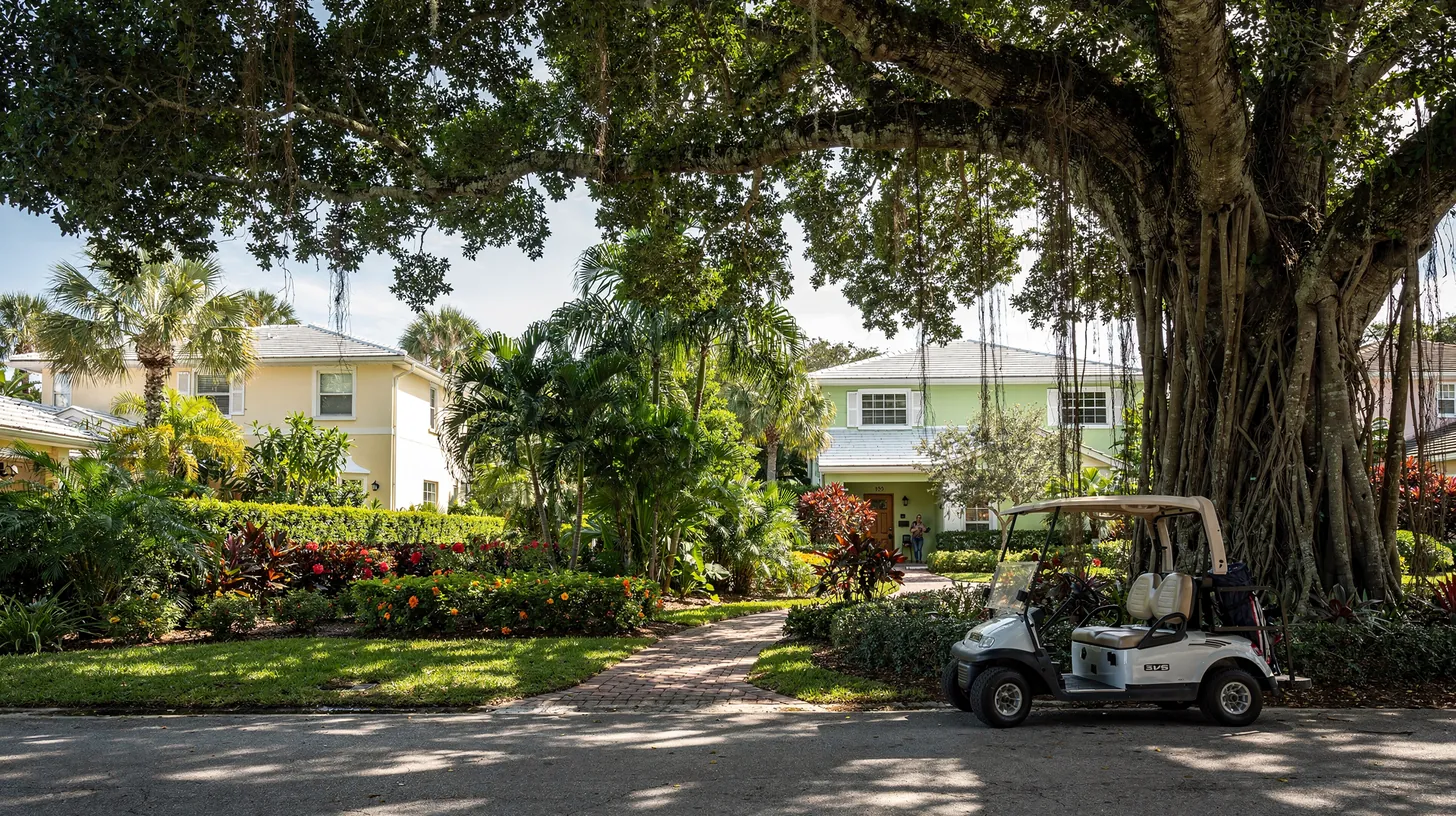
Neighborhood-named searches add explicit context. "Coffee shop in Old Naples" or "roofer serving Golden Gate Estates" tells Google both the service and the specific area, and it expects results that clearly belong there. These searches reward presence, not proclamation: you cannot outrank a genuinely local competitor for their own neighborhood just by adding its name to a page. The winners tend to be businesses a resident would already name, backed by data that corroborates they operate there.
04 / 09
What are hyperlocal keywords, and how do you use them without stuffing?
Hyperlocal keywords pair a service with a very specific location: a neighborhood, a district, a landmark, or a "near me" phrase. You use them by writing naturally about the areas you truly serve, in titles, headings, and body copy that a local would recognize as accurate. The moment you repeat a location to hit a density target, you have crossed into stuffing.
Good hyperlocal keywords come from how customers actually talk. They name neighborhoods ("Aqualane Shores"), reference landmarks ("near the Naples Pier"), or attach "near me" to a service. The job is to learn the real vocabulary of the areas you serve, including the informal names locals use that a city-level keyword tool will never surface, then weave those terms into content that would still make sense if you removed the keyword. When the location is load-bearing to the writing, the keyword takes care of itself; when the writing exists only to hold the keyword, both the reader and Google notice.
Keyword stuffing is the failure mode to avoid, and it is not subtle. Repeating "plumber in Old Naples plumber near Old Naples best Old Naples plumber" signals low quality rather than helping you rank, and Google has spent years devaluing the pattern. Write for the person deciding whether to call you, place the location where it belongs, and let one clean mention do the work of ten stuffed ones.
05 / 09
How do Google Business Profile service areas fit hyperlocal targeting?
For businesses that travel to customers, Google Business Profile service areas let you define the specific places you serve without a storefront in each one. Set them to areas you genuinely cover, keep your primary category accurate, and treat the profile as your strongest hyperlocal asset. It is the single most influential surface in local search, so precision here pays off.
Google Business Profile signals account for roughly 32% of local pack ranking weight, with the profile's primary category the single most influential factor overall (Whitespark, 2026)[1]. That makes the profile the anchor of any hyperlocal strategy, and its service-area settings the closest thing to telling Google which small areas you cover. We go deep on tuning the whole profile on our Google Business Profile optimization page.
Service-area businesses, the ones that go to the customer, can list the specific cities, neighborhoods, or zip codes they serve instead of publishing a street address. The discipline is honesty: define areas you actually work in and can serve well, because padding the list with far-flung places you rarely reach dilutes relevance and undercuts the tight local signal you are building. Storefront businesses instead lean on a verified address, which grounds them in a specific spot while proximity does much of the rest.
06 / 09
How do you build localized landing pages without creating doorway pages?
Build a location page only where you have something true and specific to say. A real page names the area's streets and landmarks, describes the local demand pattern, and reflects genuine service there. A doorway page just swaps the city name into a template. Google treats doorway pages as a violation, so the honest version is the only version worth building.
Doorway pages are the classic hyperlocal mistake, and they are against Google's guidelines, not merely ineffective. The pattern is familiar: one template, a city or neighborhood name find-and-replaced across dozens of copies, nothing on any page that would be false if you swapped the location. Google has discounted and can penalize these, so scaling that way is a liability.
The test for a legitimate location page is simple and demanding: could you write three paragraphs that would be factually wrong if you changed the place name? If yes, you have real local substance, the neighborhoods buyers mention, the seasonal rhythm, the problems you solve there. If no, you have a template, not a page, and you are better off with one strong page than ten thin ones that read as written by someone who never worked the neighborhood.
07 / 09
Why does proximity matter so much more at the hyperlocal level?
Proximity is always a local ranking factor, but at hyperlocal scale it becomes decisive. When someone searches "near me," how close you are is a large part of the answer, and a closer competitor can outrank a stronger but more distant one. You cannot fake location, so the strategy is to be genuinely present and prominent in the areas you target.
Proximity is one of the core inputs Google weighs for local results, alongside relevance and prominence, and its influence scales with how location-specific the query is. For a broad city search it is one factor among several; for a "near me" or neighborhood search it moves to the front, because the searcher has made distance part of the question. We unpack how proximity and relevance trade off in a dedicated guide.
This has an uncomfortable implication: there is a limit to what optimization can overcome. If a competitor sits two blocks from a cluster of searchers and you are across town, no amount of on-page work guarantees you outrank them for that spot, and anyone promising you the top "near me" result everywhere is selling something no one can deliver. What you can control is being real and prominent wherever you legitimately operate, so the honest goal is not to rank everywhere but to be the strongest option close to the customers you can actually reach.
08 / 09
Which businesses benefit most from hyperlocal SEO?
Three types benefit most: multi-location businesses that need each site found in its own area, service-area businesses that travel to customers across distinct neighborhoods, and brick-and-mortar businesses whose customers search on the go. If your customers are nearby and act quickly, hyperlocal is where the demand actually lives, and where a city-level page leaves money on the table.
Multi-location businesses gain the most obvious advantage. Each location competes in its own micro-market, and a single city-level presence cannot represent all of them well. Franchises, clinics with several offices, and multi-store retailers need each site to surface for its own neighborhood, a hyperlocal problem by definition.
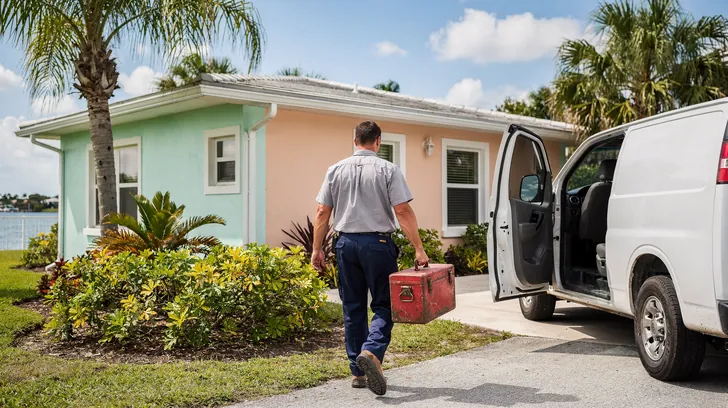
Service-area businesses, from plumbers to landscapers to mobile detailers, serve distinct areas without a storefront in each. Their Google Business Profile service areas and honestly built content signal genuine coverage of specific neighborhoods rather than a vague claim to serve "all of Southwest Florida," often the difference between a full schedule and a quiet phone.
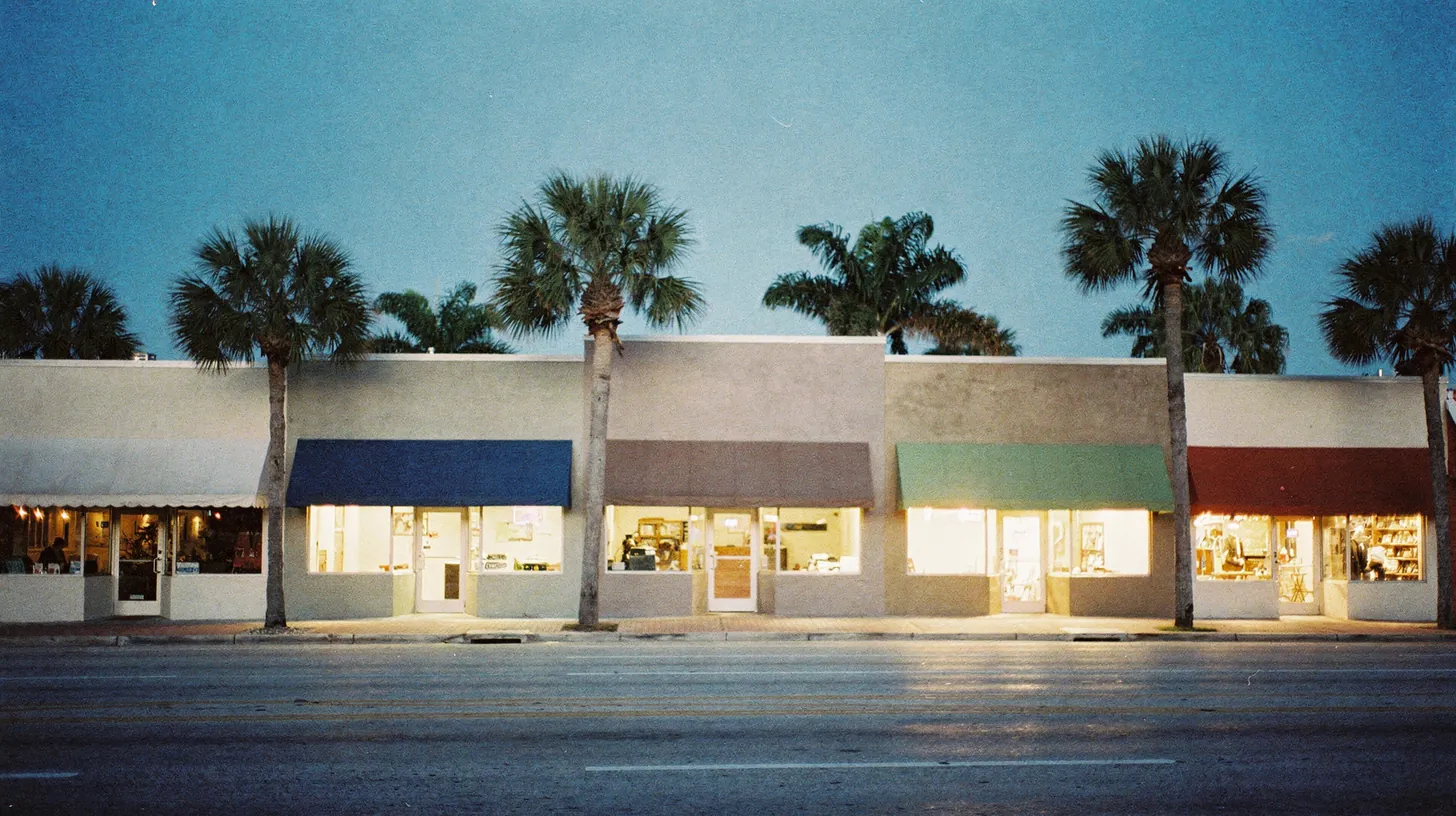
Brick-and-mortar businesses, especially food, retail, and anything discretionary, live on foot and short-drive traffic. Their customers search on the move, and proximity plus a strong profile decides who gets the visit. The common thread across all three is immediacy: nearby customers ready to act soon, which makes hyperlocal the main event.
09 / 09
Does hyperlocal SEO help you show up in AI and voice answers?
Increasingly, yes. AI assistants and voice search answer local questions by naming a specific business, and they draw on the same clean, corroborated data hyperlocal SEO builds. Consistent location signals, an accurate profile, and genuine local presence give these systems the evidence they need to name you. There is no tag that forces it, only evidence that earns it.
The behavior shift is measurable. Roughly 45% of consumers now use AI to find a local business, up from 6% a year earlier (BrightLocal, 2026)[2], moving a meaningful slice of local discovery onto surfaces where an assistant returns one answer, not ten blue links. Those surfaces are selective: SOCi found that ChatGPT recommends only about 1.2% of business locations, while those same brands appear in Google's local 3-pack 35.9% of the time (SOCi, 2026)[3]. Ranking well on Google no longer guarantees an assistant names you; those that do get named tend to have clean, corroborated data behind them, exactly what disciplined hyperlocal work produces.
The levers here are the same ones that already power local trust: being named consistently across the web. Ahrefs, studying 75,000 brands, found branded web mentions correlate with AI visibility at roughly 0.66 to 0.71, while classic link metrics correlate only very weakly (Ahrefs, 2026)[4]. Structuring content well helps too, with research finding generative-engine tactics can lift visibility by up to 40%, varying by domain (Aggarwal et al., KDD 2024)[5]. We make no promise of a citation, because nobody controls what an engine names, and we cover this work in our GEO optimization services.
Watch it work
Turn on what makes AI recommend you.
AI recommends the businesses it can read, trust and quote. Flip on the four signals we engineer, and watch your visibility climb and the answer rewrite itself.
THE FOUR SIGNALS WE ENGINEER
Illustrative · the four signals are the real system we build
Questions
This article, answered.
Jamie Kloncz · SEO Elite Agency, Naples
Local SEO targets a whole city or metro; hyperlocal SEO narrows that to a neighborhood, a street, or a "near me" moment. They share the same fundamentals: a strong Google Business Profile, citations, reviews, and useful content. The difference is scale and weighting. At hyperlocal scale, the searcher's exact location carries far more influence, and content has to speak to a specific area.
Jamie Kloncz · SEO Elite Agency, Naples
There is no switch that guarantees it, because "near me" results are answered against the searcher's location. What you can control is being genuinely present where you operate: an accurate, well-categorized Google Business Profile, correct location data, reviews from the areas you serve, and content rooted in those neighborhoods. A closer competitor can still outrank you for their block, so the honest goal is to be the strongest option within your real radius.
Jamie Kloncz · SEO Elite Agency, Naples
They are valuable when built honestly and a violation when built lazily. A legitimate location page names the area's streets and landmarks, describes local demand, and reflects genuine service there. A doorway page just swaps the place name into a template, which Google has treated as a violation for years. The test: if you cannot write paragraphs that would be false with a different place name, you do not have a real page yet.
Jamie Kloncz · SEO Elite Agency, Naples
Not necessarily. Service-area businesses that travel to customers can use Google Business Profile service areas to define the specific neighborhoods, cities, or zip codes they cover without publishing a storefront address. Brick-and-mortar businesses use a verified address instead. Either way, the discipline is honesty: define areas you genuinely serve and can serve well, rather than padding the list.
Jamie Kloncz · SEO Elite Agency, Naples
As specific as your customers actually talk, and no more forced than that. Learn the real vocabulary of the areas you serve, including informal neighborhood names, landmarks, and "near me" phrasing, then use those terms where they belong: titles, headings, and body copy that would still make sense with the keyword removed. The moment you repeat a location to hit a density target, you have crossed from targeting into stuffing.
Jamie Kloncz · SEO Elite Agency, Naples
Multi-location businesses that need each site found in its own micro-market, service-area businesses that travel across distinct neighborhoods, and brick-and-mortar businesses whose customers search on the go. The common thread is immediacy: nearby customers ready to act soon. You can reach SEO Elite Agency at (843) 955-7727 for a free audit of your local presence.
Sources
- 1Whitespark: Local Search Ranking Factors Report, 2026 edition (Google Business Profile signals ~32% of local pack weight; primary category the single most influential factor)↩
- 2BrightLocal: Local Consumer Review Survey, 2026 (45% of consumers use AI to find a local business, up from 6%)↩
- 3SOCi: Local Visibility Index, 2026 (~1.2% of locations recommended by ChatGPT vs 35.9% appearing in Google's local 3-pack)↩
- 4Ahrefs: Top Brand Visibility Factors in ChatGPT, AI Mode, and AI Overviews, 2026 (75,000 brands; branded web mentions correlate with AI visibility at 0.66 to 0.71)↩
- 5Aggarwal et al.: GEO: Generative Engine Optimization, KDD 2024 (GEO can boost visibility by up to 40% in generative engine responses; efficacy varies across domains)↩

Written by
SEO Elite Agency, Naples FL. Last updated , first published June 27, 2025.
Check this page has not changed
Every article is hashed when the site is built. This recomputes the hash of its text in your browser and compares it with the published record.
Related services