Florida Law Creates an Electrical Market Nobody Markets To
Most electrical contractors compete for the same residential work: panels, generators for houses, service calls, the occasional remodel. Meanwhile Florida has written a commercial market into its own regulations, one where the customer is legally required to buy, required to keep the equipment tested, and required to come back when they renovate. The searches that market generates are almost entirely uncontested, because nearly every electrician website in the state is written to a homeowner.
In one paragraph
Commercial electrician SEO means ranking for the compliance, capacity and testing questions that institutional buyers research before they hire, rather than the residential service terms every competitor already targets. SEO Elite Agency builds that content, the commercial service pages under it and the entity signals that make it credible, from Naples, month to month, starting with a free audit.
01 / 07
The Market Florida Requires Somebody to Build
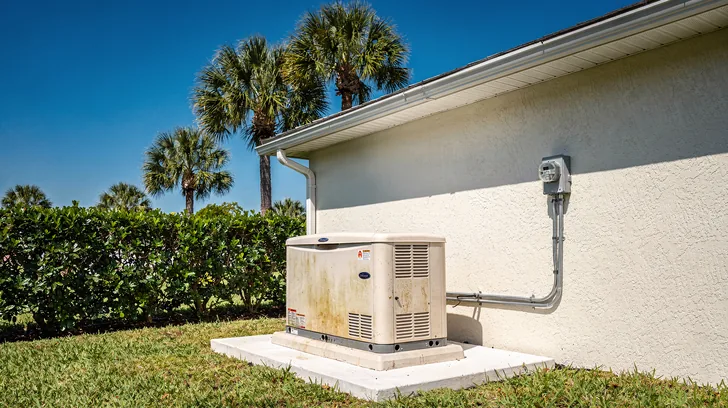
Florida requires each assisted living facility to hold an alternate power source such as a generator, maintained at the facility, sufficient to keep ambient air temperature at or below 81 degrees Fahrenheit for a minimum of 96 hours after the loss of primary electrical power (Florida Administrative Code, 2026). That is not a preference a salesperson has to create. It is an obligation.
Start with the obligation itself, because it defines the size and the certainty of the work.
Florida requires each assisted living facility to prepare a detailed plan for the acquisition of a sufficient alternate power source, such as a generator maintained at the facility, to ensure ambient air temperatures will be maintained at or below 81 degrees Fahrenheit for a minimum of 96 hours in the event of the loss of primary electrical power (Florida Administrative Code, 2026). The ratified rule text is published openly, including by county emergency management offices, so any contractor can read exactly what their prospective customer has to satisfy (Miami-Dade County, 2026).
The rule also sizes the space that has to stay cool, which is what turns a temperature target into a load calculation. The required temperature must be maintained in an area of sufficient size to keep residents safely at all times, and for planning purposes no less than 20 net square feet per resident must be provided, with the facility permitted to use 80 percent of its licensed bed capacity as the resident count in that calculation (Florida Administrative Code, 2026).
Notice what that gives an electrical contractor that residential work never does. The customer cannot decide to skip it, the specification is published rather than negotiated, and the sizing follows arithmetic a competent contractor can perform before the first conversation. Content that walks a facility administrator through that arithmetic is genuinely useful to them, and almost nobody has written it.
The statutory backdrop is thinner than people assume, which is worth knowing so you cite the right thing. The assisted living statute requires a comprehensive emergency management plan addressing postdisaster activities including provision of emergency power, food and water (Florida Statutes section 429.41, 2025), but the operative detail, the temperature, the hours and the fuel, lives in the administrative rule rather than the statute.
02 / 07
The Fuel Rules Decide How Big the Job Actually Is
Onsite fuel minimums scale with licensed capacity: a facility of 16 beds or less must store 48 hours of fuel onsite, and one of 17 or more beds must store 72 hours (Florida Administrative Code, 2026). Piped natural gas is allowable and satisfies the onsite requirement, which changes the design entirely.
The generator is only half the specification. Fuel is where the projects diverge from each other.
Onsite fuel minimums scale with the facility. A facility with a licensed capacity of 16 beds or less must store 48 hours of fuel onsite, and a facility with 17 or more beds must store 72 hours (Florida Administrative Code, 2026). When a facility sits in an area under a declared state of emergency that may affect primary power delivery, it must secure a full 96 hours of fuel, and may use portable fuel storage containers for the remainder needed to reach that figure (Florida Administrative Code, 2026).
Two provisions change the engineering conversation completely, and both are the sort of thing a buyer searches. Piped natural gas is an allowable fuel source and meets the onsite fuel supply requirement under the rule (Florida Administrative Code, 2026), which for a facility with gas service available removes the storage problem outright. And where a local ordinance limits how much fuel may be stored onsite, the facility must plan for the maximum the ordinance allows plus a reliable method of obtaining the additional fuel at least 24 hours before onsite fuel runs out (Florida Administrative Code, 2026).
Each of those is a page. Not a generic commercial generators page, but the specific questions an administrator types: what size generator a facility of a given bed count needs, whether natural gas satisfies the requirement, and what to do when the municipality will not permit enough diesel onsite. Those searches have low volume and extremely high value, which is the opposite of the residential terms every competitor is fighting over.
03 / 07
The Obligation Does Not End When the Generator Is Installed
The rule requires acquisition of the services necessary to maintain and test the equipment and its functions, plus acquisition and maintenance of a carbon monoxide alarm, with equipment protected from flooding or storm surge damage (Florida Administrative Code, 2026). That is a recurring service obligation, not a one-time sale.
This is the paragraph that should change how an electrical contractor thinks about the whole market.
Alongside the power source and the fuel, the plan must cover the acquisition of the services necessary to maintain and test the equipment and its functions, so as to ensure safe and sufficient operation of the alternate power source maintained at the facility (Florida Administrative Code, 2026). The rule separately requires the acquisition and maintenance of a carbon monoxide alarm, and requires that equipment be protected from flooding or storm surge damage (Florida Administrative Code, 2026).
Read commercially, that is a maintenance and testing obligation attached to every installation in the state, permanently. It is the revenue model most contractors say they want and few build: recurring, contracted, compliance-driven, and very hard for a customer to drop, because dropping it puts their own license position at risk rather than merely risking an outage.
Recurring obligations also produce recurring searches, which is the part that matters for a website. A facility that inherits a generator from a previous administrator, or takes over a building, needs someone to assess, test and document what is already there. A page about assessing and testing an existing installation against the requirement will quietly collect that work for years, and it is the kind of asset we build into a monthly program rather than a one-off project, as we set out in what a monthly program should actually deliver.
04 / 07
Every Renovation Is a Second Bite at the Same Customer
A facility that undergoes additions, modifications, alterations, refurbishment, renovations or reconstruction requiring changes to systems or equipment affecting compliance must amend its plan, resubmit it for approval, and implement the amended plan concurrently with the work (Florida Administrative Code, 2026).
There is a second demand stream sitting inside the same rule, and it is triggered by construction.
Where an existing facility undergoes any additions, modifications, alterations, refurbishment, renovations or reconstruction that require modification of its systems or equipment affecting compliance with the rule, it must amend its plan and submit the amendment to the local emergency management agency for review and approval, and must implement the amended plan concurrently with that work (Florida Administrative Code, 2026). A new facility has to submit its plan before obtaining a license at all (Florida Administrative Code, 2026).
That means every meaningful renovation in this sector is also an electrical compliance event, and the timing is not optional: the amended plan has to be implemented alongside the construction rather than afterwards. A contractor who understands that sequence is worth more to a project than one who shows up to install equipment once the walls are closed.
It also identifies the referral relationships worth having. The general contractor, the architect and the administrator all encounter this constraint before an electrician is chosen, which is a reason to publish content aimed at those readers too, not only at the facility. The same logic drives the way we approach construction and general contractor SEO: the person searching is often not the person who signs.
05 / 07
The Approvals Are Public, Which Makes the Customer List Public
Facilities submit plans to the local emergency management agency, and must give the state agency a consumer-friendly summary, which the agency posts along with notice of approval and implementation on its website within ten business days (Florida Administrative Code, 2026). Public approval records are a prospecting asset.
Now the part almost nobody in the trade has noticed, which is where the process leaves a public trail.
Plans go to the local emergency management agency for review and approval, and the facility must submit a consumer-friendly summary of its emergency power plan to the state agency, which posts that summary together with notice of the plan’s approval and implementation on its website within ten business days of approval, updating it within ten business days of implementation (Florida Administrative Code, 2026). The agency may also request cooperation from the State Fire Marshal to conduct inspections to ensure the plan is implemented in compliance with the rule (Florida Administrative Code, 2026).
A public record of which facilities have approved and implemented plans is unusual and useful. It tells you which buildings in your service area are already in the system, and it tells you the vocabulary those buyers and their regulators actually use, which is the vocabulary your pages should be written in. Matching the language of the approval process is a far better keyword strategy than guessing at what a commercial buyer might type.
Be disciplined about how you use it. This is public compliance information, and the correct use is to understand the market and write accurately for it, not to imply anything about a named facility’s standing. A contractor who is visibly careful with that distinction reads as the safer choice to an administrator whose license is the thing at stake.
06 / 07
Why Residential Electrical Content Cannot Reach This Buyer
A homeowner searches symptoms and prices. A facility administrator searches obligations, capacity and approval. Those are different vocabularies, different page structures and different proof requirements, and a site written for the first will not surface for the second.
It is worth being explicit about why an existing residential site does not simply pick this up.
A homeowner searches a symptom or a price: a breaker that keeps tripping, what a panel upgrade costs, whether a generator will run the air conditioning. An administrator responsible for a licensed facility searches an obligation: what capacity the requirement implies for their bed count, whether their fuel arrangement satisfies the rule, what has to happen to the plan if they renovate a wing. Those are not the same queries, and a page written for the first genuinely cannot answer the second.
The proof requirements differ just as much. A homeowner wants reviews and a fast response. An administrator wants evidence you have done this before, understand the approval path, and will not create a compliance problem for them. That means content carrying specifics, named requirements and clear scope, which is also exactly what makes a page citable by AI assistants answering the same questions.
There is a strategic reason to want this ground in particular. On broad electrical search terms a national marketing agency with years of accumulated authority beats a local contractor on strength alone, which is visible in the data: unqualified terms sit far out of reach while the specific and geographically anchored ones are contested at close range. Commercial compliance content is narrow enough that authority matters less than accuracy, and accuracy is something you can actually win on. We make the same argument for roofing and the substantial improvement threshold, and it is the pattern behind our work across Cape Coral and the wider region.
07 / 07
What to Publish, and in What Order
Publish the requirement explainer first, then capacity and fuel pages matched to how the rule scales, then testing and renovation pages. Keep residential and commercial architecture separate, quote the rule rather than paraphrasing it, and date every page.
A concrete order of work for an electrical contractor who wants this market.
First, one page explaining the requirement plainly for facility operators: the temperature and duration, how the area sizing works, what the fuel minimums are, and who reviews the plan. Quote the rule rather than paraphrasing it, name the rule, and state the date you verified it. This is the page that earns the first contact.
Second, the capacity and fuel pages, split the way the rule itself splits: smaller facilities against larger ones, diesel storage against piped natural gas, and what to do when a local ordinance caps onsite storage. These are narrow and that is the point, because they match how an informed buyer searches once they are past the basics.
Third, the two recurring-revenue pages: testing and maintenance of an existing installation, and renovation compliance for a facility that is altering a building. Both address obligations the customer already has, which makes them the easiest commercial conversations to start.
Fourth, keep this architecture genuinely separate from your residential pages rather than bolting a commercial section onto a homeowner site. Different buyer, different vocabulary, different proof. If you also serve facilities as clients rather than only their buildings, the marketing side of that sector is its own discipline, which we cover in assisted living SEO.
Then keep it current. Rules are amended, and a page that names the rule and the date it was checked compounds in value while a generic commercial generators page does not. If you would rather have that built and maintained than do it yourself, that is the work we do, month to month, from Naples.
Watch it work
Turn on what makes AI recommend you.
AI recommends the businesses it can read, trust and quote. Flip on the four signals we engineer, and watch your visibility climb and the answer rewrite itself.
THE FOUR SIGNALS WE ENGINEER
Illustrative · the four signals are the real system we build
Questions
This article, answered.
Jamie Kloncz · SEO Elite Agency, Naples
Each facility must prepare a detailed plan for acquiring a sufficient alternate power source, such as a generator maintained at the facility, to keep ambient air temperature at or below 81 degrees Fahrenheit for a minimum of 96 hours after the loss of primary electrical power (Florida Administrative Code, 2026). The required temperature has to be held in an area of sufficient size, with no less than 20 net square feet per resident for planning purposes, and the facility may use 80 percent of its licensed bed capacity in that calculation (Florida Administrative Code, 2026).
Jamie Kloncz · SEO Elite Agency, Naples
It scales with licensed capacity. A facility of 16 beds or less must store 48 hours of fuel onsite, and one with 17 or more beds must store 72 hours (Florida Administrative Code, 2026). In an area under a declared state of emergency that may affect primary power delivery, the facility must secure 96 hours of fuel and may use portable containers for the remainder (Florida Administrative Code, 2026). Piped natural gas is an allowable source and satisfies the onsite requirement (Florida Administrative Code, 2026).
Jamie Kloncz · SEO Elite Agency, Naples
Ongoing. The plan must include acquisition of the services necessary to maintain and test the equipment and its functions, plus acquisition and maintenance of a carbon monoxide alarm, and equipment has to be protected from flooding or storm surge damage (Florida Administrative Code, 2026). Separately, a facility that renovates in a way that affects compliance must amend its plan, have the amendment approved, and implement it concurrently with the construction (Florida Administrative Code, 2026). Both create recurring work.
Jamie Kloncz · SEO Elite Agency, Naples
Nursing homes are covered by a separate, parallel rule rather than this one. We have deliberately not quoted its figures here, because we were not able to read its full text at the source, and we do not publish regulatory specifics we have not verified firsthand. If you serve nursing homes as well as assisted living facilities, that rule needs to be read on its own terms rather than assumed to match.
Jamie Kloncz · SEO Elite Agency, Naples
Because you can win it. Broad unqualified electrical search terms are dominated by national marketing agencies with years of accumulated authority, while commercial compliance queries are narrow enough that accuracy beats authority. The volume is lower and the job value is far higher, and almost no competing electrician website is written to an administrator rather than a homeowner.
Jamie Kloncz · SEO Elite Agency, Naples
Yes, and we verify every rule at the source before publishing, which sometimes means reporting that something could not be confirmed rather than stating it. For this article we extracted the full ratified rule text rather than relying on a summary. Nothing we publish is legal, engineering or code advice, and pages are written to point a reader to the rule and the agency that decides.
Jamie Kloncz · SEO Elite Agency, Naples
No. SEO Elite Agency works month-to-month from our Naples office at 1950 Mayfair Street, Suite 313. Long contracts protect agencies from their own results, and we would rather earn the next month. Reach us at (843) 955-7727 or [email protected].
Sources
- 1Florida Administrative Code: Rule 58A-5.036, Emergency Environmental Control for Assisted Living Facilities, official rule record, read September 30 2026 - the rule requiring an alternate power source sufficient to maintain ambient air temperature at or below 81 degrees Fahrenheit for a minimum of ninety-six hours after loss of primary electrical power, with area sizing of no less than twenty net square feet per resident, onsite fuel minimums of forty-eight hours at sixteen beds or less and seventy-two hours at seventeen or more beds, maintenance and testing services, a carbon monoxide alarm, plan submission to the local emergency management agency, and amendment on renovation affecting compliance
- 2Miami-Dade County: final ratified text of Florida Administrative Code Rule 58A-5.036 published by the Office of Emergency Management, extracted and read in full September 30 2026 - the source of the verbatim provisions quoted in this article, including that piped natural gas is an allowable fuel source meeting the onsite fuel supply requirement and that the state agency posts the plan summary and notice of approval within ten business days
- 3Florida Statutes section 429.41: 2025 edition, read September 30 2026 - requires rules establishing standards for assisted living facilities including a comprehensive emergency management plan addressing postdisaster activities, and at subsection (1)(b) names provision of emergency power, food and water among those activities, while the operative temperature, duration and fuel requirements are set by administrative rule rather than by this section

Written by
SEO Elite Agency, Naples FL. Published .
Check this page has not changed
Every article is hashed when the site is built. This recomputes the hash of its text in your browser and compares it with the published record.